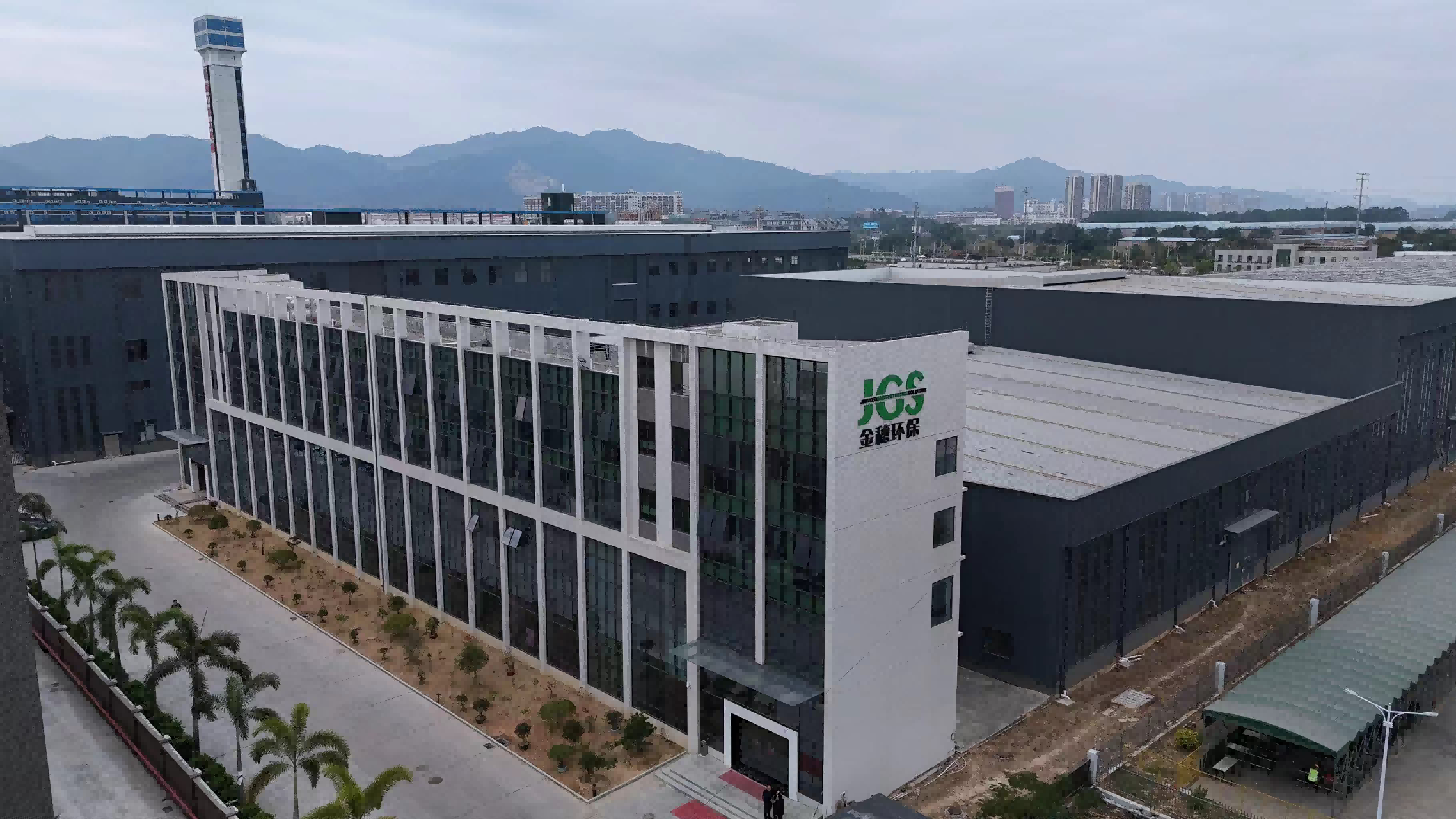

Woven Geotextile Manufacturer Insights for Choosing Durable Fabric
2026-09-13
Choosing the wrong woven geotextile doesn’t just delay a project—it quietly eats into your budget through premature failures and repeated repairs. If you’ve ever wondered why two fabrics labeled with the same grams per square meter perform so differently in the field, you’re asking the right question. This post shares practical insights from JInseed Geosynthetics Solution on what genuinely makes a geotextile durable: resin quality, weaving tension, UV resistance, and how to verify claims before you buy. Read on to avoid the costly trial-and-error that most spec sheets won’t warn you about.
Reading a Geotextile Spec Sheet Without Getting Fooled
A spec sheet looks precise, but manufacturers curate every number. The first red flag is when the only highlighted values are mass per unit area and thickness. Those matter for shipping, not performance. Dig instead for grab tensile strength, trapezoidal tear strength, and puncture resistance (CBR or ASTM D6241). If those are missing or buried, the product probably has a weak point the supplier would rather not discuss.
Check the test method behind each value before comparing sheets side by side. An ASTM D4632 grab tensile result is not interchangeable with an ISO 10319 wide-width tensile figure. Also note whether the sheet gives a minimum average roll value or just a typical value. Minimum average roll values are batch-level guarantees; typical values can come from a single favorable sample. Finally, watch for only one direction being reported. Geotextiles are often anisotropic, and a strong machine direction can hide a much weaker cross direction.
Do not treat the sheet as a promise for field performance. Installation damage from sharp backfill, long-term creep under sustained load, and UV exposure during staging can cut strength by half or more before the design life begins. Ask for a survivability specification or at least installation damage reduction factors. When comparing products, keep units, test standards, and conditioning identical, otherwise you are not comparing geotextiles, you are comparing marketing copy.
Polypropylene or Polyester: A Side-by-Side for Tough Soils
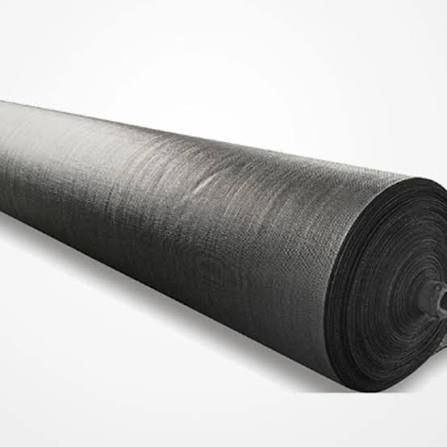
Polypropylene has a well-earned reputation for being the low-fuss option in rooms that collect mud, gravel, and damp grit. Because the fiber is inherently hydrophobic, it doesn't soak up spills the way natural materials do, so you can usually blot a fresh stain and move on. The trade-off is that polypropylene tends to crush under repeated foot traffic, especially in busy hallways, and once the pile flattens, it can hold onto fine dust in the crevices.
Polyester brings a different set of strengths to the table. Its fibers accept dye more readily, which means even after aggressive spot-cleaning with stronger solutions, the color doesn't fade as quickly as you might expect. It also feels noticeably softer underfoot. However, polyester is more likely to attract oily residues, and in a tough-soil environment, that can lead to a gradual darkening of high-contact areas unless you vacuum and blot more frequently.
If your tough soils skew wet and muddy, polypropylene's quick-drying, stain-resistant surface is hard to beat. For dry, dusty, or oily messes combined with lighter foot traffic, polyester's color retention and softer texture may justify the extra upkeep.
Why Weave Density Matters More Than Fabric Weight
When you pick up a shirt, the first thing you might notice is how heavy the fabric feels. But weight alone tells you almost nothing about how that fabric will perform. A heavyweight cotton can be loosely woven and fall apart after a few washes, while a lighter fabric with a tight weave can shrug off years of abuse. The real story is in the weave density—how many threads are packed into each square inch. This determines breathability, durability, and even how the garment drapes on your body. A dense weave means less room for air and moisture to pass through, which can be great for a windbreaker but terrible for a summer shirt. Weight is just a number on a scale; density is the structural fingerprint of the fabric.
Think of it like comparing two ropes: one thick but loosely twisted, the other thinner but braided tight. The thick rope feels heavier in your hand, but the thin one will hold a knot better and resist fraying. Fabric works the same way. A loosely woven cotton twill might weigh 8 ounces per square yard, yet you can see daylight through it when held up. A 5-ounce poplin with a high thread count will feel crisper, last longer, and often keep its shape better after washing. This is why two shirts can feel completely different even if their labels list the same weight. The weave density affects how the fabric handles stress, how it wrinkles, and whether it pills or snags easily. For anyone who cares about how clothes actually wear—not just how they feel on a hanger—density is the metric that matters.
There's also a practical reason density beats weight: it's a better predictor of real-world performance across different materials. Linen, for example, is naturally heavier than cotton but often woven loosely to maximize airflow. That loose weave makes it cool and comfortable, but it also means linen wrinkles and wears through faster at stress points like elbows or cuffs. Conversely, a tightly woven wool flannel might be lighter in weight but far more resistant to tearing and wind. By focusing on weave density, you can compare fabrics across the board without getting misled by the raw ounce count. Next time you're shopping, don't just rub the fabric and judge its heft—hold it up to the light, count the threads if you can, and ask yourself: is this built to last, or just built to feel substantial? The answer is almost always in the weave, not the weight.
The Real Impact of UV Exposure on Woven Fabrics
Sunlight doesn't just fade colors. Over time, ultraviolet radiation breaks down the molecular bonds in natural and synthetic fibers alike, leaving woven fabrics brittle and prone to tearing along fold lines and stress points. The damage often goes unnoticed until a simple tug turns into a rip.
Polyester and nylon may resist fading better than cotton or silk, but they suffer from a different kind of degradation: surface pitting and a gradual loss of tensile strength. Even indoors, window-filtered UV can slowly weaken upholstery and drapery, especially in rooms with southern exposure.
The real impact shows up in unexpected ways. A canvas awning that looked fine all summer can shred during the first autumn storm. A favorite cotton shirt develops holes near the collar after a single season of regular wear. Weave density and yarn twist matter, but no construction fully escapes the cumulative effect of photons hammering the fabric day after day.
How Installation Damage Quietly Ruins Durable Fabric
A fabric can pass every abrasion test in the lab and still fall apart months after installation. The trouble often starts with the tools used to stretch and secure the material. A dull staple doesn't just pierce the weave; it tears a jagged hole that grows wider every time the panel flexes. On tensioned systems, over-pulling leaves the yarns permanently stressed, so a small snag turns into a long split long before the fabric would naturally wear out.
Edge details hide a similar story. Aluminum track and rubber spline are supposed to hold fabric in place, yet installers who force the spline into a groove with a screwdriver can scrape the coating right off the fibers. That exposed area then absorbs moisture, accelerates UV breakdown, and starts to wick dirt. What begins as an invisible line near the frame becomes a weak point where the material simply gives way under normal wind load.
Even careful handling leaves marks. Dragging a panel across concrete, kneeling on it while cutting, or folding it sharply for transport creases the fibers and breaks internal bonds. These flaws don't show up on day one. They wait until the fabric is under real tension, then spread quietly along the same paths, mimicking material failure when the true cause was installation all along.
Matching Pore Size to Your Aggregate Before You Order
Without knowing the gaps between granules, you're ordering blind. Pore space isn't just void; it controls how water moves, how much pressure builds, and whether fines wash through. Take a handful of your existing aggregate, dry it, and look at the contact points. If gaps look inconsistent, a quick sieve analysis beats guesswork.
For drainage beds, you want pores large enough to pass water but small enough to trap migrating soil. A common mistake is matching aggregate by visual size alone—angularity, gradation, and compaction change effective pore diameter more than nominal size. Crushed stone with multiple size fractions often locks tight and reduces open space, while single-size rounded gravel holds more void.
Before ordering, back-calculate from your required flow rate or filtration threshold. Use a simple water percolation test on a small sample, then adjust the top size or add a bridging layer. Suppliers can provide void ratio data, but your site conditions and compaction method will shift the final number. Confirm the spec after a field trial, not just from a data sheet.
FAQ
Look beyond weight. Check the polymer type, weaving pattern, and quality control during extrusion and weaving. High-tenacity polypropylene or polyester yarns with consistent denier and tight, uniform weave tend to outlast cheaper alternatives. Ask for tensile strength retention after UV exposure and installation damage tests.
Polypropylene is lighter and resists most chemicals but has lower UV resistance unless properly stabilized. Polyester offers higher modulus and better creep resistance, making it suitable for reinforcement where deformation must stay minimal. For buried applications, both work if stabilized; for exposed use, polyester often has an edge.
Ask about yarn type, whether it is fibrillated tape, monofilament, or multifilament, along with weave tightness and whether the fabric is calendered. Also confirm whether the manufacturer tests each lot for grab tensile, trapezoidal tear, puncture resistance, and apparent opening size. Inconsistent lot data is a red flag.
Weight alone can be misleading. A heavy fabric with a loose, uneven weave may allow soil migration and suffer seam failure. A lighter but tightly woven fabric with high-quality yarns can outperform it. Check the cover factor and pore size distribution rather than just mass per unit area.
Installation survivability. Many specs focus on final tensile strength but ignore how much damage occurs during aggregate placement. Request data from ISO 10722 or similar installation damage tests. A fabric that retains 80 percent strength after installation is far better than one with higher lab strength but poor damage resistance.
Ask for full batch certificates, not just marketing sheets. Check if they provide traceability from raw resin to finished roll. Request samples and do simple checks: stretch a strip, look for consistent width and thickness, examine weave uniformity under light, and test water flow through the fabric. If they hesitate to share production data, that tells you something.
Not necessarily. Heavier fabrics can be overkill and may create drainage problems if their permittivity is too low. For separation and stabilization, a mid-weight high-strength woven with proper opening size often works better than a thick, heavy fabric that traps water. Match the fabric to the soil gradation and load conditions.
UV stabilizers protect the polymer during storage and installation before covering. Without adequate stabilization, the fabric can lose significant strength within weeks of sun exposure. For buried use, UV exposure is short but still critical; ask for accelerated weathering test results such as ASTM D4355 to confirm resistance.
Conclusion
Most spec sheets list impressive tensile numbers, but those figures rarely tell you how a woven geotextile behaves once it's buried under sharp aggregate. Ask for grab elongation and trapezoidal tear values, not just wide-width tensile. Polypropylene tends to be the better default for aggressive soils because it resists chemical attack and moisture, while polyester can edge ahead in high-temperature or high-creep scenarios. However, the real durability signal is weave density. A lighter fabric with a tighter, more uniform weave often outperforms a heavier, looser one in separation and puncture resistance. Dense interlacing limits yarn movement, which is exactly what prevents rocks from pushing through.
UV exposure is another overlooked factor. Even stabilized woven fabrics lose strength if stored uncovered for months or left exposed during a long site delay. Keep rolls wrapped and backfill promptly. Then watch installation damage. Dragging fabric over sharp subgrade or dropping large aggregate from too high can cause tears that never show up on a spec sheet. Before ordering, match the fabric's pore size to your specific aggregate gradation. Too open and fines pump through, while too tight and water backs up. The right choice balances permittivity with retention, and that balance changes with every project. Trust a manufacturer who asks about your exact stone size and subgrade before quoting any product.
Contact Us
Contact Person: Jerry Qiu
Email: [email protected]
Tel/WhatsApp: +65 84265294
Website: https://www.jinseed-geo.com