

Wholesale Telescopic Combined Flood Control Board for Rapid Urban Flood Protection
2026-11-23
Urban flooding rarely gives a warning, and waiting for sandbags or heavy equipment can cost valuable minutes. As extreme rainfall becomes more common, cities and contractors are looking for faster ways to block water at doorways, underground entrances, and low-lying streets. The wholesale telescopic combined flood control board is built for exactly that moment: a compact, modular barrier that expands quickly, stores easily, and can be moved by a small team without sacrificing strength. In this article, we explore why this approach is gaining ground in rapid urban flood protection and how Jianghe Flood Prevention is helping buyers source dependable, cost-effective flood control boards at scale.
Telescoping Panels That Skip the Usual Anchoring Delay
A telescoping panel that can be walked into position and locked off without waiting on anchor cure times changes the rhythm of an install. Rather than setting brackets, pouring or drilling, and then pausing while everything gains strength, the panels extend, seat against their tracks, and take load through a series of interlocking stops almost immediately.
The delay usually comes from the anchors, not the panels themselves. By shifting the connection strategy to mechanical engagement and distributed bearing, the system removes that idle stretch between placing the panel and putting it to work. Crews can keep moving down the line instead of circling back to torque bolts or check set concrete.
That is useful where access windows are short or where a temporary enclosure has to be reliable the same afternoon it goes up. The telescoping action also keeps the footprint small during transport, so the speed advantage starts before the panels even leave the truck.
Mixed Site Conditions Call for One Adjustable Barrier, Not Three
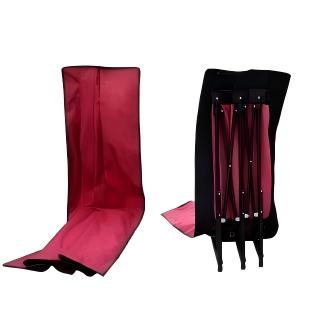
Job sites rarely cooperate with a single barrier spec. One edge may run along broken asphalt, another drops off into soft gravel, and a third meets a low concrete curb. Fixed units force a choice: accept gaps and unstable footing, or bring in several models and hope the right one ends up where it is needed. That is where a single adjustable barrier earns its place.
The value shows up in the details. Telescoping end sections or stepped leveling feet let the same barrier sit flush on uneven ground, span a wider access point, or pinch down around a narrow post. Operators do not need to stop and swap out hardware when the surface changes; they adjust the contact points, lock the position, and keep the line moving.
Using one adjustable unit instead of three fixed variants also simplifies everything behind the scenes. Fewer products to track, fewer spare parts on the truck, and no confusion during setup or teardown. When a section of the site gets regraded or a temporary entrance shifts, the barrier can be re-set on the spot rather than replaced with another stocked model.
Wholesale Inventory That Moves From Pallet to Perimeter in Minutes
The back dock doesn't turn into a staging maze. Incoming wholesale pallets are built so the outer ring holds the cold, fast-selling perimeter items while dry goods sit toward the middle. The moment a pallet hits the floor, staff can wheel it straight past receiving and slide each layer onto a cart without tearing down boxes or re-sorting labels.
What makes it work is the labeling system. Every case gets a wide color band that matches the department marker at the sales floor edge—green for produce, blue for dairy, brown for bakery. A part-time associate doesn't need a scanner or a map; the band says exactly which run to take. This keeps the trip from dock to display down to a few minutes because decisions are made at the warehouse, not in the aisle.
For the store, that speed changes ordering behavior. Instead of piling inventory in backstock, managers can order smaller wholesale drops timed closer to the midday rush. Short shelf-life perimeter stock gets pushed out while it still looks fresh, and less product ends up stuck behind the freezer door. The result is a sales floor that reads as fully stocked without the hidden labor sink.
Hard-to-Seal Entry Points Where Standard Boards Fall Short
Gaps around rim joists, crawl space vents, and the uneven seams where old masonry meets new framing have a way of making standard foam board look useless. The rigid sheets are too stiff to follow the bumps, too wide to fit behind existing pipes, and once cut, they rarely sit tight enough to stop air from sneaking past the edges. People usually end up stacking scraps, taping joints, and hoping for the best, but leaks still show up in the corners where the board simply cannot conform.
What actually works in these spots is something that expands into the irregular shape, fills the surrounding voids, and bonds without needing a perfectly clean surface. It needs to hold up through seasonal movement and keep pests out, while staying flexible enough not to crack when the framing shifts. That combination is rare in rigid products, which explains why so many airtightness plans fall apart the moment they reach these awkward transitions.
Modular Storage Logic for Cities That Cannot Idle Crews
Storage in a city where every crew member has a standing assignment stops being a passive buffer and starts acting like a sorting floor. Instead of one central warehouse, I split storage into small nodes attached to production clusters. Each node only holds what the adjacent workshop can consume within a shift, so a sudden surplus never sits long enough to justify hauling it across the map.
I started treating storage capacity as a limiter rather than a convenience. When a mill has room for exactly two input crates, its upstream gatherers naturally pace themselves. If I add a third crate slot, they over-deliver, the extra material blocks the walkway, and somebody gets pulled off a construction job to clear it. Keeping storage tight keeps every worker in the role they were assigned to.
I also rotate module placement as districts grow. A storage pad that once served a lumber yard might become a charcoal cache when the forest moves further out. Because the pads are small and standardized, they can be decommissioned without leaving a dead zone, and the crew that used to manage them folds into the next production line instead of waiting for a new order.
Rapid Urban Flood Response Without the Sandbag Bottleneck
Sandbags look simple, but in an urban cloudburst their logistics eat the clock. Filling, moving, and placing enough bags to protect a subway entrance or storefront can take a crew several hours. Cities and building operators are cutting that lag by storing modular flood barriers near repeat trouble spots; many of these systems clip together or fill with water on site, so a small team can seal an opening before the drainage network backs up.
A quieter shift is happening with materials that do the work only when wet—absorbent blankets, gel-filled tubes, and self-expanding seals. They sit flat in storage and swell into a barrier on contact with runoff. Meanwhile, water-level sensors can notify nearby staff or trigger magnetic door guards, sharpening the moment of response to a matter of minutes rather than waiting for a sand delivery.
The common thread is removing the supply chain from the first hour of a flood. Instead of searching for bags, sand, and volunteers, responders activate pre-positioned hardware at the points that fail most. This turns flood response from a scramble for materials into a rehearsed, place-based routine.
FAQ
It expands and locks into place within minutes, covers wider openings with fewer units, and stores flat when not needed. Sandbags require manpower, time and disposal planning, while this board can be deployed by one or two people and reused repeatedly.
Yes, the combined design handles slight surface irregularities and common urban entry points, including garage ramps, building entrances and sidewalks. For heavily damaged or very soft ground, adding a compressible seal strip is recommended.
Most standard openings are closed in under ten minutes. Because the boards telescope and clamp to side posts, no heavy equipment or specialized training is needed, which matters when rainfall arrives faster than forecast.
The panels typically use corrosion-resistant aluminum alloy with reinforced seals and stainless steel fasteners. They are built for repeated contact with floodwater and normal weather, though rinsing off debris after an event extends service life.
Both. Wholesale orders are common for city emergency-response warehouses, commercial building operators, hospitals, schools, and logistics centers. The modular sizing allows different lengths to be combined for various entrance widths.
No major construction is required. Fixed side channels or removable posts are installed at prepared entry points, and the boards drop in when needed. Removable options keep daily traffic flow clear and preserve the appearance of the entrance.
Lengths are usually modular and can be joined to span wide openings, while common heights range from about 50 cm to 120 cm or more depending on the series. Custom heights and powder-coated colors are often available for large-volume purchases.
Store them flat or in a vertical rack, with seals clean and dry, away from direct sunlight and heavy impact. A simple inspection before the rainy season, checking seals and lock pins, keeps deployment reliable.
Conclusion
Flood response often stalls before water even arrives, usually because barriers need drilled anchors, custom cuts, or crews waiting on sand deliveries. The telescopic combined flood control board removes that early friction. Its sliding panels extend to match uneven curbs, narrow doorways, service ramps, and mixed masonry edges without switching between separate barrier types. A single adjustable unit does the work that would otherwise require three specialized systems, trimming setup errors and training time. Because the boards ship in wholesale quantities, a municipal crew can take stock straight from pallet to perimeter, unstacking and locking sections in minutes instead of filling and carrying sandbags.
The design also targets the weak points where standard boards leak: recessed entrances, sloped thresholds, utility penetrations, and uneven ground. Instead of forcing a rigid panel against an imperfect surface, the combined profile flexes and seals across those transitions, giving crews a repeatable method for hard-to-protect openings. Storage follows a modular logic that fits compact depots and rapid replenishment cycles, so teams are not stuck with idle labor or scattered components. For cities facing flash floods, that changes the operational rhythm. Response shifts from a slow sandbag bottleneck to a staged, deployable perimeter that can be broken down, restacked, and redeployed at the next vulnerable entry point.
Contact Us
Contact Person: Kristin Zhang
Email: [email protected]
Tel/WhatsApp: +8615366239752
Website: https://www.jianghecn.com/