

Waterproof Breathable Membrane Companies Among the Top 10 Industry Leaders
2026-11-16
Rankings of waterproof breathable membrane companies often repeat the same familiar names, but the top 10 industry leaders are far from interchangeable. Real differences show up in moisture control, long-term durability, and how well a membrane holds up under demanding building conditions. That is why a closer look at the list is worth your time. One name gaining steady attention in this space is Jinbo, a brand that balances breathability with weather resistance in ways that challenge the usual market leaders. Here is a closer look at what sets the strongest players apart.
What Separates a Market Leader from a Membrane Imitator
A market leader in membrane technology earns that position through years of material science refinement, not by simply matching a datasheet. The difference shows up in how the membrane behaves under variable feed conditions: a genuine leader has mapped the performance envelope across temperature swings, fouling agents, and pressure spikes, while an imitator typically validates only a narrow set of ideal laboratory parameters. That gap becomes painfully visible on site, where recovery rates drift, cleaning intervals shrink, and operators start questioning whether the promised flux was ever realistic.
Another telling sign lies in failure analysis and after-sales engineering. Leaders treat every returned element as forensic evidence, feeding findings back into casting formulas, spacer geometry, and leaf bonding methods. Imitators rarely have the internal lab capacity or the institutional memory to do that, so their products may look identical from the outside but repeat the same weak points batch after batch. Over a five-year operating window, the leader's membrane might cost less per cubic meter of permeate even with a higher upfront price, precisely because unscheduled downtime and membrane replacement carry hidden costs that imitators quietly shift onto the end user.
Finally, market leaders publish what they cannot fully hide: long-term field data, independent pilot studies, and transparent salt rejection curves that hold up when audited. Imitators often rely on borrowed spec sheets, vague performance claims, and aggressive pricing to compensate for a lack of verifiable track record. For engineers who have lived through a failed membrane retrofit, the distinction is not academic; it is the difference between a system that stays within design limits for years and one that slowly drifts into expensive troubleshooting.
The Pore Problem That Still Shapes Waterproof Breathable Design
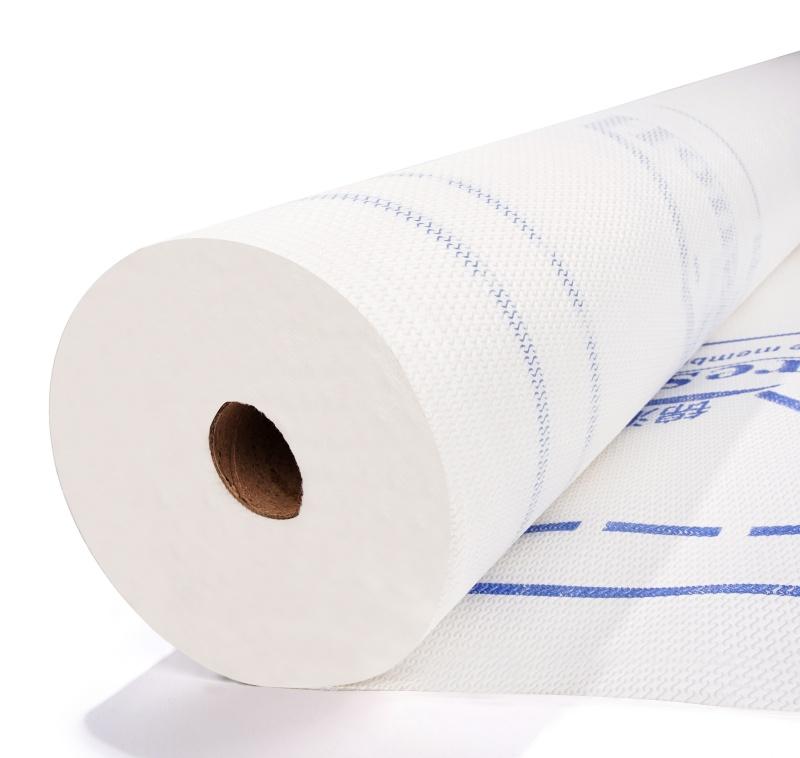
The reason waterproof breathable gear still feels clammy in rain has less to do with bad marketing and more to do with a basic hole-size paradox. Water vapor is tiny, but it condenses into droplets that are much larger and stick together. A membrane can be full of microscopic openings that let sweat escape, yet those same openings have to resist water forced through by pack straps, kneeling, or a hard downpour. That conflict never disappeared; it just gets renegotiated with every new fabric stack.
Early microporous membranes were tuned around a neat size range, but real trail conditions are messy. Oils from skin, soap residue, and fine dirt all change how a pore wets and drains. Once a pore loses its ability to shed water, breathability drops even if the fabric is not leaking. That is why some brands moved to solid hydrophilic films that move moisture by absorption and diffusion rather than through holes. The tradeoff is usually lower peak breathability in exchange for behavior that stays more predictable after months of use.
Now the pore question often gets handled as a system rather than a single layer. The face fabric, membrane, liner, and DWR finish each have to fail gracefully instead of fighting for the same job. In practice, that means designers accept small leaks or reduced vapor transfer in specific conditions and try to make sure those conditions don't overlap too often.
How Industry Leaders Test Rain, Sweat, and Long-Term Wear
Instead of relying on a single spray test, most serious outdoor brands run their shells through a sequence of climate chambers that alternate between cold rain, warm humidity, and sharp temperature drops. The point is to force fabric laminates and taped seams to expand and contract while moisture sits on the surface, revealing failures that a quick lab dunk would miss.
Sweat resistance gets a different treatment. A synthetic perspiration solution is applied under pressure against the membrane, often while the fabric is being flexed, because that mimics how a pack or harness drives moisture into the back panel. The best programs measure both liquid penetration and the time it takes for vapor to escape, since blocking one usually means compromising the other.
Long-term wear is rarely left to guesswork. Brands run abrasion drums, repeated stretch cycles, and field-test units with athletes and outdoor workers for months before a product ships. What they look for is not just obvious tearing but subtle loss of loft, coating wear at high-friction points, and seam tape lifting after repeated washing.
The Chemistry Shift Driving Waterproof Breathable Leaders Now
Waterproof breathable fabrics used to lean on one trick: a microporous fluoropolymer membrane stretched until it formed a lacework of tiny openings. That approach worked, but it left chemists with a narrow field to tweak. The current shift is molecular. Brands and material suppliers are now tuning the spacing between hydrophilic and hydrophobic segments in polyurethane and polyester copolymer films, allowing moisture vapour to move through the polymer itself rather than waiting for a pore to line up. By changing the ratio of ether to ester groups, a membrane can pass sweat vapour faster while still blocking liquid water, which means the hand feel and stretch of a jacket no longer have to be sacrificed for a high hydrostatic head rating.
The most visible pressure behind this chemistry shift is the move away from long-chain fluorinated treatments. Instead of merely swapping one water repellent for another, some mills are reworking the entire membrane stack. Electrospun polyurethane webs, for example, are being produced with controlled fibre diameters and laydown patterns to create tortuous paths that resist water entry while remaining air-permeable enough to vent moisture. Others are exploring silicone and wax-based chemistries that form a continuous, non-porous barrier with high moisture vapour transmission, relying on solubility and diffusion rather than physical holes. This changes the failure point: older garments lost performance when pores clogged with body oils or detergent residue, while newer non-porous films are far less sensitive to that kind of fouling.
There is also a quieter race in coatings and adhesives, because a membrane alone does not make a fabric work. Water-based polyurethane dispersions with carefully balanced particle size and drying behaviour are letting factories bond membranes to face fabrics without the usual solvent-heavy primers. That allows lighter laminates and cleaner production without the smell or stiffness older processes left behind. As more of these systems reach commercial scale, the leaders are not simply adding a new hangtag; they are shortening the supply chain around chemistry that can be adjusted at the reactor, giving mills faster ways to dial in breathability, stretch, and durability for specific activities rather than relying on a single membrane specification.
Regional Manufacturing Hubs Rising Through the Industry Ranks
For years, the map of American manufacturing looked fixed—coastal ports, Great Lakes steel towns, and a handful of automotive corridors. That picture is now being redrawn by a cluster of smaller regional hubs that have moved up the industry ranks through specialization, not sheer size. Places like Columbus, Indiana, have leveraged decades of diesel engine work and precision machining to become a default choice for complex heavy-equipment components, pulling in supplier investment that once would have gone to established industrial centers.
The shift is not just about cheap land or tax breaks. It reflects a tighter link between production and technical talent. Greenville, South Carolina, and the surrounding upstate have climbed steadily in advanced materials and automotive parts because local technical colleges retooled programs around the exact skills floor managers ask for. That has shortened the time from hiring to full productivity, which manufacturers now weigh as heavily as hourly wages when deciding where to add capacity.
As these hubs rise, their advantage compounds quietly. A supplier cluster forms, freight lanes become denser, and veteran workers move between plants without relocating. Dayton, Ohio, is a case in point: its aerospace maintenance and small-engine work has grown beyond the legacy of its old aviation giants, giving the region a more stable position in national rankings than it held a decade ago. The result is a more dispersed industrial map where rank depends less on historical reputation and more on day-to-day delivery reliability.
Why Some Waterproof Membranes Outlast the Products Around Them
A waterproof membrane often sits in a strange position: it protects components that look far more substantial but fail much sooner. The difference usually comes down to what the membrane is actually being asked to endure. While surrounding materials expand, flex, and rub against each other, a well-placed membrane remains relatively undisturbed. It is shielded from direct abrasion, kept away from mechanical joints, and bonded to a stable substrate. In that sense, its longevity is less about being inherently tougher and more about being spared the daily stresses that wear down everything else.
Material choice also plays a quiet but decisive role. Membranes made from high-quality polyurethane or reinforced bituminous compounds tend to shrug off the slow creep of moisture, temperature swings, and mild chemical exposure better than the adhesives, sealants, and metal fasteners around them. Those adjacent products often fail at the interface, not in the core material: a sealant dries out, a fastener corrodes, a backing board swells. The membrane, if detailed correctly, avoids those failure points by remaining continuous and flexible. That continuity matters more than raw thickness.
Installation timing adds another layer. When a membrane goes down early, before multiple trades begin working over it, it cures properly and bonds without contamination. Later materials may be rushed, installed in less-than-ideal conditions, or substituted under cost pressure. Over time, that difference in care shows up. The membrane simply has fewer compromises built into its placement, so it quietly outlasts the flashier, more visible parts of the assembly.
FAQ
It usually comes down to three things: consistency of the film or coating at scale, long-term field data across harsh climates, and the ability to co-develop custom laminates with apparel or footwear brands. A top-tier manufacturer can hold hydrostatic head ratings above 20,000 mm while still delivering moisture vapor transmission rates that keep active users dry from the inside.
Names frequently mentioned include W. L. Gore & Associates, Toray Industries, Mitsui Chemicals, Covestro, Sympatex Technologies, and Polartec. Other contenders often include Finetex EnE, Event Fabrics, Sioen Industries, and Nextec Applications, though positions shift depending on whether the ranking weights revenue, patent activity, or brand recognition.
Expanded PTFE uses a microporous structure with nodes and fibrils; it offers great durability but requires careful lamination. Monolithic polyurethane and polyester films rely on hydrophilic molecular chains to move moisture outward, which can feel less crinkly and handles stretch better. Some suppliers now combine both ideas in bicomponent constructions to balance waterproofness, breathability, and hand feel.
Performance outdoor apparel remains the anchor market, but medical protective fabrics, military garments, and technical workwear are growing quickly. Footwear is another bright spot because the flex and abrasion demands force membrane makers to rethink how they bond films to knit uppers and bootie constructions.
The pressure to eliminate perfluorinated compounds has pushed several leaders toward PFC-free water-repellent treatments, recycled polyester backers, and thinner membranes that use less raw material. The difficult part is keeping performance stable after repeated washing, which is why some companies are redesigning the membrane itself rather than just swapping the DWR finish.
Beyond lab specs, ask for wearer trial data, bond strength after repeated flex and laundering, availability of technical support during factory ramp-up, and clear documentation on chemical compliance. A supplier that cannot explain why their 20,000 mm rating behaves differently in cold rain versus warm humidity is probably not ready for demanding product lines.
Durability and stretch remain hard to maximize together. Very breathable membranes can sacrifice abrasion resistance, while heavier films may feel clammy in high-output activities. Leaders differentiate themselves through lamination chemistry and face fabric pairing as much as through the membrane chemistry itself.
Japanese and Korean producers are strong in precision film extrusion and thin coatings. European firms tend to push sustainability and performance certification. Meanwhile, Taiwanese and mainland Chinese manufacturers are moving beyond commodity production by investing in proprietary resins and faster prototyping, which is changing how quickly mid-sized brands can bring new styles to market.
Conclusion
The top 10 industry leaders in waterproof breathable membranes stand apart less by raw material access and more by how thoroughly they connect polymer formulation, film extrusion, lamination, and long-term wear validation. A membrane that passes a quick hydrostatic head check can still fail in the field, which is why the leading names rely on dynamic flex testing, rain tower protocols, and humidity-gradient measurements rather than isolated lab values. That distinction is especially visible around the core pore problem. Microporous structures must release sweat vapor while preventing liquid water from forcing through under pressure, and any imbalance invites saturation, chilling, or delamination. Companies that control pore geometry, thickness, and backing stability tend to stay ahead of imitators selling similar-looking films with far less reliability.
A second shift is chemical. As the industry moves away from long-chain fluorinated treatments, producers are reformulating polyurethane, polyester, and polyolefin membranes to preserve water repellency and seam compatibility without older chemistry. This transition is uneven, and it has given some manufacturing hubs in East Asia and Europe a chance to climb the ranks by integrating film production with garment lamination and faster line changes. The best membranes also explain why they outlast the products around them. Strong hydrolysis resistance, stable elongation recovery, and consistent bond strength after repeated washing, UV exposure, and abrasion mean the membrane remains intact long after face fabrics, stitching, or zippers have started to degrade.
Contact Us
Contact Person: Miranda
Email: [email protected]
Tel/WhatsApp: +8615231299719
Website: https://www.ihousewrap.com/