

Top Automotive Shunt Resistors for Precision Current Sensing and High-Performance Vehicles
2026-07-15
Precision current sensing is the unsung hero behind every high-performance vehicle, from torque-vectoring EVs to advanced battery management. But not all shunt resistors deliver the stability and accuracy demanded by modern automotive systems. At the heart of this challenge, Milliohm offers a range of resistors engineered to handle extreme temperatures and low-ohmic values without compromise. Here’s a closer look at the top options that keep your current measurements spot-on when it matters most.
The Quiet Struggle for Accuracy in High-Voltage Powertrains
In the race to electrify everything from sports cars to buses, engineers face an invisible enemy: measurement drift. High-voltage powertrains demand precision down to millivolts and microseconds, yet thermal swings, electromagnetic interference, and component aging conspire against stable readings. It's not a battle fought with fanfare, but in the quiet hum of a test cell, where a single erroneous sample can cascade into costly safing events or missed efficiency targets.
Consider the humble current sensor. On the bench, it performs flawlessly. But bolt it near a 400V busbar switching at 10 kilohertz, throw in a 60-degree temperature gradient, and suddenly linearity crumbles. Teams spend weeks hand-curating calibration tables, only to watch parameters shift once the pack is sealed. The struggle isn't just about hardware—it's about understanding that accuracy is a dynamic property, one that must be continuously verified against real operating conditions rather than idealized lab benchmarks.
Software often picks up where hardware leaves off, employing adaptive filtering and online impedance tracking to compensate for sensor imperfections. Yet these algorithms introduce their own latency and phase delay, creating a fragile balance between noise rejection and real-time fidelity. The quiet struggle is ultimately a human one: engineers chasing nanosecond sync across distributed measurement nodes, debating timestamp drift over coffee, knowing that every decimal place matters when you're pushing silicon carbide modules to their thermal limits.
When Milliohms Make a Megawatt Difference
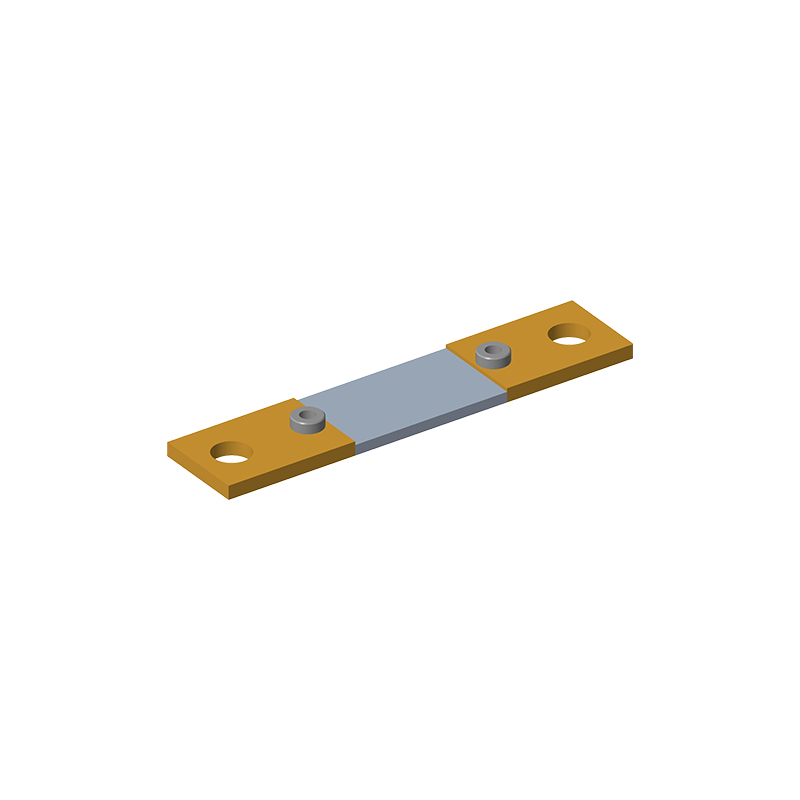
In high-power electrical systems, it’s easy to overlook the tiniest resistances. A connector here, a cable joint there—each might add just a handful of milliohms. But when currents reach thousands of amps, those milliohms become anything but trivial. A single milliohm at 1,000 amps dissipates a full kilowatt of heat. Multiply that across dozens of connections in a data center or an industrial plant, and you’re suddenly bleeding megawatts into thin air—and watching energy bills spiral.
What’s even more unsettling is how quietly these losses accumulate. A busbar joint that degrades over time might drift from 0.5 to 2 milliohms without setting off any alarms. Yet in a 3,000-amp circuit, that extra 1.5 milliohms adds 13.5 kilowatts of constant waste heat—enough to power several homes. Over a year, it’s a staggering amount of money and carbon footprint, all because of something you can’t even see.
The good news is that tackling these micro-losses often doesn’t require exotic technology. Simple steps like torque-controlled bolting on bus connections, periodic thermographic inspections, and using higher-conductivity alloys can reclaim those lost kilowatts. In industries where every percentage point of efficiency is hard-won, sweating the milliohm-level details turns out to be one of the most cost-effective upgrades you can make. After all, when you’re already managing megawatts, chasing down milliohms isn’t over-engineering—it’s just smart business.
Temperature Drift and the Art of Staying Stable
In any precision measurement system, temperature drift is the quiet saboteur of accuracy. It’s not a sudden failure but a slow, creeping shift—tiny expansions in circuit board traces, subtle changes in resistor values, the gradual warping of a sensor’s baseline. Engineers learn early that stability isn’t a component you can buy off the shelf; it’s a practice, a mindset. You battle drift with thoughtful layout symmetry, with components that age gracefully together, and sometimes with nothing more than a well-placed thermal mass. The goal is never perfection, but predictability—making the drift so linear and repeatable that it fades into background noise.
The art lies in knowing what to fight and what to accept. Active compensation circuits can chase every millidegree, but they often introduce their own flicker noise. Passive solutions—like pairing materials with opposing temperature coefficients or burying critical nodes deep inside the board—feel almost old-fashioned, yet they remain some of the most elegant ways to keep a circuit centered. There’s a certain calm in designing a system that simply doesn’t care about ambient swings, a quiet confidence that comes from watching a reference voltage hold steady while the lab air conditioning cycles on and off. It’s not flashy engineering; it’s the kind that ages well.
Stability, in the end, is about understanding the environment as much as the electronics. A breath of air from an open door, the heat of a nearby power supply, even the shadow of a passing colleague—all leave their signature. Mastering temperature drift means learning to read those signatures and designing them out, or at least making the system resilient enough to shrug them off. It’s a slow, patient craft, one that rewards curiosity and a willingness to measure, wait, and measure again. The circuits that truly endure aren’t the ones with the most expensive components, but the ones whose creators understood that stability is a conversation between physics and time.
Low Inductance, Fast Switching, and the Fight Against Noise
In the realm of power electronics, minimizing inductance is critical for achieving fast switching speeds. Parasitic inductance in circuit loops causes voltage spikes and ringing whenever a switch transitions, slowing down the edge rates and increasing switching losses. By carefully designing PCB layouts to reduce loop area and using components with low parasitic inductance, designers can push switching frequencies higher while maintaining clean waveforms. This is especially vital in modern GaN and SiC converters where dV/dt rates are extreme and every nanohenry counts.
However, fast switching brings its own set of challenges, particularly in the form of electromagnetic interference (EMI). Sharp voltage and current edges radiate noise that can couple into sensitive analog circuits or cause compliance failures. The fight against noise demands a holistic approach: soft-switching techniques, snubber networks, and strategic placement of ferrite beads all play a role. Shielding and proper grounding further help contain high-frequency emissions, ensuring that the benefits of low inductance and fast switching aren't overshadowed by a noisy, unreliable system.
Balancing low inductance and noise suppression is a delicate dance. Too much focus on minimizing loop area without considering the resulting electric field patterns can inadvertently increase capacitive coupling to other nodes. Engineers often resort to simulation tools to visualize current paths and voltage gradients, iterating on layout until both switching performance and EMI meet target specifications. Ultimately, the art lies in achieving a design that is both fast and quiet, leveraging layout tricks and component selection to outmaneuver parasitic elements.
Alloys, Construction, and the Secret Life of a Resistor
Peel back the skin of any electronic device and you'll find resistors—those tiny, often overlooked components that quietly shape currents. Their secret lies not just in their striped codes but in the very materials they're molded from. The heart of a resistor is a carefully chosen alloy, a marriage of metals like nickel and chromium, or a blend of carbon and ceramic, each concocted to offer just the right amount of electrical friction. It's this material alchemy that decides whether a resistor hums along under high temperatures or drifts subtly over time, making alloy selection a quiet art in circuit design.
Construction techniques matter as much as the materials themselves. Wire-wound resistors coil thin alloy wires into tight helixes, giving them precision and punch for power supplies, while film types deposit a whisper-thin layer of resistive paste onto a ceramic core, spiraled into a delicate path that fine-tunes resistance. Thick film variants screen-print their resistive tracks like ink on a page, each method leaving a distinct footprint on performance—noise levels, inductance, thermal stability. It's in these fabrication details that a resistor's true persona emerges, far beyond the dry numbers in a datasheet.
But the secret life of a resistor unfolds in the subtle ways it misbehaves. Heat builds and resistance wanders; stray capacitance and inductance creep into high-frequency circuits, turning a simple component into a tiny radio receiver or an unwitting filter. Some resistors crackle with excess noise, betraying the quiet signal they're meant to preserve. Even outdoor humidity can seep through a coating, nudging the resistance off its mark. Understanding these quirks turns a humble resistor from a black-box part into a character in the story of a circuit, and reminds us that no component is ever truly passive.
Real-World Stress Tests: From Racetrack to Rush Hour
Pushing a car to its limits on a closed circuit reveals raw speed and handling, but it rarely mirrors the chaos of daily driving. The real gauntlet involves stop-and-go traffic, unpredictable weather, pothole-riddled streets, and the constant hum of highway miles. Engineers now recognise that endurance isn't just about lap times—it's about how a vehicle's components hold up after years of thermal cycling, vibration, and exposure to salt, dust, and neglect. This shift in perspective has redefined what it means to build a durable machine.
From the racetrack's high-speed cornering to the rush hour's crawling pace, the contrast couldn't be starker. Racing stresses are intense but brief; real-world stress accumulates silently over time. Brakes that bite hard on the track must also withstand thousands of gentle stops without squealing. Suspension systems tuned for apexes need to absorb expansion joints without rattling the cabin apart. Even software gets tested—infotainment glitches rarely surface in a controlled environment, but they become maddening during a monotonous commute. By blending extremes, automakers create vehicles that feel predictable whether you're late for a meeting or enjoying a Sunday drive.
FAQ
An automotive shunt resistor is a low-resistance precision component placed in series with a load to measure current. It works on Ohm’s law: when current flows through it, a small voltage drop is generated proportional to the current. This voltage is then measured by an amplifier or microcontroller to calculate the current. In vehicles, they're essential for monitoring battery management, motor control, and power distribution without interrupting the circuit.
Modern vehicles rely heavily on precise current sensing for critical functions like electric power steering, advanced driver-assistance systems (ADAS), and battery management in EVs. Even tiny measurement errors can lead to inefficient energy use, safety risks, or premature component wear. High-precision shunts ensure accurate feedback for control systems, improving performance, safety, and overall reliability.
For high-performance automotive use, a shunt resistor needs a very low temperature coefficient of resistance (TCR), high power rating in a compact size, and excellent long-term stability. It must also withstand harsh environments—vibration, extreme temperatures, and thermal cycling. Materials like manganese-copper or nickel-chrome alloys are often used because they offer low thermal EMF and minimal drift over time, which is critical in motor drives and EV inverters.
In an EV BMS, the shunt must handle high continuous currents while maintaining accuracy. Key factors are resistance value (typically micro-ohms to minimize power loss), power dissipation capability, and thermal management. You also need to consider the sense connections—Kelvin (4-terminal) layout reduces lead resistance errors. Look for a component with low TCR and robust construction to ensure stable readings over the battery's lifetime, even with frequent charge-discharge cycles.
Unlike standard resistors used for limiting current or dividing voltage, shunt resistors are purpose-built for accurate current measurement. They have extremely low resistance values (often µΩ or mΩ) to minimize voltage drop and power loss, and are designed to have a precise, stable resistance with minimal thermal drift. Standard resistors aren't optimized for low TCR or high power dissipation in a small footprint, so using one for current sensing would introduce significant errors and heat issues.
Common failures include thermal overload caused by excessive current pulses, solder joint fatigue from vibration and thermal cycling, and drift in resistance due to poor material quality. Prevention starts with proper derating—choose a shunt with a power rating well above the expected load. Using temperature-resistant mounting techniques, such as direct copper bonding or heavy copper PCBs, helps manage heat. Additionally, selecting shunts with low TCR and robust terminals ensures stable performance over years of operation.
Conclusion
Precision current sensing in modern vehicle powertrains hinges on shunt resistors that can quietly handle the chaos of high-voltage, high-current environments. The struggle for accuracy begins at the milliohm level, where a tiny resistance value turns massive currents into measurable voltage drops without sacrificing efficiency or generating excessive heat. But raw resistance isn't enough—these components must battle temperature drift through clever alloy choices and construction techniques that keep readings stable from frigid starts to scorching engine bays. Manganin and Zeranin alloys, for instance, offer remarkably flat temperature coefficients, while four‑terminal Kelvin connections reject lead and contact resistance that would otherwise corrupt the signal. In the world of fast‑switching inverters and DC‑DC converters, low inductance becomes non‑negotiable, as any stray magnetic field can couple noise into the measurement. Designs like the metal element with folded current paths or coaxial structures fight parasitic inductance so that the shunt itself doesn't become the limiting factor in a control loop. Ultimately, the “secret life” of a shunt resistor distills into a tightrope walk between low resistance, minimal temperature drift, high precision, and immunity to electromagnetic interference—all while enduring relentless mechanical vibration and thermal cycling.
Real‑world validation is where theoretical performance meets brutal honesty. Accelerated life tests in laboratories only tell part of the story; the true test comes from racetrack telemetry and bumper‑to‑bumper rush‑hour traffic. On a track, the shunt sees shock loads from aggressive regenerative braking and full‑throttle acceleration in seconds, all while ambient temperatures can swing dramatically. In stop‑and‑go commuting, it must survive hundreds of thermal expansion cycles per trip without cracking a weld joint or drifting out of tolerance. The best automotive‑grade shunt resistors—like those utilizing bulk‑metal foil or electron‑beam‑welded shunts—combine a near‑zero temperature coefficient of resistance (TCR) with construction that minimizes thermoelectric EMFs at dissimilar metal junctions. Such ruggedness means that the battery management system or motor controller can rely on current data that remains truthful over years of service, safeguarding powertrain health and squeezing every watt of usable energy from the battery. In high‑performance vehicles, where each milliohm translates to a megawatt difference in controlled power delivery, shunt resistors quietly orchestrate the delicate symphony of efficiency and acceleration.
Contact Us
Contact Person: Yuying Gao
Email: [email protected]
Tel/WhatsApp: +86 18926013721
Website: https://en.milliohm.net/