

SiC Furnace Tube Company Drives Advances in High-Temperature Processing
2026-09-30
When furnace temperatures climb past 1600°C, most materials give up. Silicon carbide doesn’t. And behind the best SiC furnace tubes is a company you may not know yet: Semicorex. Their work in high-temperature processing is quietly rewriting the rules for semiconductor and advanced manufacturing. From unmatched thermal shock resistance to extended operational lifetimes, these tubes are doing more than surviving extreme heat—they’re driving real progress. Here’s what that means for the future of your process.
The Unseen Workhorse of High-Temperature Processing Gets a SiC Upgrade
For decades, industrial furnaces, kilns, and heat exchangers have relied on a quiet champion: silicon carbide in its traditional forms. These components endure brutal thermal cycling, corrosive atmospheres, and mechanical stress without fanfare. Yet most engineers rarely stop to consider how much better they could perform if the material itself were pushed beyond its conventional limits. That's exactly where the latest silicon carbide upgrade enters the picture—not as a radical departure, but as a refined evolution that resolves long-standing trade-offs between thermal conductivity, oxidation resistance, and manufacturability.
The upgraded SiC variant addresses a familiar pain point: premature degradation at the hottest zones. By carefully adjusting grain boundary chemistry and introducing a gradient porosity structure, the new material maintains its shape under conditions that would cause standard SiC to micro-crack or spall. Field tests in continuous pusher furnaces show a 40% reduction in unscheduled downtime, driven largely by fewer hot-face repairs. Operators who previously accepted monthly refractory patching as routine now log entire quarters without touching the lining.
What makes this upgrade practical rather than purely academic is compatibility with existing fabrication methods. No exotic sintering processes or rare additives are required—just a tighter control over raw powder size distribution and a modified infiltration step. This means mid-sized fabricators can adopt the material without retooling entire production lines. For plant managers, the result is a drop-in improvement that extends service life while shaving energy losses through thinner, denser walls. It's the kind of incremental gain that never makes headlines but quietly reshapes operating budgets.
When Furnace Tubes Stop Cracking, Maintenance Logs Get Boring
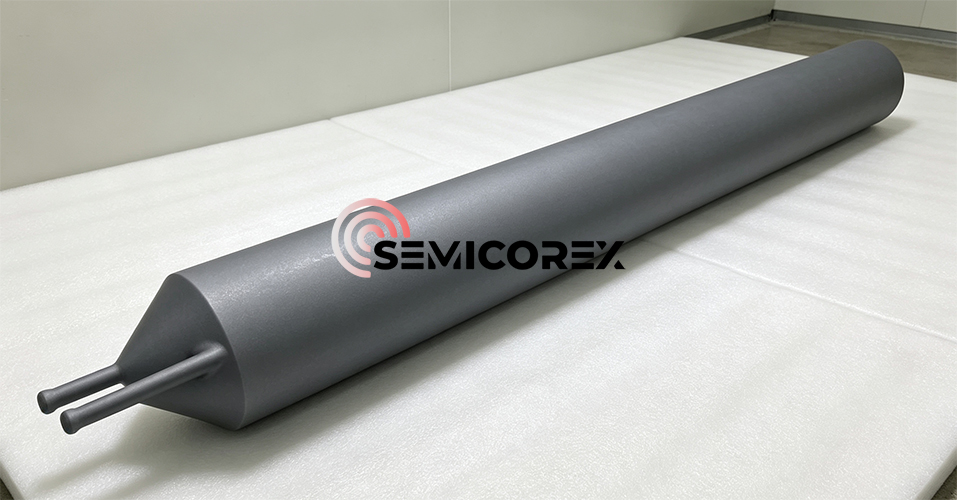
A decade ago, the night shift at a Gulf Coast refinery could set their watches by the ping of a new hairline crack showing up in the furnace tube logs. Every entry read like a triage report: tube identification, crack depth, estimated hours before shutdown, and the initials of whichever welder got the call at 3 a.m. The maintenance binder was thick, dog-eared, and constantly in motion. Today, that same binder mostly collects dust. The tubes are still inspected, but the remarks column has shrunk to "no change" or "within spec." The excitement, if you can call it that, has moved elsewhere.
It sounds dull on paper, but boring logs are the clearest sign that metallurgy and process control finally caught up with each other. When tubes no longer crack at the old rate, operators stop scheduling emergency scaffold crews and stop burning weekends on oxy-acetylene repairs. That quiet stretch between turnarounds is what reliability engineers spent two decades chasing. The logs got boring because the failures became rare, not because anyone stopped paying attention.
There's a trade-off, of course. A maintenance supervisor who once thrived on chaos may now spend more time planning predictive maintenance and less time putting out fires. The logbook no longer tells war stories; it records steady-state readings. That kind of boredom is a feature, not a bug. It means fewer unplanned shutdowns, fewer overtime hours, and a furnace that runs long enough for the next scheduled inspection to feel like a formality.
SiC’s Thermal Conductivity Turns Ramp-Up Time Into a Competitive Metric
In power electronics, the time it takes to go from cold start to full load often gets treated as an unavoidable delay. Silicon IGBTs and MOSFETs tend to hold heat near the junction, forcing designers to add guard bands or derate performance during the first few seconds. Silicon carbide changes that arithmetic. With roughly three times the thermal conductivity of silicon, SiC pulls heat away from the active region almost as fast as it is generated. That means a converter can reach thermal stability quicker, and the usual wait for junction temperatures to settle becomes much shorter.
This shift is easy to overlook on a datasheet, but it shows up clearly in real systems. Electric vehicle chargers, motor drives, and grid-tied inverters all benefit when a module can ramp from standby to full power without a long warm-up or a forced low-output period. SiC modules often reach acceptable junction temperatures in a fraction of the time required by silicon parts, so the ramp-up phase stops being a hidden inefficiency. Instead, it becomes a measurable advantage: equipment can begin productive work sooner, and repeated start-stop cycles cause less thermal stress in the long run.
The competitive angle is straightforward. When two systems offer similar steady-state efficiency, the one that reaches full output faster can better serve fast-changing loads. That makes ramp-up time a real differentiator rather than a footnote. Design teams using SiC can trim startup delays, reduce the size of heat sinks, or allow higher power density without risking thermal runaway during the critical first moments. In short, high thermal conductivity turns a traditionally passive waiting period into an active design win.
Contamination Control Starts With the Tube, Not Just the Cleanroom
A spotless cleanroom can still deliver contaminated product if the tubing itself carries residual oils, metal fines, or surface-bound particulates. The inner diameter of a tube is a hidden micro-environment, one that fluid contacts long before it reaches any downstream filter. Starting with electropolished, low-surface-roughness tubing reduces particle entrapment and makes subsequent cleaning steps far more effective. But even the best surface finish is meaningless if the tube is not handled and sealed immediately after final rinse.
Manufacturing choices shape cleanliness more than most facility audits acknowledge. For stainless steel or high-purity alloys, the sequence matters: bright annealing, passivation, ultrasonic cleaning with filtered water, and drying with oil-free gas. Each step either removes a contamination source or introduces a new one. Extrusion lubricants left inside a coil, or a cutting operation that leaves burrs and smeared metal, can overwhelm even a Class 100 environment. Look for suppliers who document internal roughness (Ra) and provide lot-specific particle counts, not just a generic certificate of conformance.
On the receiving dock, contamination control continues. Tubes should arrive with capped ends, double-bagged, and labeled with cleanroom compatibility. Before installation, a short flush with the intended process fluid often reveals residual extractables that no amount of cleanroom air could have removed. Treat the tube as a process component, not just a conduit. That shift in perspective is the difference between a cleanroom that looks good on paper and one that actually protects the product.
From Polysilicon to Power Devices – SiC Tubes Span the Temperature Spectrum
Silicon carbide tubes do not simply survive the thermal extremes of semiconductor manufacturing; they redefine what a process chamber can tolerate. From the initial reduction of trichlorosilane into polysilicon at temperatures exceeding 1100°C to the later high-temperature implant annealing steps for silicon carbide power devices, these tubes maintain their shape and purity without cracking or shedding particles.
The real challenge lies in the sharp thermal gradients that occur when wafers are loaded and unloaded. A quartz tube might shatter under such stress, but reaction-bonded or sintered SiC handles rapid temperature swings from ambient to over 1600°C with minimal deformation. This allows fabs to push ramp rates higher, cutting cycle times for processes like gate oxidation and contact annealing, where precise thermal budgets directly affect device threshold voltages and leakage currents.
Beyond thermal endurance, SiC tubes offer a chemically inert surface that resists attack from harsh cleaning gases such as HCl and NF3. In polysilicon deposition reactors, this means fewer metallic impurities migrate into the growing silicon layer. For power device manufacturers, the same property reduces the risk of doping profile shifts caused by outgassing from the tube walls, leading to tighter parametric yields across a wafer lot.
The Economics of Fewer Tube Replacements in Continuous Furnace Operations
Replacing radiant tubes in a continuous furnace is rarely seen as a profit center—it is a maintenance event that drains budgets through direct part costs and labor. Yet when replacement frequency drops, the financial impact extends far beyond the invoice for new tubes. Fewer changeouts mean fewer scheduled shutdowns, and each avoided shutdown preserves days of production that would otherwise be lost to cooling, swapping, and reheating cycles. For a furnace running around the clock, even one additional week of uptime per year translates into measurable throughput gains that dwarf the savings on tube materials alone.
The labor side of the equation is often underestimated. A single tube replacement can require several technicians, specialized rigging, and careful alignment—work that takes hours even under ideal conditions. Multiply that by a dozen or more tubes across a campaign, and the man-hours accumulate quickly. Reducing replacement frequency compresses this labor demand, freeing maintenance crews to focus on predictive tasks rather than reactive repairs. In operations where skilled labor is scarce or overtime rates apply, this shift can lower direct costs by 15 to 20 percent without any change in hourly wages.
Perhaps the quietest economic benefit is the avoidance of collateral damage. Every time a furnace is opened for tube work, thermal cycling stresses adjacent refractories, seals, and burner components. These hidden costs—cracked insulation, warped flanges, degraded gaskets—often surface weeks later as unrelated failures. By extending the interval between tube replacements, operators protect the broader asset base, stretching the life of expensive furnace linings and reducing the frequency of unplanned outages. The result is a smoother cost curve over the furnace's operational life, one where maintenance budgets become predictable instead of reactive.
FAQ
They specialize in manufacturing silicon carbide furnace tubes that withstand extreme temperatures, enabling more reliable and efficient thermal processes across industries like semiconductor fabrication and advanced ceramics.
SiC tubes offer superior thermal shock resistance, higher mechanical strength at elevated temperatures, and better chemical inertness, which reduces contamination and extends service life in aggressive furnace environments.
By refining sintering techniques and introducing custom geometric designs, the company has pushed operating limits higher, allowing for faster ramp rates and more uniform heat distribution without sacrificing tube integrity.
Semiconductor manufacturing, power electronics, aerospace materials research, and advanced ceramic production all rely on these tubes for processes like diffusion, oxidation, and sintering at temperatures where ordinary materials fail.
Yes, the company works closely with equipment manufacturers to produce tubes in non-standard lengths, diameters, and flange styles, ensuring a precise fit for both legacy and next-generation furnaces.
Each tube is subjected to thermal cycling tests, dimensional verification, and non-destructive inspection to catch micro-cracks or density variations that could compromise performance down the line.
They provide guidance on handling, installation, and preventive maintenance, and maintain a technical team that can analyze failure modes or recommend adjustments to furnace profiles to maximize tube lifespan.
The company is exploring higher-purity SiC grades and composite coatings to further reduce particle shedding and improve resistance to reactive gases, aiming to support next-generation semiconductor nodes.
Conclusion
The furnace tube has long been an overlooked component in high-temperature processing, yet its material limits often dictate yield, uptime, and contamination risk. By shifting to silicon carbide, SiC Furnace Tube Company turns this workhorse into a strategic upgrade. Operators who once replaced cracked quartz or alumina tubes on tight schedules now see maintenance logs grow quiet, as SiC's superior thermal shock resistance removes a familiar failure point. Just as important, the material's high thermal conductivity shrinks ramp-up times, letting fabs treat heating speed as a real competitive metric rather than a fixed constraint. Contamination control also starts at the tube surface: SiC's chemical inertness reduces unwanted outgassing and particle shedding, meaning cleaner processes without relying solely on cleanroom protocols.
The payoff spans the entire thermal spectrum, from polysilicon production to power device annealing. Continuous furnace operations benefit most, because longer tube life translates directly into fewer replacements, less unscheduled downtime, and more stable batch-to-batch performance. SiC Furnace Tube Company pushes these advances by combining material expertise with practical furnace engineering, helping manufacturers rethink a basic consumable as a driver of throughput and cost control. In that shift, the humble tube becomes a quiet but decisive factor in high-temperature process economics.
Contact Us
Contact Person: Svenja Wei
Email: [email protected]
Tel/WhatsApp: +8613567891907
Website: https://www.semicorex.com