

Professional Continuous Still Essentials Every Distiller Should Know
2026-09-11
From the steady hum of a well-tuned column to the delicate balance of vapor and reflux, continuous stills demand more than just a passing familiarity. Whether you’re scaling up production or chasing a cleaner, more consistent spirit, the line between mediocre output and masterful distillation often comes down to a handful of essentials most distillers overlook. This guide strips away the noise and focuses on what actually matters—and yes, we’ll touch on how DYE fits into that equation without turning it into a sales pitch. If you’ve ever wondered why your continuous run falls flat or how to push efficiency without sacrificing character, you’re in the right place. Let’s get into the details that separate the professionals from the hobbyists.
Why Continuous Stills Quietly Win on Consistency and Yield
Batch distillation gets the headlines, but continuous stills earn their keep through a quieter kind of excellence. The steady flow of feedstock, constant temperature gradients, and uninterrupted vapor-liquid contact strip away the variability that plagues start-stop operations. Operators aren't chasing equilibrium after every shutdown or compensating for thermal lag. Instead, the column finds its rhythm and holds it, hour after hour, which means the spirit drawn off at noon matches the spirit drawn off at midnight.
That stability translates directly into yield. In batch runs, a meaningful fraction of alcohol stays trapped in the tails or gets smeared across cut points when conditions drift. A well-tuned continuous column keeps those fractions moving to where they belong, pulling more ethanol from the same grain bill. There's no heroic middle cut to rescue, no feints tank filling with usable alcohol destined for reprocessing. The math is simple: less wasted vapor, fewer thermal cycles, and a tighter hold on the target proof add up to more liters per ton of raw material.
None of this makes for a romantic story, and that's the point. Consistency and yield don't come from dramatic adjustments or artisanal intuition. They come from designing out the pauses, the swings, and the reheats that quietly eat into efficiency. Continuous stills win because they make the boring choice the profitable one.
Feedstock Flow and Preheating Missteps That Ruin a Run
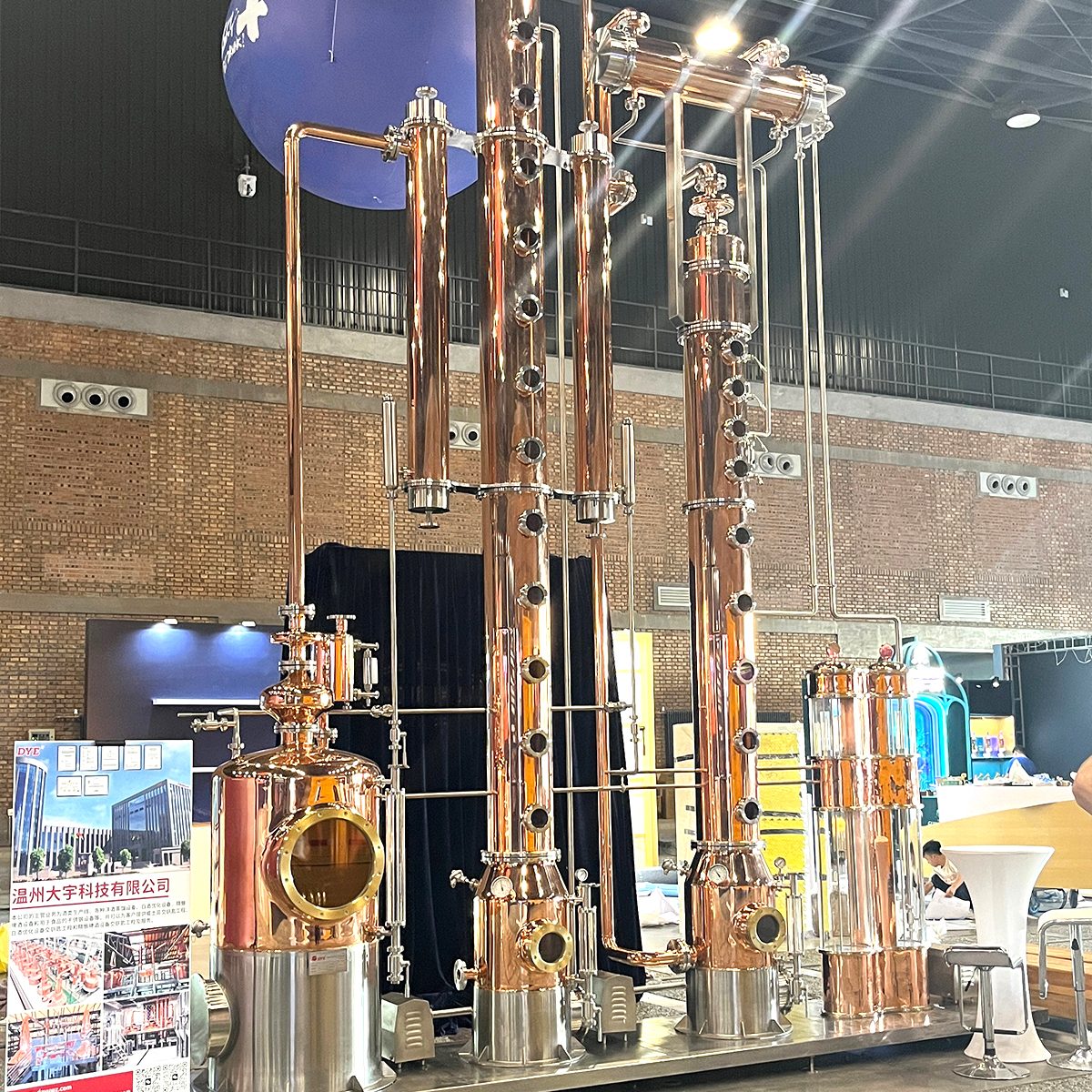
Uneven feedstock flow is one of those silent killers that doesn't announce itself until the temperature profile starts drifting. When the feed rate fluctuates even a few percent, the whole thermal balance shifts: some zones run lean and overheat while others choke on excess material. Operators often blame the controller tuning, but nine times out of ten it's a mechanical issue—worn auger flights, a half-clogged rotary valve, or bridging in the hopper. The result is usually a run that looks fine for the first hour, then slowly degrades into off-spec product and carbon buildup that nobody wants to clean out.
Preheating mistakes can be just as damaging, and they usually come down to impatience. Ramping the feedstock temperature too fast causes thermal shock at the inlet, which can crack ceramic liners or warp metal feed tubes. Skipping the soak period at a lower setpoint means the core of the material never reaches the intended temperature, so when it finally hits the reaction zone it behaves differently than the pilot data predicted. A common misstep is trusting a single wall-mounted thermocouple while the bulk of the feedstock is still cold; the surface reads warm, everyone gives the green light, and then the run stalls midway because the material's viscosity is all over the place.
The worst failures often happen when flow and preheating are both slightly off in a way that compounds. A minor feed restriction reduces throughput, which increases residence time in the preheater, which then overheats the material, which makes it stickier and further restricts flow. Before long the system is oscillating and nobody can pin down the root cause because each sensor is telling a slightly different story. Taking fifteen minutes to verify actual feed rate with a catch test and checking the temperature at multiple points along the preheater would prevent most of these run-ending headaches.
Steady-State Operation: Reading Pressure and Temperature Like a Pro
Once a system settles into steady-state, the numbers on your gauges stop jumping around and start telling a coherent story. But reading that story takes more than a quick glance. You need to know which values matter for your specific setup, whether it's a refrigeration loop holding a constant suction pressure or a hydraulic line maintaining stable oil temperature. Small drifts that look harmless on a digital readout can point to slow leaks, a fouled heat exchanger, or an expansion valve that's losing its edge. Get comfortable with the baseline first—run the system under normal load for a while and log the pressures and temperatures at several points. That baseline is your reference for everything that follows.
The trick is to stop treating pressure and temperature as separate readings and start seeing them as two sides of the same coin. In a closed loop, a pressure change almost always drags a temperature change along with it, or vice versa. For example, a gradual rise in discharge pressure with a steady discharge temperature often means restricted airflow or a dirty condenser coil. If both pressure and temperature climb together, you might be looking at an overcharge or a failing component adding heat. Learn to cross-check the pair against the manufacturer's expected operating envelope. When the two readings agree with each other but sit outside the envelope, you have a system problem. When they disagree—say, high pressure but low temperature—you have a sensor or flow issue, and trusting one gauge over the other will lead you astray.
Finally, document everything in a way that lets you spot trends weeks before they become breakdowns. A single steady-state snapshot is useful, but a series of snapshots taken under similar load conditions is gold. Note the ambient temperature, the load percentage, and any recent maintenance. Over time, you'll learn your system's quirks: maybe the suction pressure always drops a few psi in the afternoon, or the oil temperature runs a bit warm after a filter change. Those patterns become your early warning system. When a reading drifts outside its normal pattern—even if it's still within broad acceptable limits—that's your cue to investigate before the steady state quietly becomes an unsteady one.
Column Packing and Plate Choices That Shape Your Spirit's Character
The shape of a finished spirit often starts inside the column, where packing and plate selection quietly steer esters, fusel oils, and sulfur compounds. Copper mesh encourages catalytic reactions that strip volatile sulfur and bind fatty acids, lending a rounder, less prickly grain character to whiskey or rum. Ceramic or stainless structured packing, by contrast, is nearly inert, so it preserves raw fermentation notes and offers higher theoretical plates for cleaner neutral spirits.
Plate style matters just as much as the material. Bubble cap trays hold a deeper liquid bed, which favors ester formation and gives a distiller more control over cuts at the cost of some smearing. Perforated plates run faster and add less copper contact, pushing the profile toward a leaner, sharper distillate. Valve plates sit between the two, balancing throughput with gentle rectification.
Experienced operators rarely switch packing or plates in isolation. A move from copper mesh to hybrid ceramic below a copper catalyst section can lower sulfur while keeping fruit esters intact. Likewise, replacing a bubble cap section with high-efficiency structured packing can raise proof and narrow the heads cut, but it often strips some of the oily, spicy depth that older plate designs preserve. The real art lies in matching the column internals to the raw material, not chasing a single 'best' configuration.
The Sounds and Signs of a Continuous Still About to Fail
Before the failure announces itself, there are small acoustic betrayals. The floorboards tick in a rhythm that no longer matches the house’s settling; a radiator exhales a wet sigh at odd hours. From behind the drywall, a faint grind repeats every few minutes—not enough to alarm, but enough to make a sleeping dog lift its head. These sounds are the background noise of a structure holding its breath, a continuous still that has started to argue with its own weight.
The visual signs are quieter and easier to dismiss. A hairline crack travels from the corner of a window frame toward the ceiling, pausing at a nail as if reconsidering. Dust sifts down from the crown molding in a fine, slow drizzle, even when no one walks overhead. Small objects—a pen, a paperclip, a button—keep appearing on the floor beneath a shelf that hasn’t been touched. The stillness is not empty; it is accumulating pressure, the way ice thickens on a lake before a spring thaw.
Then comes the brief interval when everything seems to correct itself. The ticking stops, the crack closes by a millimeter, the dust settles. It’s a trick of temperature or humidity, and it buys another night of uneasy sleep. But the signs have already been read, and the failure, when it comes, will feel less like an explosion than a release—a long-held exhale as the continuous still finally lets go.
Trimming Energy and Water Waste Without Touching Output Quality
Most facilities treat conservation as a trade-off: dial back a rinse cycle, lower a temperature setpoint, and you inevitably sacrifice some degree of cleanliness or throughput. That assumption falls apart once you start looking at where energy and water actually go. Pumps sized for a peak demand that never arrives, spray nozzles clogged just enough to cut pressure but not enough to be obvious, steam traps leaking through the night while nobody is watching—these are the quiet drains that never show up in a quality inspection because they were never tied to one. The fix isn't to run leaner on the process itself, but to map the support systems around it and remove the slack that was never doing useful work.
A practical starting point is to separate what the production line requires from what the building systems deliver. A cooling tower might be circulating 20 percent more water than the heat load demands simply because the float valve was adjusted years ago and no one has revisited it. Rinsing nozzles might be running at full pressure when half that would still meet spec, but without a flow meter at each header, the waste stays invisible. The key is instrumentation that tracks consumption per unit of output, not just aggregate utility bills. Once you see gallons per finished part or kilowatt-hours per batch in near real time, the anomalies stand out—and fixing them rarely touches anything that affects the product.
There's a second layer that's even easier to overlook: the timing of operations. Boilers kept hot over a weekend when production is shut down, air compressors cycling against closed valves, sanitation crews running hot water hoses at full blast for tasks that need only a warm rinse—these habits get baked into shift routines and labeled as "how we've always done it." Changing them doesn't require new equipment or process redesign; it requires someone to ask whether the utility is actually doing anything for the output at that moment. In most cases, trimming energy and water waste means reclaiming the gap between what the product genuinely needs and what the equipment was left doing out of habit. Output quality doesn't move because the process itself was never the target—only the waste around it was.
FAQ
A continuous still never stops feeding wash and drawing off spirit, so the run is steady rather than batch-by-batch. The main practical difference is that you can strip and rectify in one pass, while a pot still usually needs a second distillation to hit a clean, high-proof spirit. That means continuous stills suit large-volume, consistent products like grain whisky or neutral alcohol, but they demand tighter control over feed rate, steam, and draw points.
Focus on the feed preheater, the analyzer column, the rectifier column, condenser, and the draw plates or valves. Check for fouling on the plates, weeping or flooding, vapor leaks around manways, and any drift in temperature sensors. On a practical level, most problems start with a clogged feed line or a stuck reflux splitter, so those deserve extra attention.
Higher reflux sends more condensed liquid back down the column, which increases separation and can produce a lighter, cleaner spirit with higher ABV. Lower reflux lets heavier congeners carry over, giving more grain or molasses character. The ratio isn't just a purity knob; it also affects the energy bill, so experienced operators adjust it while watching both the top-plate temperature and the sensory profile at the draw point.
Preheating the incoming wash with hot spent lees or vapor reduces thermal shock inside the column and helps stabilize the temperature gradient. If cold wash hits the analyzer column, it can collapse the vapor flow and force the still into surging. So preheating protects the column hydraulics and makes the separation more predictable, not just cheaper to run.
Drawing too early or too late on the plate where fusel oils concentrate is common. Some operators also try to remove them too aggressively, which pulls ethanol with the side draw and lowers yield. A better approach is to find the temperature band where the oils layer and settle, draw slowly, and let the separator do its job instead of chasing a completely clean top-plate reading.
Flooding usually shows up as a sudden rise in differential pressure across a column section, erratic top temperature, and liquid carryover in the vapor line. Weeping is the opposite: plates don't hold enough liquid, so separation drops and the distillate proof falls even with the same steam input. Tapping the column or checking sight glasses often reveals the difference, but the pressure drop across the column is the most reliable early warning.
The feed plate sets where the incoming wash first meets the rising vapor. Too high and you lose ethanol to the bottom; too low and you waste energy heating water and encourage unwanted flavor carryover. The best position depends on the wash strength and the target congener profile, so moving the feed point a plate or two can noticeably shift the spirit's body.
First, avoid chasing the temperature with the reflux valve; that often makes the column swing harder. Reduce the feed rate to match the lower steam, keep the base level stable, and let the column settle into the new vapor rate. If the fluctuation is frequent, check for a faulty steam trap or condensate backing up, because that can mimic a fuel supply problem.
Conclusion
Most distillers who run continuous equipment eventually realize the real advantage isn't speed alone—it's the tight repeatability that batch stills rarely match. But that repeatability only holds if the liquid entering the column is preheated correctly and fed at a steady rate. A fluctuating feedstock flow or a cold slug hitting the plates throws off the temperature gradient fast, and once that happens you're chasing the run instead of guiding it. Watching the pressure drop across the column and the mid-column temperatures matters more than any single reading; small shifts there tell you about loading, fouling, or a preheater that's falling behind long before the spirit quality tanks.
Column internals are another quiet lever. The choice between structured packing and sieve plates, along with the number of theoretical stages, shapes more than just proof—it sets where esters and heavier alcohols end up. You can hold output steady while cutting energy and cooling water if you trim excess reflux and monitor the reboiler duty against the feed's thermal state. And when something starts to go wrong, it rarely announces itself with a bang; listen for a change in the pump cadence, a rising hiss near the draw plate, or a subtle vibration in the vapor line. Those early noises, combined with a pressure reading that won't settle, tell you a continuous still is heading toward a shutdown you'd rather avoid.
Contact Us
Contact Person: Ada Xu
Email: [email protected]
Tel/WhatsApp: 0577-86806088
Website: https://www.dayuwz.com/