

PPGI Manufacturer Production Practices That Directly Affect Your Supply Chain
2026-11-26
Supply chains rarely break because of one large failure. More often, they weaken through small production choices made long before a container ships. For PPGI buyers, coating consistency, pretreatment quality, and a mill’s ability to hold tolerances under real deadlines all shape landed cost and rejection rates. LANYUN focuses on these overlooked pressure points, and this article unpacks the production practices that directly determine how predictable your supply chain really is.
Raw Coil Substitutions That Happen Before You See the Mill Test
Some material substitutions never show up on the paperwork you receive. A service center or mill may pull a different coil from inventory because the ordered heat is buried, delayed, or already allocated to another customer. The replacement coil gets loaded onto the truck, and the mill test report still references the original heat number. Because the change happens days before the document reaches your desk, the mismatch is easy to miss.
The replacement is rarely a completely different grade. More often it sits just inside the same specification, but with a different chemistry path or mechanical result. A coil meant for one customer might carry higher residuals, a coarser grain structure, or a slightly thinner zinc coating. These differences do not always cause immediate failure. They show up later as inconsistent forming, weld porosity, or paint adhesion problems across what should be the same lot.
Checking the actual coil tags against the MTR before the material enters production is the only way to catch most of these swaps. Record the heat number, coil number, and weight from the physical label, not from the delivery ticket. If the numbers do not match the report, stop and get clarification. A few minutes at receiving can prevent a much larger headache downstream.
Coating Weight Drift During Extended Production Runs
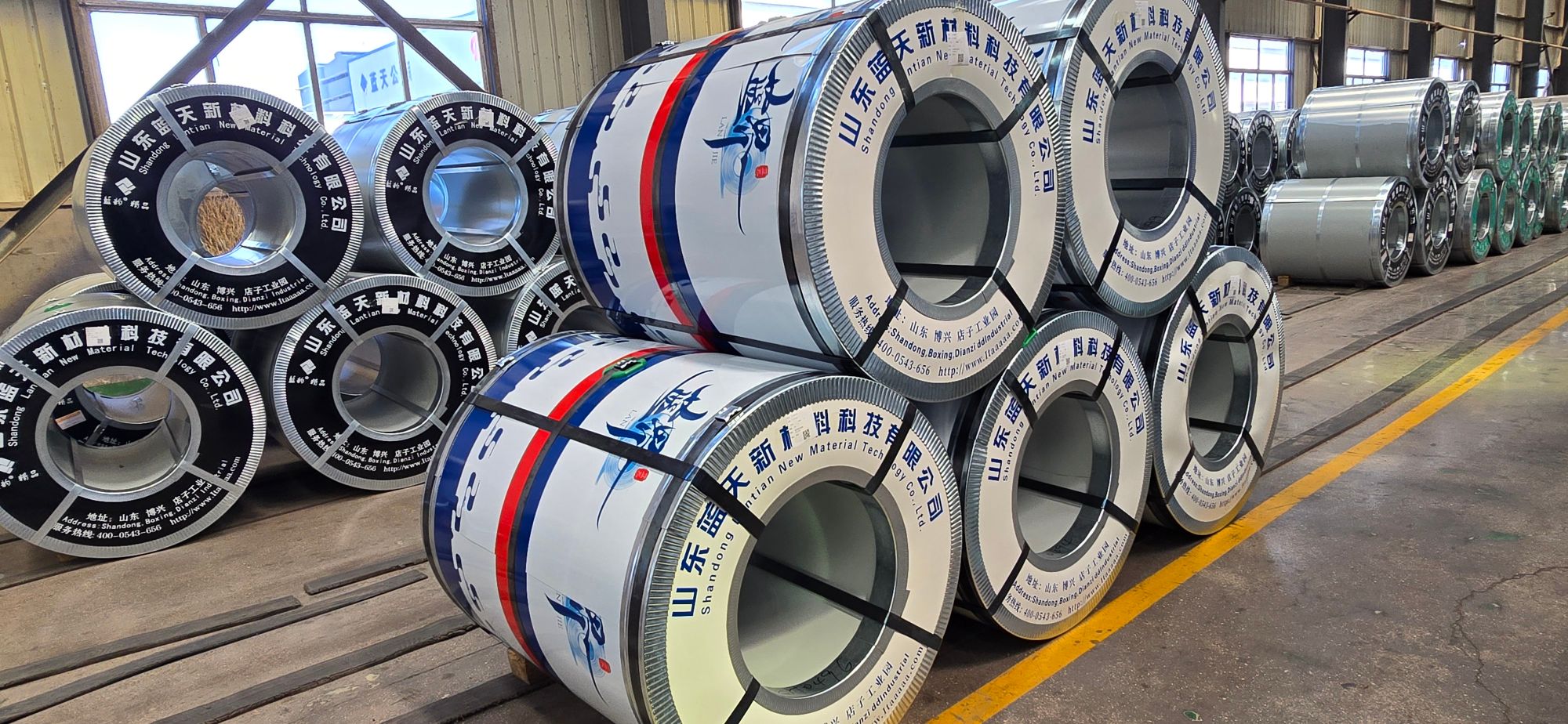
Extended production runs make coating weight drift easy to overlook because the change unfolds gradually across hundreds or thousands of feet of substrate. A line that begins with a stable two-micron film can slip to two-point-three microns without a single alarm, simply because roll pickup increases with bath temperature or solids content creeps upward through evaporation. By the time the lab result arrives, several coils may already be outside the acceptable band.
Some of the most common drivers are mechanical rather than chemical. Metering roll wear, slight changes in nip pressure, and bath level decline alter the amount of coating delivered before the substrate ever reaches the oven. In other cases, line speed adjustments made to manage oven temperature create a mismatch between pump output and coat weight settings. These small shifts tend to compound because operators compensate for one variable while another is still moving.
Keeping the process within range requires checking both wet film and dry coat weight at short intervals, not just after a finished run. A simple control chart tied to measured grams per square meter can reveal a drift pattern early enough to adjust pump speed, gap clearance, or solids content before it becomes a full deviation. When the trend is traced back to bath evaporation or roll wear, the correction should be tied to the cause rather than repeatedly trimming the same setting.
Cure Oven Profiles and the Adhesion Issues They Hide
A cure oven's air temperature reading can look stable while the part itself never reaches the same thermal state. Heavy castings, stacked panels, or thick bosses lag behind the surrounding air, and the chemical crosslinking that builds adhesion may stall in those cooler regions. You only notice it later when a routine crosshatch test lifts coating from what appeared to be a properly baked surface.
Dwell time at peak temperature is another number that gets flattened into an average. Some areas of a load may brush the target temperature for a few seconds and then drop, which is enough for the recorder but not enough for full interfacial bonding. Meanwhile, thinner edges and exposed flanges can sit at elevated temperature long enough to become brittle at the coating-substrate boundary. The result is a part that passes visual inspection but fails under flex or impact.
Airflow patterns and load density can also distort the actual cure profile. A tightly packed rack creates thermal shadows where the oven's sensors read the moving air, not the surface temperature of parts in the middle of the stack. Those hidden deviations rarely show up as uncured film; they appear later as poor wet adhesion, edge lifting, or corrosion that starts beneath an otherwise intact coating.
Line Speed Changes That Alter Surface Texture Consistency
Extrusion line speed rarely gets the attention it deserves, yet it quietly reshapes how a surface feels under the fingertips. Push the line faster and the polymer has less time to relax against the die wall, which can smooth out minor melt fractures or leave a faint drag pattern that dulls the intended texture. Slow the same run down and the material may swell or sag just enough to deepen grooves, sharpen micro-ridges, or create an uneven sheen that shifts from batch to batch. Operators often compensate with temperature tweaks, but speed remains the hidden lever behind that “good roll” versus the one nobody wants to touch.
What makes this tricky is that the effect is not linear. A modest increase of a few meters per minute might do almost nothing on a stable grade, then suddenly push a filled compound past its shear threshold, producing a chalky, inconsistent matte finish. Conversely, dropping the speed to fix one texture defect can introduce another, such as subtle die lines or a wavy profile that reads as rough even when the measured Ra stays within spec. The practical fix is to map speed windows for each resin lot, not just each product family, because recycled content and additive variations shift the point where surface texture starts to drift.
Floor teams usually learn to read the extrudate by eye and by thumbnail drag, but a more reliable approach pairs line speed with a quick gloss or roughness check at the winder. When a texture starts to wander, the first question should be whether the speed drifted from the validated window, not whether the die needs cleaning. Keeping a simple log of speed, melt pressure, and tactile rating builds a reference that turns surface consistency from a guessing game into a repeatable setting.
Color Changeover Cleanliness Between Your Orders
Pigment residue has a way of lingering in places you wouldn't expect, so we treat each changeover as a fresh start rather than a quick rinse. Lines are flushed, nozzles wiped down, and any shared contact points checked before the next batch moves through. That extra pass is what keeps a soft cream from arriving with a faint trace of the previous blue.
Between every order, the equipment gets a physical inspection along with the standard purge cycle. If a color is known to stain or cling, we run a dedicated cleaning sequence and adjust the timing instead of relying on a fixed setting. Small differences in viscosity and pigment load matter, and the changeover routine reflects that.
Cleanliness during color changeover isn't just about what you can see. A visually clear line can still carry enough leftover tint to shift the next shade, so we use test pulls and scrap material to confirm the switch before your actual items are made. This keeps the color you approved from being compromised by the order that came before it.
Packing Density Decisions That Affect Arrival Condition
Getting the packing density right is less about filling every gap and more about controlling how force travels through the carton. When items are pressed too tightly, the outer box can feel solid, but the contents lose the small amount of give that absorbs vibration and drop shock. A dense pack may survive the first impact cleanly, then transfer the second or third impact straight into a corner, a hinge, or a finished surface. The result often shows up as cracked plastic along a seam or a scuffed edge that was never touched during packing.
On the other end, leaving too much air inside invites a different kind of damage. Loose contents shift in transit, and what starts as a minor rub becomes repeated abrasion against neighboring pieces or the inner walls of the box. Heavier items can drift toward one side, changing the center of gravity and making the carton more likely to land badly on a conveyor or in a delivery van. In that sense, density is also a balance problem: a package that is not stable before it is sealed will not become more stable on the road.
The more useful check is to simulate the boring, repetitive part of shipping rather than the dramatic drop. Lift the sealed carton, tilt it, set it down firmly, and listen for movement. If contents settle after a short shake, the pack is too loose. If the box bulges or requires force to close the flaps, the pack is too tight. Small adjustments, such as repositioning a heavier item closer to the center or replacing a rigid dunnage block with a layer that can compress slightly, often improve arrival condition more than adding extra padding.
FAQ
The coil coating line itself is usually the pinch point. Every change in width, thickness, paint color, or finish type forces a line stop for roller changes, paint line flushing, and oven temperature adjustments. A mill that runs long campaigns of standard colors can ship quickly, while one juggling many short runs will accumulate setup time that doesn't show on paper but shows up in late deliveries.
A PPGI producer that relies on imported hot-dip galvanized coils can face multi-week swings when shipping or customs delays hit. Mills with tied local substrate supply or long-term contracts with a small number of steelworks usually keep more predictable inventory. The substrate also sets the tolerance floor: if the base steel thickness or zinc coating varies noticeably, the painted coil will inherit that variation and your forming line may feel it first.
Ask how the mill controls bath concentration, temperature, and rinsing, not just which chemicals they use. Poor rinsing leaves residue that quietly undermines paint adhesion. A well-run line will have automated dosing, conductivity monitoring, and regular checks after the dryer. If the answer is vague or limited to 'we use chrome-free pretreatment,' push for the process control details.
Because the spec often covers only part of the system. A lower quote usually hides a thinner primer, a cheaper polyester resin, or a reduced topcoat film thickness. Oven curing time and peak metal temperature also shift gloss and color stability. One mill may hold a Delta E below 1.0 with retained batch panels; another may barely check color at the exit end.
Edge protection is critical, especially for lighter gauge coils that can crush easily. The best practices include circumferential edge guards, moisture-resistant paper, desiccant inside the coil eye, and steel or composite strapping placed over protective pads. Loading orientation matters too: coil eye horizontal versus vertical changes how vibration and weight transfer during transit. If a mill skimps on packing to cut cost, the damage usually shows up at your dock, not theirs.
Look for coil-specific records showing substrate heat number, zinc coating mass, pretreatment parameters, dry film thickness per coat, peak metal temperature, and final adhesion or impact test results. Mills that retain batch panels for each production run can settle disputes quickly. If the only document offered is a generic certificate of conformance, treat that as a signal that traceability stops at the shipping gate.
It can mean they keep a buffer of popular substrate gauges and run smaller campaigns more often, or it can simply mean they will slot your order whenever a line opens. The useful version includes committed changeover windows, a clear minimum order quantity per color, and the ability to hold stock coils for repeat orders. Without those details, flexibility is often just a sales phrase for 'we will fit you in if nothing bigger comes along.'
Conclusion
A coil substitution can happen long before your mill test reaches the desk. A mill may swap a full-hard substrate for a slightly softer heat because the original lot was held up, and that change carries through forming, springback, and even how the painted surface ages. By the time the paperwork lands, the coil is already on your dock. Coating weight drift is just as quiet. On long runs, operators compensate for bath temperature or line tension shifts, and the zinc or paint thickness slowly moves away from the mid-point of the spec. You still receive a passing test result, but the downstream corrosion margin or paint adhesion window gets narrower without anyone flagging it. Cure oven profiles add another layer. A peak metal temperature that looks correct on a chart can hide uneven airflow across the strip width, leaving edges under-cured or the center over-baked. Adhesion passes a tape pull today, yet the bond may begin to fail after forming or exposure.
Surface texture changes when a line slows down or speeds up to clear a bottleneck. The roll pattern, gloss reading, and tactile feel can shift enough that panels made from different coils no longer match under showroom lighting. Color changeover cleanliness sits between your orders more often than most buyers realize. Residual pigment or solvent in the coater, oven, or booth can tint a light color or create micro-specks in a high-gloss finish. Even if the final inspection misses it, the installer will notice it across a large facade. Packing density is the last decision that quietly shapes what arrives. A coil packed too tight against dunnage can develop edge bruising or moisture traps; too loose and it shifts in transit, creating telescope damage or chafe marks. Each of these choices is made inside the mill or coater, yet every one of them lands on your receiving dock, your line, or your customer's building.
Contact Us
Contact Person: Nia
Email: [email protected]
Tel/WhatsApp: +86 18954360337
Website: https://www.sdppgi.com