

Porcelain Paving Tiles OEM: A Comprehensive Guide to Custom Manufacturing Solutions
2026-06-21
Outdoor spaces deserve more than off-the-shelf paving. When standard porcelain tiles don’t match your vision, OEM manufacturing opens the door to custom sizes, textures, and finishes crafted to your exact specifications. Beata Ceramics brings this flexibility to life, combining technical expertise with a deep understanding of porcelain paving tiles. In this guide, we’ll walk you through how custom manufacturing works, what to look for in a partner, and why tailored solutions are reshaping outdoor design.
The Real Value of Tailored Porcelain Paving Solutions
Off-the-shelf paving often forces compromises. Slabs arrive in fixed sizes and patterns, leaving awkward cuts or visual inconsistency across larger areas. Tailored porcelain paves a different path—literally. Every piece is precision-cut to match a project’s exact layout, whether it’s a quirky courtyard, a sprawling pool deck, or a stepped garden terrace. The result is a seamless flow that store-bought tiles rarely achieve, minimising grout lines and accentuating the architectural intent.
Beyond appearances, the real advantage lies in long-term resilience. Porcelain’s low porosity means it laughs off frost, stains, and constant foot traffic without the need for sealing. When the paving is custom-fabricated, you also sidestep the wastefulness of trimming dozens of standard slabs on site—a process that often leads to micro-cracks and a weakened surface. Instead, you get a hard-wearing finish that stays intact and looks precisely as designed for years, even in harsh climates.
There’s also a subtler payoff: a space that feels genuinely yours. Cookie-cutter materials can make a patio feel like anyone’s. Tailored paving, on the other hand, can incorporate bespoke colour blends, textured finishes, or inlaid patterns that echo the home’s character. It turns a functional surface into a deliberate extension of the interior design, raising the everyday experience of stepping outside without shouting for attention.
Demystifying Material Grades and Performance Metrics
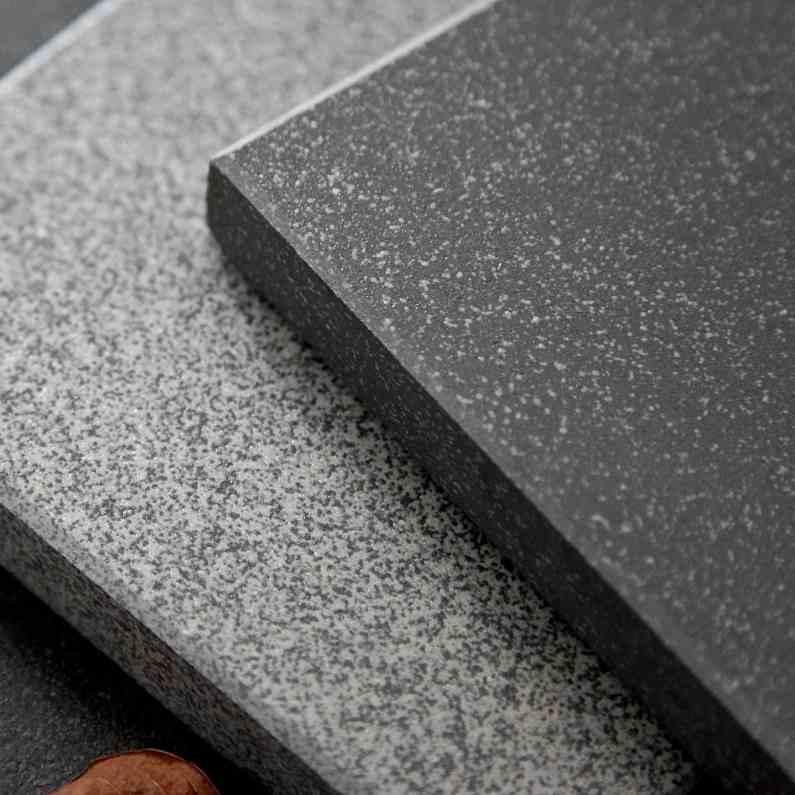
Material grades often feel like a secret code—stamped on a spec sheet yet rarely explained in plain terms. At their core, these designations capture a material's chemical makeup, strength range, and intended use. For instance, a grade like 304 stainless steel signals a specific balance of chromium and nickel that resists corrosion, while a 1018 carbon steel points to controlled carbon content for predictable machinability. Decoding these labels shifts the conversation from guesswork to informed selection, especially when the environment or load demands precision.
Performance metrics go beyond the grade name. Tensile strength, yield point, elongation, and hardness each tell a distinct story about how a material behaves under stress. A high tensile number might look impressive on paper, but if the yield strength sits too close to the ultimate strength, the material could snap without warning—ductility matters. Similarly, impact resistance at low temperatures often reveals more about real-world reliability than any room-temperature test. Matching the metric to the actual failure risk separates a safe design from a fragile one.
Bridging grades and metrics requires reading between the lines of data sheets and standards. Testing methods like Charpy V-notch or Rockwell hardness aren’t interchangeable; they answer different questions. A material that passes a bending test might still crack under a sudden shock. Smart engineers look for trends rather than single numbers: how does the material behave across a range of thicknesses, heat treatments, or surface finishes? That habit turns raw specifications into actionable insight, making the material choice a deliberate strategy rather than a default setting.
Bringing Your Vision to Life: Design-to-Production Workflow
A great idea deserves more than just a sketch—it needs a clear path from concept to reality. Our design-to-production workflow bridges the gap between creative vision and tangible results, ensuring every detail is refined without losing the spark that makes your project unique.
We begin with a deep dive into your goals, audience, and brand story, translating abstract concepts into structured design systems. Then, through iterative prototyping and collaborative feedback, we polish every interaction, layout, and component until it feels effortless. This isn’t a linear handoff—it’s a continuous dialogue between design and engineering, where technical constraints spark inventive solutions.
Once the design is locked, production moves swiftly, with quality checks built in at every stage. From pixel-perfect assets to responsive code, the final output mirrors the original vision with zero compromise. By the time your project launches, it already feels alive—ready to grow with your audience, not just sit on a shelf.
Behind the Scenes: Manufacturing Precision at Scale
Walk into any high-tech assembly line and you’ll witness a carefully choreographed dance between robotics and human expertise. Every screw, every weld, every micron-level adjustment is the result of years of process refinement. It’s not just about machines moving fast—it’s about them moving smart. Sensors track real-time deviations, algorithms correct paths mid-operation, and operators fine-tune parameters that outsiders never see. This quiet collaboration is what turns raw materials into flawless products, shift after shift.
Precision at scale isn’t magic—it’s an obsession with measurement. Behind closed doors, metrology labs operate 24/7, using lasers and coordinate measuring machines to validate parts down to a fraction of a human hair. But the real secret lies in how that data flows back to the floor. When a trend shows a tool wearing out just slightly faster than normal, the system adjusts before a single defect appears. That proactive pulse keeps million-unit runs consistent, whether you’re making medical devices or smartphone lenses.
And then there’s the human layer nobody talks about. The veteran technician who can hear a bearing that’s about to fail, the engineer who redesigned a fixture so parts self-align, the night-shift team that runs diagnostics while the world sleeps. Manufacturing precision at scale is as much about culture as it is about capital equipment. It’s a mindset where “good enough” has no home, and every team member knows that their attention to detail echoes across thousands of end-users who will never know their names—but will trust the outcome.
Ensuring Consistency: Rigorous Testing and Standards
True consistency isn’t accidental — it’s engineered through intentional, layered testing. Every batch undergoes a gauntlet of environmental stressors, from rapid temperature swings to humidity saturation, ensuring no weak link escapes. Statistical sampling never tells the whole story; we monitor real-time production data, flagging deviations before they become defects.
Behind every reliable output is an unshakable system of standards. Tooling is calibrated daily against certified references, while operators follow meticulous work instructions refined over years. External audits aren’t feared — they’re welcomed as a mirror to our own exacting benchmarks, keeping uniformity from first unit to last.
Strategic Collaboration: From Sampling to Final Delivery
Every successful project begins with a shared vision. We start by listening closely to your needs, transforming initial samples into tangible representations of what’s possible. This early stage is about alignment—matching materials, refining details, and ensuring the prototype not only looks right but feels right. It’s a hands‑on dialogue where your feedback shapes the next iteration, building the foundation for everything that follows.
From those first approved samples, the process gains momentum. Our teams work in parallel—production planning, quality benchmarks, and logistics all interwoven. Rather than handing off tasks in sequence, we maintain a continuous loop of communication, so adjustments happen in real time. Whether it’s fine‑tuning a finish or accommodating a last‑minute design tweak, the collaborative spirit keeps the timeline intact and the integrity of the product uncompromised.
The final delivery is never just a shipment. It’s the culmination of trust built step by step. We coordinate every detail—packaging that protects what’s been carefully crafted, schedules that respect your deadlines, and transparent updates that leave no surprises. When your order arrives, it carries with it the confidence that the partnership didn’t end at production; it simply moved into the next phase of our ongoing commitment.
FAQ
OEM stands for Original Equipment Manufacturing. In the porcelain paving world, it’s a partnership where we produce tiles to your exact specifications—your designs, your brand name, your packaging. You handle the sales and marketing, while we take care of the technical manufacturing side, right from raw material selection to the final product.
Absolutely. You have full control over dimensions, thickness, surface finish, color, edge profiles, and even anti-slip ratings. Whether you need large-format slabs for a modern patio or textured tiles that mimic natural stone, we engineer the body and glaze to match your vision. Custom packaging and branding are also part of the package.
It varies depending on the complexity, but we usually work with a minimum of around 500 square meters per design. For more intricate specifications or unique colors, the MOQ might increase slightly because of the setup involved. We always aim to find a balance that works for both sides.
We maintain strict control over raw materials and use computerized dosing systems. Before mass production, you approve a master sample. Throughout the run, we pull and test samples against that reference under standardized lighting. If any drift occurs, we halt and recalibrate—no exceptions. For large orders, we also use single-batch firing when possible.
Reputable OEM manufacturers hold certifications like ISO 9001 for quality management and ISO 14001 for environmental practice. For the tiles themselves, CE marking is essential in Europe, while ANSI or ASTM standards apply in North America. Always ask for up-to-date test reports on water absorption, breaking strength, frost resistance, and slip resistance.
Of course. You’ll first receive lab samples for initial approval, followed by production-run samples that reflect final quality. We encourage you to test them in real-world conditions—install a small area, expose it to weather, check how it handles wear. Only after you’re completely satisfied do we move forward.
Typically, the timeline spans 8 to 12 weeks. This includes sample development (2-3 weeks), sample approval and any adjustments (2-4 weeks), then mass production and shipping. Complex designs or new mold creation can add a couple of weeks. We’re pretty upfront about schedules and keep you looped in at every milestone.
Conclusion
Opting for OEM porcelain paving tiles unlocks a level of customization that off-the-shelf products simply cannot match. The real advantage lies in tailoring every aspect—from color blends and surface textures to exact dimensions—so the finished slabs truly reflect your project’s identity. Material grades form the backbone of this process; understanding how factors like water absorption, breaking strength, and frost resistance align with your intended use prevents costly mismatches. The journey from concept to reality is streamlined through a collaborative design-to-production workflow, where initial sketches evolve into digital proofs and sample batches, ensuring your vision isn’t lost in translation.
Behind the scenes, large-scale manufacturing relies on advanced pressing and controlled firing cycles that deliver consistent flatness and edge precision across thousands of units. Integrated quality control goes beyond spot-checking—tile dimensions, surface hardness, and slip resistance are continuously monitored against international benchmarks. This rigor extends into the partnership itself, with structured sampling phases that confirm color fidelity and physical properties before full production. Strategic collaboration guides the entire timeline, from prototyping to packing and container loading, so final delivery aligns with your installation schedule without sacrificing the custom details that set your outdoor spaces apart.
Contact Us
Contact Person: Emma
Email: [email protected]
Tel/WhatsApp: 8618064423698
Website: https://www.beataceramics.com/