

Piezo Ceramic Supplier: How to Choose the Right Partner for Your Application
2026-11-04
Every piezo ceramic datasheet looks impressive until your application exposes the gaps. Choosing a supplier isn't a checkbox exercise—it's about matching your operating frequency, temperature swings, and mechanical stress to a partner who has actually solved those problems. Siansonic doesn't just ship components; they work alongside you from material formulation to final validation. In this guide, we'll unpack the questions that separate a dependable piezo ceramic supplier from a source of unpleasant surprises.
Don't Buy a Bare Disc Until You Know Its Mounted d33
A bare disc is just a shiny circle of potential until you understand how it's mounted. The d33 designation isn't some random code — it tells you exactly which mounting interface you're dealing with, and ignoring it can turn a simple purchase into a frustrating return. Whether it's a different bolt pattern, center bore, or offset, the way a disc sits on the hub affects everything from braking performance to wheel clearance.
Too many buyers grab a disc based on diameter or brand name alone, then discover the mounting face doesn't match their existing setup. That's where d33 comes in: it's a specific mounting configuration, and assuming all discs of the same size are interchangeable is a costly mistake. Check the mounting tabs, the pilot hole, and the torque specs before you hand over your money.
If you can't verify how the bare disc is mounted, you're essentially gambling. A few minutes of research on the d33 geometry saves you from stripped threads, vibration at speed, and a brake job that never feels right. Know your mount, then buy the disc.
Why Your Supplier's Poling Process Matters More Than the Datasheet
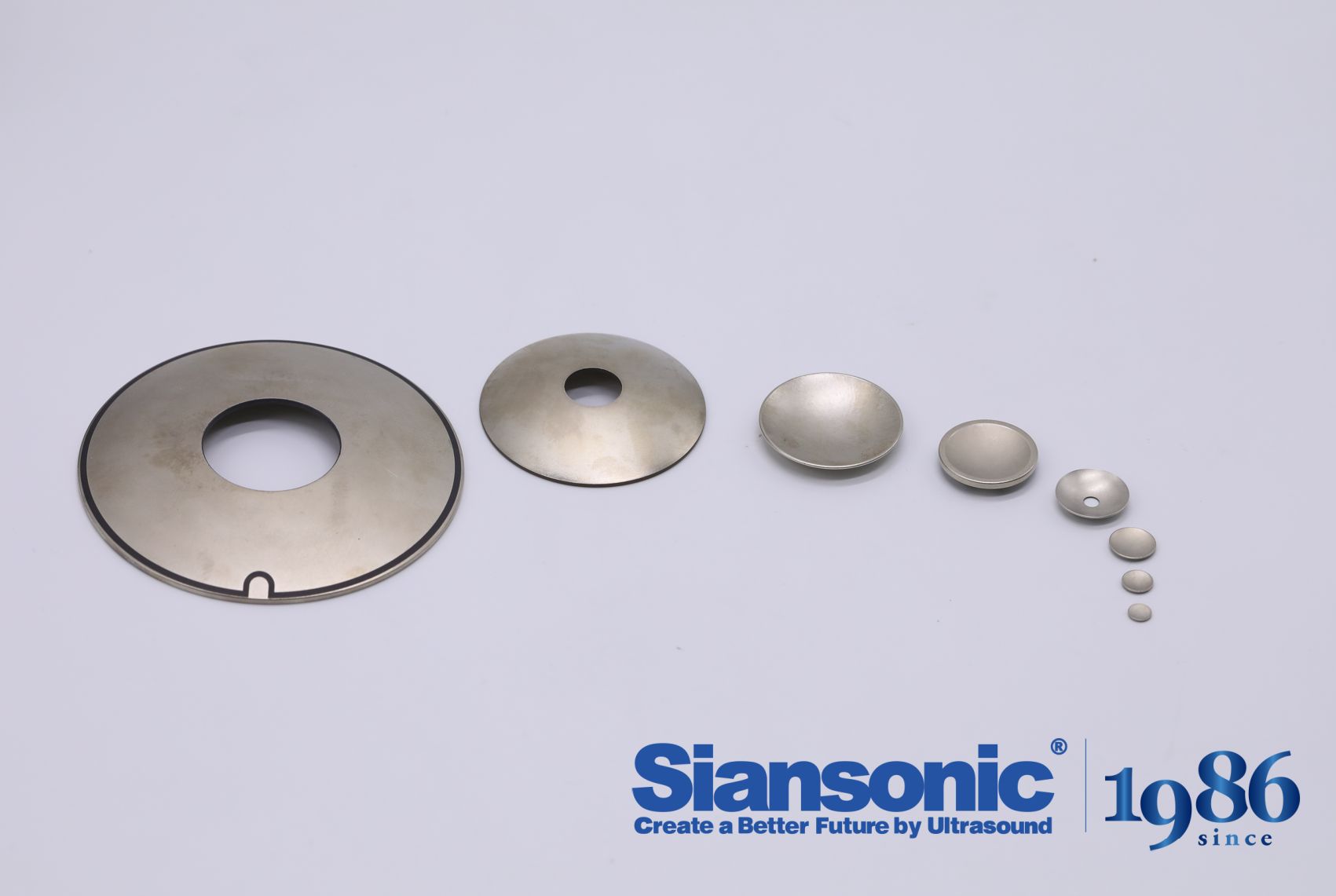
Most engineers treat the datasheet as gospel, but when it comes to piezoelectric ceramics, the numbers on that page are only half the story. A supplier can list identical d33 coefficients, coupling factors, and dielectric constants, yet two batches from different poling lines will behave like entirely different materials in your transducer. The reason is simple: the poling process—how the ceramic domains are aligned under high voltage and temperature—dictates not just the peak performance, but how that performance degrades under real-world stress. A rushed or uneven poling cycle leaves remnant strain and unstable domain walls, which means your sensor might meet spec on day one and drift out of tolerance by month three.
Datasheets reflect ideal lab conditions: freshly poled samples, controlled temperatures, and no mechanical load. But your application likely involves thermal cycling, compressive stress, or continuous drive. A supplier who polishes their poling recipe—using slow voltage ramps, precise cooling rates, and post-poling aging stabilization—produces ceramics that hold their polarization under those stresses. Cheap poling, on the other hand, often relies on short high-voltage pulses that align only surface domains. The bulk remains partially randomized, so the material's effective piezoelectric response is lower than advertised and, worse, unpredictable from part to part.
You cannot audit this from a PDF. You need to ask the supplier about their poling fixtures, whether they measure polarization uniformity across each batch, and how they validate long-term stability. A reputable vendor will share internal test data showing aged performance, not just initial values. That extra scrutiny pays off in production: fewer field failures, tighter lot-to-lot consistency, and a transducer that actually delivers what the datasheet promises—not just for the first hour, but for the life of the product.
The Hidden Cost of Cheap Electrodes in High-Cycle Applications
At first glance, saving a few cents per electrode seems like a smart procurement move, especially when ordering thousands for high-cycle industrial processes. But that upfront discount quietly erodes long-term performance in ways that rarely show up on the invoice. Cheap electrodes often use substandard graphite blends or inconsistent machining tolerances, which lead to faster wear, unpredictable arc stability, and more frequent replacement intervals. In high-cycle applications—where downtime is measured in lost output per minute—the true cost isn't the electrode itself; it's the cumulative effect of more frequent stops, increased scrap rates, and the labor required to swap out failing parts sooner than expected.
Another hidden expense comes from degraded process consistency. Low-cost electrodes tend to have higher impurity levels and uneven resistivity, causing fluctuations in current density and heat distribution. Over thousands of cycles, these small deviations compound into dimensional drift, micro-cracking in workpieces, and higher rejection rates. Operators may compensate by adjusting parameters on the fly, but each tweak adds variability and reduces the overall throughput. In high-volume production, a one-percent drop in yield due to poor electrode performance can dwarf the initial savings from buying cheap components.
Eventually, the pattern becomes clear: cheap electrodes shift costs from procurement to maintenance, quality control, and missed production targets. Teams spend more time troubleshooting electrode-related issues instead of optimizing other areas. The solution isn't necessarily to buy the most expensive option, but to evaluate electrodes based on total lifecycle cost—how long they last, how consistently they perform, and how much unscheduled downtime they prevent. In high-cycle environments, paying slightly more upfront for reliable electrodes almost always costs less than repeatedly paying for the hidden consequences of going cheap.
Ask for a Preload vs. Capacitance Curve, Not Just a Single Number
A single capacitance value listed on a datasheet is almost always measured at zero DC bias. In real circuits, especially with ceramic capacitors, applying a DC voltage causes the effective capacitance to drop significantly. If you only rely on that lone number, your power supply filter or timing circuit might behave unpredictably once the board is powered up. The relationship between applied preload voltage and actual capacitance isn't linear—it varies by dielectric type, package size, and even manufacturer batch.
Requesting a full preload versus capacitance curve gives you the full picture across the operating voltage range. This lets you spot sharp drop-offs that a single test point would hide. For instance, a 10 µF, 16 V X5R capacitor might retain 90% of its value at 5 V bias but only 30% at 12 V. Without the curve, you’d never know whether your design has enough bulk capacitance under worst-case conditions.
When you ask for this curve, you’re also forcing suppliers to be more transparent about their parts. Many will happily quote the unbiased number because it looks impressive, but a curve reveals whether the component truly fits your application. It’s a simple request that can save you from late-stage redesigns and field failures caused by undervoltage ripple or unstable control loops.
Batch Repeatability Is the Real Spec - Here's How to Test It
Most datasheets list a single value for a parameter, but anyone who has dealt with production fallout knows that the number on page one rarely tells the whole story. Batch repeatability—the variation you see when you compare one production lot to the next—is what actually determines whether a component will work in your assembly without constant tuning. If the mean shifts by a few percent between runs, a design that passes qualification can still fail in the field.
The simplest way to test this is to pull a fixed number of units from at least three separate batches, preferably ones made weeks apart. Measure the same characteristic on each unit using the same fixture and operator. Plot the results as a distribution per batch, then compare the means and standard deviations. A quick rule of thumb: if the batch-to-batch mean moves by more than half of the within-batch standard deviation, you have a repeatability problem that will eventually bite you.
For a more rigorous pass/fail, run a one-way ANOVA with batch as the factor. If the p-value for batch is below 0.05, there is a statistically significant shift. But don't stop at significance—look at the effect size. A shift of 2% in a resistor might be irrelevant; the same shift in a timing capacitor could break a design. Set your own limits based on the circuit's sensitivity, not just what the vendor claims.
Custom Lead Attachment Should Be a Conversation, Not a Footnote
Most teams treat an attachment as a supporting file that gets dropped into a lead record and forgotten. A proposal, contract, or product sheet ends up buried under activity logs, and the sales rep assumes the prospect will open it, read it, and come back with questions. That rarely happens. Instead, the attachment becomes a silent footnote—visible in the system but doing no real work in the relationship.
Flip that approach. Each file you attach should be a prompt for dialogue. When you send a customized quote, pair it with a specific question: “Which section would you adjust first?” or “Does this reflect the timeline you mentioned on Tuesday?” The file then becomes a starting point for a back-and-forth, not a one-way data dump. That shift changes the meaning of the attachment from something you store to something you use to keep the conversation moving.
A practical way to do this is to write a short note directly above the attachment link in your message, explaining why that particular file matters for that particular lead. Then follow up a day later with a question tied to a specific part of the document—page two, the pricing table, the service scope. Even if the prospect hasn't opened it yet, the question itself signals that you've paid attention to their situation. That's what turns a passive file into an active conversation.
FAQ
A strong supplier will offer more than generic PZT. Check whether they can provide soft and hard formulations, different dielectric constants, and tailored d33 or coupling coefficients. Ask if they adjust dopants or firing profiles to meet specific frequency or temperature stability requirements rather than pushing a one-size-fits-all grade.
It is often the difference between a smooth design cycle and repeated failures. Look for a partner that can deliver small-batch prototypes with short lead times, accept low minimum order quantities, and iterate quickly on dimensions or electrode patterns. This lets you validate resonance, displacement, and impedance before committing to volume.
ISO 9001 is a starting point, but certifications alone do not guarantee consistency. Ask whether they perform 100% electrical testing on every element, how they handle batch traceability, and if they have experience with automotive or medical standards where applicable. A supplier willing to share control charts or process capability data is usually more trustworthy.
Yes, and this capability matters for many applications. A capable supplier should handle discs, rings, plates, tubes, and custom geometries, as well as silver, nickel, or gold electrodes. More importantly, they should suggest electrode configurations that improve field distribution or reduce spurious modes rather than simply machining to your drawing.
Ask about raw material sourcing, whether they hold safety stock for critical powders, and if they have redundant production lines. A reliable partner will share accelerated life test data, discuss failure modes openly, and explain how they manage supply chain disruptions without hiding behind generic promises.
It can save months of trial and error. A good supplier will understand whether you are building sensors, actuators, ultrasonic transducers, or energy harvesters, and recommend material grades, thicknesses, and poling directions accordingly. They should also help troubleshoot issues like depoling under high field or mechanical stress.
Not in most cases. A cheap element with wide lot-to-lot variation or poor electrode adhesion can increase scrap, rework, and field returns. Compare total cost including testing, assembly yield, and technical support. Sometimes paying slightly more per piece reduces overall project cost because the supplier catches design flaws early.
Request statistical process control data for capacitance, dissipation factor, and resonance frequency across multiple production lots. A small pre-production run of 100 to 500 pieces compared against a later sample can reveal drift. Consistent suppliers are willing to share distribution plots and discuss causes of any outliers rather than treating them as trade secrets.
Conclusion
A bare disc's datasheet d33 rarely reflects what you'll get once it's mounted in your assembly. Clamping, bonding, and housing constraints shift the effective charge constant, so insist on vendor data for mounted d33 under realistic preload. Equally telling is the poling process—some factories over-drive voltage to hit impressive numbers on paper, then those values decay within weeks. Ask how they monitor polarization stability and what aging tests they run. Cheap screen-printed silver electrodes look fine on a spec sheet, but in high-cycle or humid environments they delaminate, migrate, or crack, quietly killing your device's lifetime. A supplier who pushes low-cost electrodes without asking about duty cycle and environmental exposure doesn't understand your application.
Request a preload versus capacitance curve, not a single capacitance value. That curve reveals how the ceramic behaves under mechanical stress—nonlinearity here predicts drift and hysteresis in real use. For batch repeatability, don't settle for "we follow the datasheet." Ask the supplier to share their in-house SPC data: measure resonant frequency, impedance, and d33 across at least three production lots, and check the coefficient of variation. Finally, custom lead attachment—wire type, solder joint, strain relief—should be a design discussion early on, not an afterthought buried in the order notes. A partner who treats leads as a footnote will deliver parts that fail at the joint, not in the ceramic. Choose a vendor who talks about your whole assembly, not just their wafer.
Contact Us
Contact Person: Ivy Zhang
Email: [email protected]
Tel/WhatsApp: +86 1081502288
Website: https://www.siansonic.com/