

Original Manufacturer Insights: Why Automotive Shunt Resistors Define Precision Current Sensing
2026-07-17
In the rapidly evolving automotive landscape, precision isn't just a luxury—it's the backbone of safety, efficiency, and performance. From battery management in electric vehicles to motor control and onboard chargers, the ability to measure current accurately can make or break a system. At the heart of this precision lies a component often underestimated: the shunt resistor. As an original manufacturer, Milliohm understands that not all shunts are created equal. This insight explores why automotive-grade shunt resistors are the silent heroes of current sensing and how they are shaping the future of smarter, more reliable vehicles.
Decoding the DNA of Shunt Resistors: From Raw Material to Precision Component
Shunt resistors start their journey in a surprisingly elemental form—raw metal alloys like manganin, constantan, or even specialty blends engineered for minimal temperature drift. These aren’t off-the-shelf wires; they’re carefully smelted and rolled under tight controls to achieve the exact resistivity and thermal stability needed. The alloy composition acts like a genetic code, dictating how the final component will behave under stress, temperature swings, and long-term aging. Every impurity is a potential failure point, so the refining process borders on obsessive, setting the stage for precision that most passive components can only dream of.
Once the alloy is formed into foils, strips, or rods, the real shaping begins. High-precision stamping or laser cutting defines the resistive element’s geometry, which directly influences current distribution and self-heating. A seemingly simple notched or serpentine pattern isn’t just about hitting a target resistance value; it’s about managing parasitic inductance and creating uniform current density. This is where engineering intuition meets metallurgical reality—slight variations in cutting tool wear or beam focus can introduce micro-cracks that later manifest as drift, so process monitoring is relentless. It’s a silent battle against the imperfections that want to creep in.
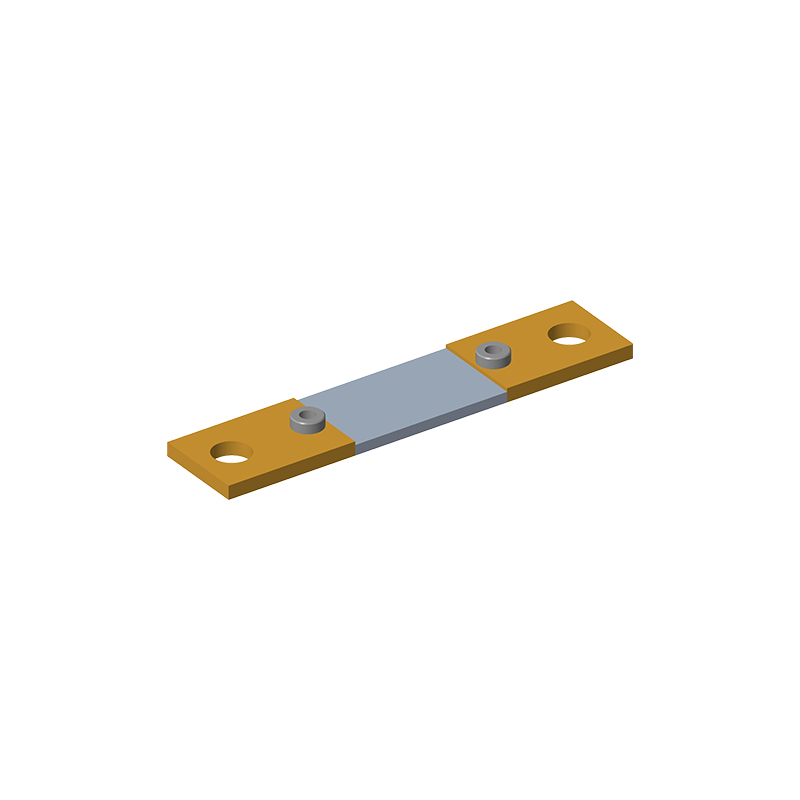
Bridging raw resistive material and a reliable measurement tool demands a final transformation: terminations, protective coatings, and calibration. Copper or tinned copper leads are welded or ultrasonic-bonded with low-resistance joints, while a conformal coating or molded case shields the element from humidity and mechanical strain. Then comes the defining step—precision trimming and temperature coefficient matching often done via laser adjustment, sometimes down to fractions of a percent. When a shunt leaves the production line, it carries an identity forged from materials science, fabrication artistry, and rigorous testing, ready to silently interpret current in electric vehicles, solar inverters, or medical equipment without ever calling attention to itself.
Thermal Tightrope: How AEC-Q200 Qualification Separates Leaders from Followers
In the unforgiving world of automotive electronics, passive components face a relentless barrage of temperature swings, from frigid cold starts to scorching under-hood soak. AEC-Q200 compliance demands that resistors, capacitors, and inductors prove their mettle through grueling thermal shock, humidity bake, and operational life tests at extreme highs and lows. The real differentiator isn't just surviving these conditions—it's maintaining parametric stability when the heat is on. Leaders invest in advanced materials and design margins that keep a capacitor's ESR from drifting or a resistor's TCR from creeping, while followers struggle with batch-to-batch inconsistencies that reveal themselves only during extended temperature cycling.
Beyond the datasheet specs, true qualification mastery shows up in how components behave when pushed to the edges of their rated range. A leader's part will exhibit graceful degradation, whereas a follower's might fail catastrophically due to poor thermal interfaces or subpar dielectric formulations. This invisible tightrope of thermal resilience separates components that merely pass the standard from those engineered to thrive in the real world. It’s the difference between a component that barely ticks a compliance box and one that gives system designers confidence to push boundaries in EV powertrains, advanced ADAS sensors, and under-the-hood controllers where the cost of failure is measured in safety and reputation.
Beyond the Datasheet: Parasitic Inductance and the Hidden Art of Kelvin Sensing
Parasitic inductance is rarely listed on a component datasheet, yet it can cripple measurement accuracy in high‑current or fast‑switching circuits. Even a few nanohenries of stray inductance in a PCB trace or bond wire can generate substantial voltage spikes (V = L di/dt) that masquerade as legitimate signals, leading to false triggering or poor regulation. Designers who rely solely on the front‑page specifications often miss the subtle interplay between layout geometry and magnetic coupling, which can transform a theoretically precise current sensor into a chaotic noise source.
Kelvin sensing—a four‑terminal connection technique—sidesteps this problem by physically separating the current‑carrying path from the voltage‑measurement loop. Instead of sharing a single pair of leads for both excitation and sensing, a Kelvin connection uses dedicated force and sense lines. The sense lines draw negligible current, so their inductance‑induced voltage drop is virtually zero. In practice, this means routing a differential pair straight from the shunt resistor’s pads to the amplifier inputs, keeping the loop area as small as possible and avoiding vias or slots that concentrate magnetic flux. The result is a measurement that faithfully tracks the true voltage across the element, immune to the IR drops and inductive transients that plague simpler two‑wire setups.
Mastering the hidden art of Kelvin sensing goes beyond the textbook; it demands an intuitive feel for return current paths, component placement, and even the right trace thickness. For instance, running the sense traces on a inner layer adjacent to a solid ground plane can further reduce loop inductance, while adding a guard trace around a high‑impedance node squelches electrostatic coupling. These small, often undocumented tricks are what separate a noisy bench prototype from a production‑grade design that performs exactly as the sensor specs promised—no more, no less.
Miniaturization Meets Megawatts: Tackling Power Density in EV Battery Management
The push for smaller battery management systems delivering kilowatt-level control is reshaping EV design. Shrinking these electronics while preserving thermal performance and isolation integrity forces engineers to rethink both layout and materials. Ceramic substrates and advanced packaging now let monitoring circuits sit closer to the cells, slashing wiring inductance and boosting response speed without sacrificing safety margins.
Thermal density becomes the real bottleneck when capable systems are compacted. Passive cooling often crumbles under concentrated heat, making direct liquid cooling or phase-change materials essential for stable operation. Meanwhile, components like current sensors and contactors are being redesigned with integrated heat paths that draw energy away from sensitive logic, keeping precision alive in a tightly packed enclosure.
Functional safety adds another layer of complexity. With less physical separation between high-voltage and low-voltage domains, reinforced insulation and smart fault detection must coexist on a single board. Some designs now embed redundant measurement paths and self-diagnostic routines directly into the chipset, allowing high power density to coexist with the strict isolation demands of next-generation electric vehicles.
Why 'Zero Drift' Is a Myth — And How Smart Alloys Deliver the Next Best Thing
In precision engineering, the promise of “zero drift” has long been held up as the ultimate benchmark. Yet any honest materials scientist will tell you that absolute stability is a phantom. Thermal fluctuations, mechanical creep, and even subtle microstructural relaxation mean all materials shift minutely over time. Chasing zero is chasing a ghost; what matters is how predictably and minimally a material drifts—and whether you can compensate for it.
This is where smart alloys change the game. Instead of pretending drift doesn’t exist, they lean into their inherent hysteresis and phase transformation dynamics to create a new kind of reliability. By engineering the material’s response to stress and temperature, we get a predictable, near-linear drift pattern that can be calibrated out in software. It’s not zero drift, but it’s the next best thing: a stable, repeatable baseline that doesn’t degrade unpredictably over decades of service.
Think of it as treating drift not as an enemy but as a known quantity. Through precise control of composition and thermomechanical processing, these alloys deliver a consistency that traditional materials can’t match. The result is measurable, manageable, and—most importantly—trustworthy over the long haul.
Failure Forensics: Lessons from the Field That Shape Robust Shunt Design
When a shunt fails in the field, the story it tells is often more valuable than the repaired component itself. We've learned to treat every fracture, burn mark, or unexpected drift not as a nuisance but as a direct line of communication from the operating environment. One early lesson came from a utility-scale installation where shunts developed micro-cracks after only a few thermal cycles. Traditional analysis would have blamed material fatigue, but a deeper dive revealed that the mounting hardware was imparting a subtle, asymmetric load during daily temperature swings. This forced us to rethink not just the alloy composition but the entire mechanical integration, leading to a floating clamp design that absorbs expansion without transferring stress to the shunt element.
Another field failure that reshaped our approach involved a shunt exposed to coastal salt fog. The corrosion pattern was uneven, concentrated near the bolted connections rather than across the resistive element. It turned out that while the shunt's main body was protected by a conformal coating, the hardware was inducing galvanic corrosion due to a mismatch in plating materials. The fix wasn't simply a better coating; it required specifying stainless steel fasteners with a controlled level of passivation and designing the connection interface to eliminate moisture traps. That incident underscored a principle we now apply religiously: a shunt is only as robust as its weakest interface, not its bulk resistance material.
Perhaps the most counterintuitive insight came from a series of shunts that drifted out of tolerance despite passing all factory tests. The culprit was a phenomenon we now call settling noise—tiny, irreversible shifts in the resistance alloy's grain structure during the first few hundred hours of operation under pulse load. We had been calibrating shunts for initial accuracy but neglecting the burn-in period necessary to stabilize the lattice. By integrating a controlled burn-in cycle into the production process and mapping the drift curve, we could pre-condition each shunt and guarantee long-term stability. Field failures, it turns out, are rarely about one big oversight; they're about the accumulated small assumptions that collapse under real-world stress.
FAQ
Shunt resistors provide a direct, low-resistance path for current flow, converting it into a measurable voltage with minimal insertion loss. This allows for accurate, real-time monitoring of battery management, motor control, and power distribution systems, where even minor inaccuracies can lead to efficiency drops or safety risks.
Unlike Hall-effect sensors or current transformers, shunt resistors offer inherent simplicity, linear response, and immunity to magnetic interference. They don't require complex magnetic core designs or compensation for external fields, making them robust in the electrically noisy environments found in vehicles.
They must withstand extreme temperature swings from -40°C to +150°C, continuous vibration, and thermal cycling without drifting in resistance. Achieving this while keeping the footprint small and maintaining high-power dissipation capability requires careful selection of alloys and welding techniques that minimize thermoelectric effects.
Temperature changes alter resistance values, which directly impacts current measurement accuracy. In applications like EV battery monitoring, a drift of just a few parts per million can cause significant state-of-charge estimation errors. High-performance shunts use low temperature coefficient of resistance (TCR) materials to limit this effect.
Through accelerated life testing that simulates thermal shock, load cycling, and humidity exposure. We also characterize every batch for long-term drift and perform microstructural analysis on weld joints to detect early signs of fatigue, ensuring a operational life that matches vehicle lifetime requirements.
Lower resistance values reduce power loss and heat generation, but yield smaller voltage signals that demand higher-gain, low-noise amplification. Higher values produce larger signals but increase self-heating and can introduce thermal errors. The ideal resistance balances these factors, often landing in the micro-ohm to single-digit milliohm range for high-current paths.
Conclusion
In the fiercely competitive landscape of automotive electronics, shunt resistors are more than passive components; they are the sentinels of precision current sensing, critical for everything from battery management to motor control. Original manufacturers emphasize that the journey from raw alloy to finished shunt is a meticulously controlled process where material science directly dictates performance. The alloy's composition, often a proprietary blend of copper, manganese, and nickel, is engineered at the atomic level to balance low temperature coefficient of resistance (TCR) with high thermal stability. This metallurgical DNA defines how the shunt will behave under the brutal thermal cycling and vibration of an EV, making the difference between a component that merely meets specifications and one that survives decades on the road. Achieving AEC-Q200 qualification is merely the entry ticket; true reliability emerges from a deep understanding of how heat flows through the shunt's copper terminations and solder joints, a thermal tightrope walk where nanoscale grain boundaries can spell the difference between consistent readings and catastrophic drift.
Yet, even the most advanced alloy cannot escape physics. Parasitic inductance, that hidden gremlin, distorts fast-switching current waveforms in modern wide-bandgap power converters. Manufacturers reveal that the art of Kelvin sensing—using four-terminal connections—is often misunderstood; it's not just about separate force and sense lines, but about routing them in a way that cancels mutual inductance, a layout geometry refined through countless finite-element simulations and field failures. The myth of "zero drift" further complicates the picture. In reality, all resistors age under thermal and mechanical stress, but smart alloys with precisely tuned cold-working and annealing cycles can push drift to near-negligible levels, offering a practical compromise between cost and long-term accuracy. This becomes paramount as battery management systems push power densities to extremes, where shunt miniaturization must coexist with wattages that could melt lesser components. Field forensics from warranty returns provide the ultimate reality check; blown shunts often reveal not alloy failures, but solder fatigue or trace fractures, lessons that feed back into design rules for pad geometries and current derating. In short, automotive shunt resistors are not commodities—they are a symphony of metallurgy, thermal management, and electromagnetic design, orchestrated by manufacturers who see beyond datasheets to deliver the precision that defines the electric vehicle revolution.
Contact Us
Contact Person: Yuying Gao
Email: [email protected]
Tel/WhatsApp: +86 18926013721
Website: https://en.milliohm.net/