

OEM Precision Turning Machines: Advancements and Applications in Modern Manufacturing
2026-08-02
In the relentless pursuit of manufacturing excellence, precision turning remains a cornerstone of efficiency and quality. Yet, as design complexities soar and tolerances tighten, off-the-shelf solutions often fall short. This is where OEM precision turning machines redefine what's possible—tailoring every component to your exact production demands. From multi-axis agility to smart automation, recent breakthroughs are quietly revolutionizing factory floors worldwide. Companies like WINNRUI CNC are at the forefront, engineering bespoke systems that seamlessly integrate with evolving Industry 4.0 workflows. Whether you're machining intricate medical implants or high-volume automotive parts, understanding these advancements is no longer optional—it's a competitive imperative. In this article, we'll peel back the layers of modern turnkey solutions and explore real-world applications that are setting new benchmarks. Get ready to rethink what your production line can achieve.
Why Traditional Machining Can't Keep Up with Modern Demands
The methods that defined manufacturing for decades are now struggling to meet the pace of change. Traditional machining relies on setups that demand skilled operators to manually align tools, set feeds, and adjust speeds—a process that's not just time-consuming but inherently inflexible. When a design update arrives, adapting these machines often means halting production entirely for recalibration, which can stretch lead times from days to weeks. In an era where product cycles are measured in months rather than years, that kind of lag is no longer acceptable.
Precision requirements have also moved far beyond what conventional equipment was built to deliver. Today's components—whether in aerospace, medical devices, or consumer electronics—call for tolerances measured in microns, with complex geometries that traditional multi-axis setups can't reliably produce. The subtle inconsistencies from tool wear, thermal expansion, or manual oversight accumulate quickly, leading to scrap rates that many shops can no longer afford. Quality control often becomes a bottleneck in itself, as each part demands meticulous inspection that never quite catches every deviation.
Beyond the technical limits, there's a fundamental mismatch in how work gets managed. Traditional machining evolved in an environment where long production runs of identical parts were the norm. Now, customers expect customization, rapid prototyping, and small-batch runs that shift nearly overnight. The rigid programming and fixed tooling of older systems turn every changeover into a costly puzzle, draining resources and stifling the agility that modern supply chains rely on. Without the ability to pivot quickly, these methods simply can't keep stride with markets that reward speed and adaptability.
The Subtle Art of Achieving Sub-Micron Tolerances
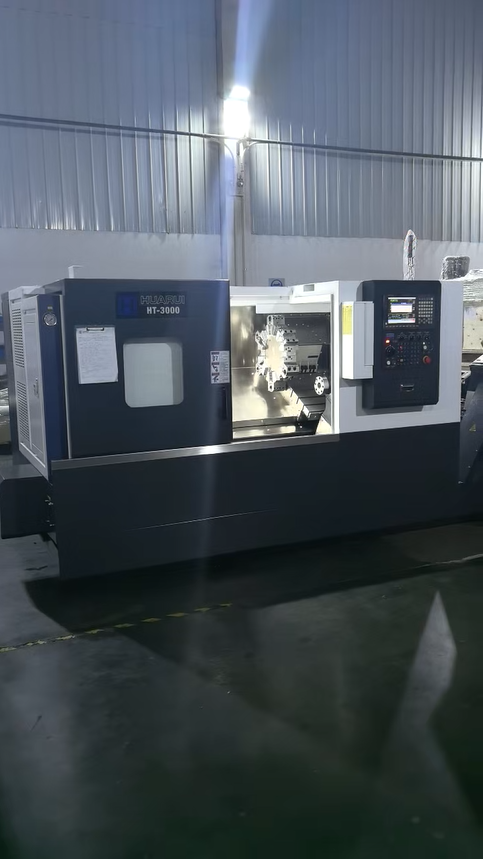
Dialing in sub-micron precision is less about heroic machinery and more about mastering a quiet, almost obsessive relationship with your environment. It’s the unglamorous work of chasing down thermal drift that shifts your part by a few hundred nanometers between morning coffee and afternoon tea. You learn to read the subtle language of vibration spectra, differentiating the hum of a chiller from the rumble of a delivery truck three floors below. Every clamp, every fixturing choice becomes a negotiation with strain—a tiny war against the elasticity that lives inside every supposedly rigid structure.
At this scale, metrology stops being a final checkpoint and turns into a continuous conversation. You’re not just measuring a surface; you’re interrogating it with stylus pressures measured in milligram-force, carefully deconvolving the waviness from the roughness, the topography from the instrument’s own fingerprint. The real skill lies in knowing when to stop—when the last angstrom of improvement is a phantom, an artifact of thermal equilibrium not yet reached. Often, achieving the tolerance means walking away and letting the part sleep in a temperature-soaked room, returning to it only when the steel has forgotten the heat of your hands.
What rarely makes it into the specification sheets is the psychological discipline required. You develop a suspicious eye for the number on the screen, constantly asking whether you’re seeing the part or the process. The best practitioners have an intuitive feel for the rate of oxide growth on a freshly cut surface, or the way a sub-micron burr can fold and smear rather than cut cleanly. It’s a craft where success is invisible—the part simply fits with a whisper of resistance, and all that meticulous, borderline-neurotic preparation dissolves into a silent, perfect assembly.
How Next-Gen Turning Machines Slash Waste Without Sacrificing Speed
Modern turning centers now incorporate adaptive control systems that continuously monitor cutting forces and adjust parameters in microseconds. This dynamic response prevents over-engagement that typically leads to tool breakage or scrapped parts, allowing aggressive roughing passes to proceed at full speed while still protecting the workpiece. The machine effectively learns the optimal balance between material removal rate and tool preservation, minimizing both physical waste and downtime.
Toolpath algorithms have evolved beyond simple geometry-driven strategies. By simulating chip formation and predicting tool deflection beforehand, CAM software can generate trochoidal and peel milling paths that maintain constant chip thickness. This eliminates erratic load spikes that often force operators to dial back feed rates. The result is a smooth, predictable cutting process where material is removed at the maximum possible rate without risking surface defects or dimensional drift that lead to rejects.
Integration of high-pressure coolant delivered precisely to the cutting zone further separates waste from speed. Rather than slowing down to manage heat, these systems blast chips away instantly and cool the insert edge with pinpoint accuracy. This allows dry machining at speeds once considered reckless, but with lower energy consumption and zero coolant disposal hassles. The part emerges dimensionally stable and burr-free, bypassing secondary finishing steps entirely.
Inside the Factories Where Precision Turning Meets Unthinkable Materials
Walking into these facilities, the first thing that strikes you is the sheer incongruity of the materials being machined. Blocks of Inconel sit beside billets of translucent ceramic matrix composites, their surfaces gleaming under specialized lighting. The air hums with the controlled vibration of spindles spinning at speeds that would liquefy lesser machines, while tooling made from custom-grown diamond slices through materials originally designed to survive re-entry plasma. Each workstation tells a story of extreme engineering—a lathe here turning a molybdenum alloy that laughs at conventional carbide, a mill there carving gas turbine components from single-crystal superalloys that demand tool pressure measured in millionths of deflection.
The real magic happens at the intersection of toolpath algorithms and metallurgical intuition. Operators peer through coolant mists to read chip color like a language, adjusting feeds and speeds based on the faint straw-to-blue transitions that signal optimal cutting zones. Thermal cameras map temperature gradients in real-time, while vibration sensors whisper data to adaptive control systems that reshape the cutting approach on the fly. It's not unusual to see an aerospace fitting emerge from a blank of titanium aluminide—a notoriously brittle intermetallic—with surface finishes that rival optical glass, achieved through a choreography of micro-lift pecking cycles and trochoidal arcs that coax rather than force the material into shape.
Beyond the machines themselves, the support infrastructure veers into the surreal. Chip management systems handle swarf that can spontaneously combust or leach heavy metals, while filtration units process coolant into something cleaner than tap water. Metrology labs bristle with white-light interferometers inspecting features smaller than bacteria, verifying that a fuel nozzle's orifices haven't drifted by nanometers. Every process is shadowed by rigorous traceability—digital twins logging each cut's energy signature, each insert's wear pattern, building a data lineage that outlives the components themselves. This is manufacturing where a single misstep could mean a jet engine's containment ring failing at 40,000 feet, and that weight of consequence is what drives the relentless precision.
The Quiet Revolution in Medical Device Manufacturing
Beneath the surface of healthcare’s digitization sprint, a less flashy but equally profound shift is reshaping how medical devices are designed and produced. Traditional machining and injection molding are giving way to additive manufacturing, enabling engineers to build patient-specific implants with lattice structures that mimic bone porosity—something subtractive methods could never achieve. This isn’t just about prototyping anymore; production-grade 3D-printed titanium spinal cages and cobalt-chrome knee components are quietly entering operating rooms, offering faster osseointegration and reduced inventory burdens for hospitals.
Materials science is the other silent driver. Bioresorbable polymers and shape-memory alloys allow devices to perform a function and then dissolve or adapt, eliminating the need for removal surgeries. Simultaneously, micro-manufacturing techniques borrowed from the semiconductor industry are shrinking diagnostic sensors to fit inside injectable capsules or chronic implants, collecting continuous physiological data with minimal patient disruption. Regulatory frameworks, often seen as barriers, are evolving in step—new guidelines for point-of-care 3D printing and adaptive trial designs acknowledge that manufacturing innovation is no longer a distant future but a present reality.
When to Retire Your Lathe: Signs It's Time for an OEM Upgrade
Your lathe has been the backbone of your shop, but even the most reliable machines start showing subtle signs of fatigue. One of the first indicators is a gradual decline in precision. If you find yourself constantly adjusting offsets or compensating for taper that wasn't there before, it's not just tool wear—the machine's structural integrity may be fading. Listen for unusual vibrations or chatter during cuts that used to be smooth; these often point to worn spindle bearings or a loosening of the bed ways. When you can't hold tolerances that were once effortless, it's a clear signal that maintenance can no longer bridge the gap.
Another red flag is the rising cost of upkeep. As components age, replacement parts become scarce or obsolete, forcing you to hunt down surplus or custom-fabricated solutions. Downtime starts creeping up, not because of operator error, but due to recurring breakdowns in critical systems like the turret, coolant pump, or control panel. If your maintenance logs show a pattern of emergency repairs rather than routine servicing, the financial drain may already outweigh the benefits of keeping the machine. A modern OEM upgrade can reverse this trend with better efficiency and built-in diagnostics that catch issues before they halt production.
Finally, consider the capabilities you're missing. Older lathes often lack the speed, automation features, or connectivity needed to stay competitive. If your current machine can't handle newer materials or complex geometries demanded by your customers, it's throttling your growth. An OEM upgrade isn't just about fixing what's broken; it's about gaining a platform that integrates with your digital workflow, reduces setup time, and opens doors to contracts you couldn't bid on before. When your lathe limits more than it enables, it's time to move forward.
FAQ
OEM precision turning machines are custom-engineered by original equipment manufacturers to meet exact specifications, integrating advanced CNC controls, high-speed spindles, and multi-axis capabilities for superior accuracy and surface finish.
Modern CNC advancements like real-time adaptive control, AI-driven tool path optimization, and improved sensor integration allow for micron-level tolerances, reduced cycle times, and the ability to machine complex geometries in a single setup.
They handle a broad range of materials, from hardened steels and titanium alloys to composites and engineered plastics, often under dry or near-dry machining conditions to support sustainable manufacturing.
Automation, including robotic part loading/unloading, in-machine gauging, and palletized systems, enables lights-out production, consistent quality, and higher throughput with minimal human intervention.
In aerospace, they produce critical components like turbine discs, hydraulic fittings, and landing gear parts, where tight tolerances and material integrity are non-negotiable for safety and performance.
In-process probing, laser measurement, and statistical process control are commonly integrated, allowing real-time corrections and verification to maintain quality without disrupting production flow.
While initial investment may be higher, OEM customization reduces secondary operations, tooling costs, and scrap rates, leading to lower per-part costs over the machine's lifecycle.
Conclusion
Machining demands have shifted dramatically, and the old guard of manual and semi-automated lathes simply cannot keep pace. Where traditional methods stumble over inconsistent surface finishes, thermal drift, and tool wear that erodes precision over long runs, modern OEM precision turning machines step in with closed-loop servo controls, active temperature compensation, and in-process metrology. These systems quietly absorb the subtle art of sub-micron tolerances—once dependent on a machinist's decades-honed intuition—into repeatable, data-driven routines. The result is not just higher accuracy but a radical reduction in waste: optimized toolpaths, minimal air cuts, and intelligent chip control let manufacturers push speeds that would have shattered inserts or scrapped parts a decade ago, all while holding limits that border on the absurd.
This quiet revolution is most visible in medical device manufacturing, where implants and surgical instruments emerge from Swiss-type sliding headstocks with surface finishes that need no secondary polishing, even as the machines effortlessly peel ribbons of titanium or cobalt chrome. Beyond biomed, next-gen turning centers cut materials that once laughed at carbide—exotic superalloys, hardened tool steels over 60 HRC, and brittle ceramics—thanks to integrated high-pressure coolant, ultrasonic-assisted spindles, and real-time vibration damping. For shops still nursing aging CNCs with constant offsets and midnight alarms, the signs are unmistakable: when tolerance windows shrink, when setup time eats margins, or when the simple fear of a crash limits your material ambitions, it’s time to evaluate an OEM upgrade that brings robustness, autonomy, and a future-proof architecture to the shop floor.
Contact Us
Contact Person: Tim
Email: [email protected]
Tel/WhatsApp: +86 15522553731
Website: https://www.winnrui-cnc.com/