

OEM Beverage Production Line Factory Solutions for Growing Beverage Brands
2026-10-04
Every growing beverage brand eventually hits the same wall: your current production setup can’t keep up with demand, but building a fully custom line from scratch is out of reach. That’s the gap INTOP Machinery fills with OEM beverage production line factory solutions. Think of it as plug-and-play manufacturing that adapts to your bottle size, filling method, and throughput—without the multi-year wait or blank-check budget. In the sections ahead, we’ll break down what actually makes a production line OEM-ready, which bottlenecks to watch for, and how to choose a partner that won’t slow you down as orders climb. If you’re serious about scaling, this is where the factory talk gets practical.
When Your Brand Outgrows Co-Packing: Mapping the Transition
Outgrowing a co-packer rarely announces itself with a single event. It shows up in smaller, persistent frictions: lead times that keep stretching, minimum order quantities that no longer match your sales curve, or packaging mistakes that slip through because your product line has grown more complex than their standard processes can handle. For a while, these issues feel manageable because the relationship still works on paper. But when you start redesigning products around the co-packer’s limitations instead of your customers’ needs, the math has already changed. That’s the moment to stop treating the co-packer as a fixed part of your operation and start mapping what a move would actually require.
The transition itself is less about finding a bigger facility and more about untangling the dependencies you’ve quietly built over time. Raw material sourcing, spec documentation, quality checks, batch traceability, inventory buffers, and even the way your labels are applied all live inside someone else’s workflow. Before any move makes sense, you need a realistic picture of which of those pieces you can take over cleanly, which need a new partner, and which might improve if you bring them in-house. It’s common to discover that only part of your product range has truly outgrown the arrangement, while other SKUs still fit comfortably. Mapping the transition means deciding whether you need a larger co-packer, a second one for overflow, a hybrid setup, or your own line — and knowing the cost and timeline for each path.
A phased handoff usually beats an abrupt switch, especially when retail accounts and fulfillment schedules are involved. Start with a pilot run under the new setup while the old co-packer still covers baseline volume. Use that overlap to verify specs, shelf life, packaging integrity, and shipping performance without risking stockouts. At the same time, revisit your contracts and IP arrangements so formulas, molds, and proprietary processes don’t become bargaining chips later. The brands that navigate this well treat outgrowing a co-packer as an operational upgrade, not a breakup — they document the gaps, run parallel systems, and only fully cut over when the new path is demonstrably steadier than the old one.
Small-Batch Runs Without the Small-Batch Price Tag
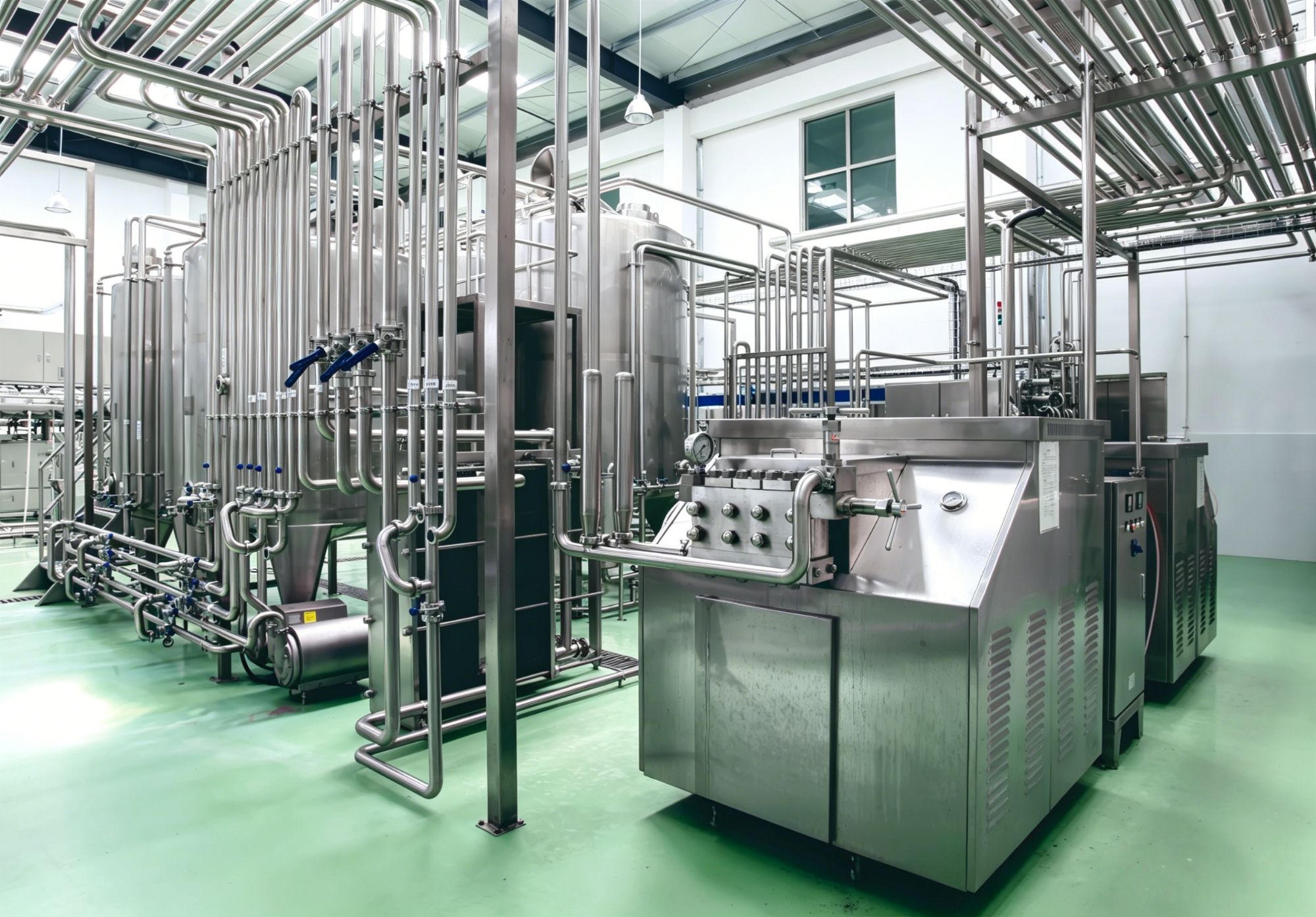
Most factories treat your order like a nuisance the moment they realize it won't fill a container. Setup fees, inflated per-unit costs, and a laundry list of minimums quietly push the real price far beyond the quote. We built our process around the opposite assumption: your run size is the point, not the problem. By keeping tooling modular and scheduling multiple small orders into shared production windows, the overhead that usually gets passed to you is absorbed before it ever reaches the invoice.
That means you can order a few hundred units, test a new market, or run a limited seasonal drop without subsidizing someone else's downtime. The materials are the same, the QC checks are the same, but the cost structure finally matches the reality of how modern brands actually launch products.
Keeping Your Recipe Yours: Confidentiality Beyond the NDA
A signed non-disclosure agreement is often seen as the final word on protecting a recipe, but the real work of keeping a formula secret starts where the paperwork ends. In many kitchens and labs, the most damaging leaks come not from formal breaches but from casual conversations, shared equipment, or a misplaced notebook. Confidentiality beyond the NDA means building habits that treat the recipe as a living secret—restricting who sees the full process, breaking tasks into steps so no single person holds every detail, and avoiding digital storage that syncs to personal accounts. These practices turn the legal shield of an NDA into a practical, everyday defense.
One underused tactic is to separate the recipe into components that only come together at the final stage. A sauce base, a spice blend, and a finishing technique can each be prepared by different people or at different times, so that no individual—or outside observer—ever sees the complete picture. Pair this with physical controls like locked ingredient bins, unmarked containers for proprietary mixes, and a clean-desk policy for any written notes. When a recipe lives in pieces and those pieces are guarded by ordinary discipline, you reduce the risk of a single point of failure that no contract can truly cover.
Finally, remember that confidentiality is also about culture. Employees who understand why a recipe matters and what makes it unique are far more likely to protect it than those who simply fear legal consequences. Share the story behind the dish or product, celebrate the craft, and make discretion part of the job’s pride rather than a burden. An NDA can set boundaries, but only a team that genuinely values the secret will keep it safe long after the ink dries.
One Line, Many Products: Flexibility Without Cross-Contamination
Running several product types through a single line usually means accepting a trade-off: either extensive teardown between runs or a constant risk of flavor, allergen, or active-ingredient carryover. The better approach pairs dedicated product-contact parts with a shared backbone—pumps, controls, and conveyance stay fixed, while mixing vessels, filling heads, or transfer hoses swap out in minutes. This keeps changeover short without forcing operators to reroute material through the same wetted path.
Instead of relying on a single flush cycle to wash away everything, cross-contamination control is built into the physical layout. Sloped surfaces and sanitary welds let rinse water drain completely; valve clusters and manifold blocks are arranged so residual product has nowhere to pool. When a recipe does change, a locked sequence of rinse, detergent, and sanitizer steps—plus a quick ATP or allergen swab—verifies the line is ready for the next item before production resumes.
The real payoff shows up in scheduling. A line set up this way can run a nut-based snack, then a dairy-containing sauce, then a gluten-free dry mix in the same shift without dedicating separate rooms or duplicate equipment. Tolerance, not isolation, becomes the default: each product gets its own contact set, while the shared frame does the heavy lifting. That cuts capital cost and floor space, but only if the changeover protocol is documented and followed every run.
Why 'Good Enough' Quality Control Kills Growing Brands
When a brand is scaling, there's a powerful temptation to sign off on "good enough" batches just to keep up with demand. But that quiet compromise erodes the very reason customers chose you in the first place. Inconsistent stitching, slight color drift, packaging that feels flimsier than before—each minor slip may seem survivable on its own, yet together they teach buyers that your promise is not reliable. Growing brands rarely die from one big scandal. They bleed out through a thousand tolerated defects.
The real cost isn't just returns or complaints. It's the customer who doesn't bother to complain. They simply don't reorder, don't recommend, and don't give you a second thought. Meanwhile, your team internalizes "good enough" as the new standard, so future products drift even further from the original vision. Before long, you're no longer the brand you set out to be—you're a lower-quality imitation of yourself, competing on price rather than trust.
Tightening quality control during rapid growth feels expensive and slow, but it's the only way to protect the brand's core asset: consistency. The brands that scale well treat every shipment, every batch, every customer touchpoint as a signature moment. They know that "good enough" is a debt that compounds—and eventually comes due in lost relevance, eroded margins, and a customer base that quietly walks away.
The Hidden Costs of OEM Production: What to Ask Before You Sign
Most buyers walk into an OEM agreement focused on the unit price, but that number rarely tells the whole story. Tooling fees, sample charges, packaging adjustments, and unexpected rework can quietly inflate your total landed cost by 20% or more. Before you commit, ask for a line-item breakdown of every non-recurring expense—especially who owns the molds and what happens to them if the relationship ends.
Quality control is another area where costs hide in plain sight. A factory may quote a low per-piece rate but then charge separately for third-party inspections, defect sorting, or re-inspection after corrections. Clarify how many inspection rounds are included, what the rejection threshold is, and who covers shipping for replacement units. If you're sourcing electronics or regulated goods, also ask about compliance testing fees—those can appear months later and derail your budget.
Finally, watch for minimum order quantity traps and freight surprises. Some suppliers advertise a low MOQ but then apply steep surcharges for smaller runs, or they quote FOB pricing while you assume it includes inland trucking and export documentation. Ask for an all-in cost scenario: from factory floor to your warehouse door, including duty, customs brokerage, and last-mile delivery. If the vendor hesitates to provide that, treat it as a red flag.
FAQ
It usually spans everything from liquid blending and pasteurization to filling, capping, labeling, and packing. Instead of investing in your own machinery, you tap into a factory that already runs these lines and can adapt them to your recipe, bottle type, and volume.
You avoid heavy capital spending on tanks, fillers, and conveyors. You also skip maintenance, line changeovers, and recruiting specialized operators. That lets you put money into branding, distribution, and recipe development while still getting commercial-scale output.
Many OEM plants have separate or flexible lines. Carbonated drinks need pressure-filled counter-pressure fillers, while still drinks can run on standard gravity or piston fillers. A good factory will tell you upfront whether your product fits an existing line or needs a dedicated setup.
You can often customize bottle shape, cap color, label material, shrink sleeve, carton design, and even the recipe's sweetness, acidity, and preservative system. Some factories also offer in-house graphic design support for labels and secondary packaging.
Reputable plants run in-process checks for brix, pH, carbonation, fill level, torque, and seal integrity. They keep batch records and retain samples from each run, so any variation can be traced back to raw material lots or line settings.
It depends on the packaging and line speed. For glass bottles or cans, MOQs often start around 10,000 to 30,000 units per SKU. For flexible pouches or smaller runs, some factories can go lower, but unit cost increases.
If the formulation is stable and packaging materials are ready, first production can happen in 4 to 8 weeks. Custom bottle molds or complex label approvals can extend that to 10 to 12 weeks.
Look beyond price: check if they have experience with your drink category, whether they hold relevant food safety certifications, how they handle changeovers, and if they can scale with you. A trial run with your own formula is more telling than a facility tour.
Conclusion
Moving out of a co-packing arrangement rarely happens all at once, and most brands only notice the squeeze when order minimums start dictating their inventory decisions instead of market demand. An OEM beverage line built around your production cadence removes that friction, giving you direct control over batch sizes so a 500-case test run doesn't carry the unit cost of a 50,000-case commitment. But the real shift is less about machinery and more about leverage: when you stop renting time on someone else's floor, your recipe stops being a file they can accidentally leave open. Standard NDAs cover legal liability, yet they don't stop a busy plant from scheduling your competitor's similar formula right after yours or reusing changeover notes. A dedicated or semi-dedicated OEM setup narrows that exposure by design, keeping your ingredient handling, batching records, and sanitation logs inside a system you actually own.
Beyond confidentiality, the same line often needs to run a sparkling water in the morning and a dairy-adjacent functional drink in the afternoon, which means flexibility can't come at the expense of allergen control or flavor carryover. Look for modular filler heads, separate CIP skids, and validation protocols that don't treat every product as if it were identical. Weak quality control is where growing brands bleed quietly: a single off-spec batch can destroy a retail relationship that took eighteen months to build, so inline monitoring for Brix, carbonation, fill level, and seal integrity should be non-negotiable. Before signing any OEM contract, push past the headline price per unit. Ask who pays for downtime during changeovers, how waste is calculated, what happens to leftover raw materials, and whether the quoted capacity assumes a perfect run with no rejects. The answers reveal whether the factory sees you as a partner or just a schedule filler.
Contact Us
Contact Person: Laura
Email: [email protected]
Tel/WhatsApp: +86 13957758832
Website: https://www.intopmachinery.com