

N10276 Extruded Seamless Pipe Manufacturer Delivers Corrosion-Resistant Performance
2026-11-16
When aggressive chemicals meet high temperatures, most alloys surrender quickly—but N10276 isn't most alloys. As a trusted JILAIDA extruded seamless pipe manufacturer, we've seen this nickel-based workhorse shrug off pitting, crevice corrosion, and stress cracking in environments that eat standard stainless for breakfast. You might wonder what makes seamless extrusion so critical to that performance, and why your next project can't afford to overlook it.
When Standard Stainless Steels Can't Take the Heat
Standard stainless steels like 304 and 316 hold up fine in moderate temperatures, but push them past 800°F and things start to go sideways. The chromium oxide layer that normally protects the surface begins to break down, leaving the metal vulnerable to oxidation and scaling. You'll see a dull, flaky surface develop, and over time the material loses thickness and strength. It's not a sudden failure—it creeps up, but eventually the part can't hold its own weight or shape.
Another problem shows up in cyclic heating and cooling. Standard grades expand and contract at a predictable rate, but when the temperature swings are extreme and frequent, internal stresses build up. This leads to cracking, especially near welds or areas with sharp corners. You can't always see the micro-cracks at first, but they grow with each cycle. That's why standard stainless often fails in furnace parts, exhaust systems, or heat exchangers before anyone expects it to.
There's also the issue of carburization and sulfidation in certain environments. In high-heat settings with carbon-rich or sulfur-bearing gases, standard stainless absorbs carbon or sulfur into its surface. That makes the steel brittle and can cause early breakage under load. So while standard grades are great for corrosion resistance at room temperature, they simply aren't engineered for sustained heat exposure. You need a different alloy—like a heat-resistant stainless with higher nickel and chromium, or a nickel-based superalloy—to survive those conditions.
Extrusion Pressure and the Case for Uniform Walls
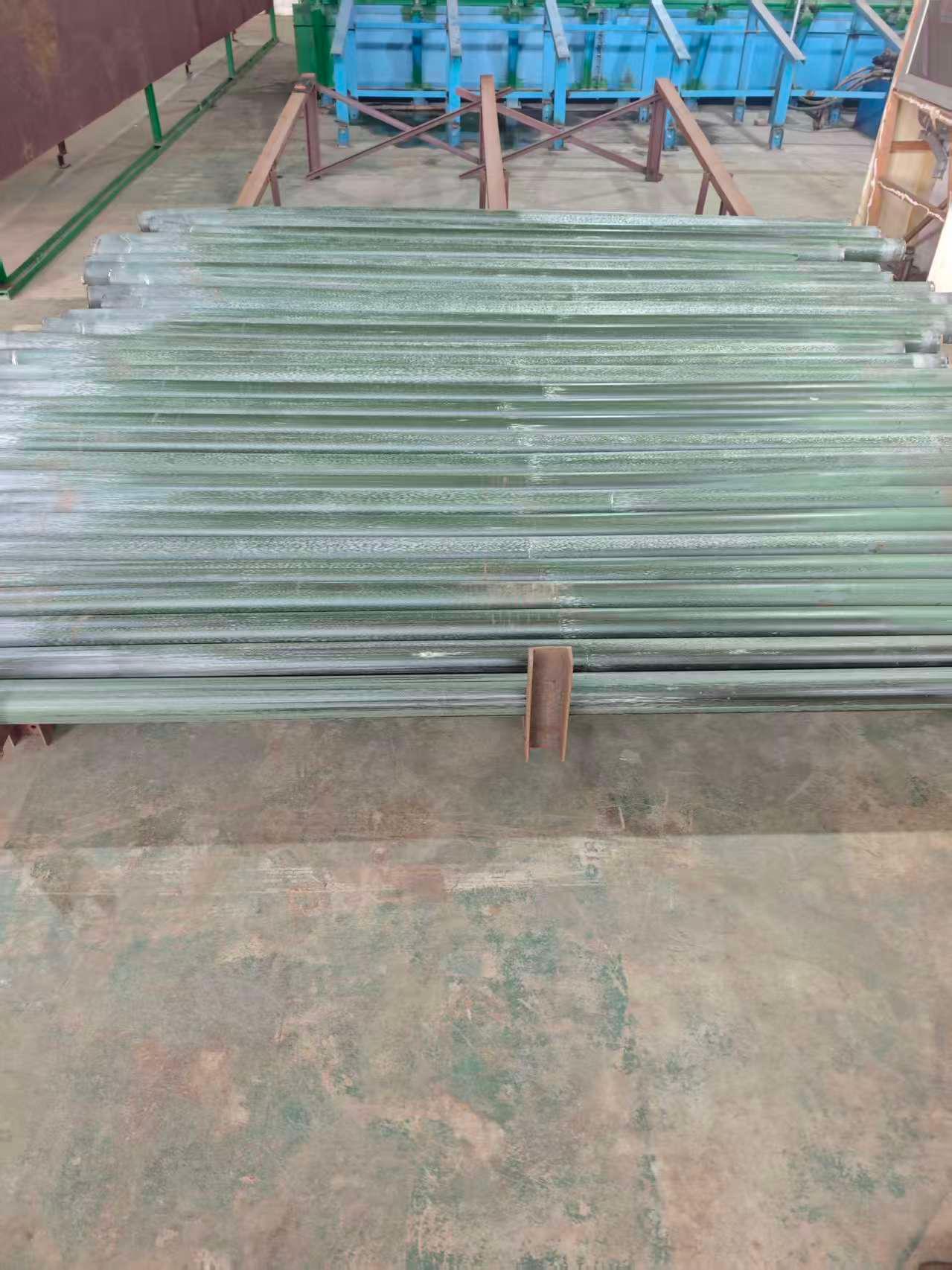
In extrusion, pressure is not simply a function of material viscosity and temperature; it also tracks cross-sectional geometry. When a profile has uneven wall thickness, the melt front advances faster through thicker sections and slows in thinner ones. That imbalance forces the die designer to compensate with restricted flow channels or added back pressure, which in turn raises overall extrusion pressure. A uniform wall design avoids most of that compensation work because the melt sees similar resistance at every point across the die opening.
The case for uniform walls becomes even stronger when you look at tooling stress. Pressure spikes concentrated near a thick-to-thin transition can deflect mandrels or shift die plates, producing out-of-spec dimensions and poor surface finish. By keeping wall thickness consistent, the pressure distributes evenly, reducing localized wear on the die land and prolonging tool life. It also cuts down on trial-and-error adjustments during startup, since the flow balance is closer to neutral from the first shot.
There is a secondary benefit often overlooked: lower pressure means lower melt temperature and less shear heating. That matters for heat-sensitive resins and for downstream cooling rates. Uniform walls pull heat at a similar rate, so warpage and sink marks become easier to control. In practice, designers will still add ribs or bosses where function demands them, but they do so knowing that every unnecessary thickness variation adds pressure—and pressure always shows up somewhere, usually in quality or cycle time.
Reading the Corrosion Data from Acid and Chloride Service
Corrosion tables for acid and chloride service usually present data as a matrix of alloy composition, acid concentration, temperature, and measured metal loss in mils per year (mpy) or millimeters per year (mm/y). A careful reader will first check the units and the exposure duration, since short-term laboratory tests can understate long-term degradation. For chloride-bearing acids, the table may also include notes on pitting, crevice attack, or stress corrosion cracking, which are not captured by a simple uniform rate.
When comparing alloys, look beyond the headline corrosion rate. A rate below 5 mpy is often considered acceptable for many industrial applications, but in chloride service even a low uniform rate can hide severe localized damage. Check whether the data reference inhibitor additions, oxygen levels, or flow conditions—these variables shift the corrosion mechanism dramatically. If the table lists only isocorrosion lines for a single acid concentration, extrapolate cautiously to your actual process stream.
A practical approach is to treat published corrosion data as a screening tool, not a guarantee. Acid and chloride mixtures can behave differently with minor temperature swings or trace contaminants like ferric ions. Cross-check multiple sources, and if the operating window falls near a boundary between “resistant” and “not recommended,” run a field coupon test or consult a corrosion engineer before committing to a material.
Seamless Pipe as a Defense Against Localized Attack
Seamless pipe eliminates the longitudinal weld seam, which is often the first place a localized attack takes hold. In welded pipe, the heat-affected zone near the seam can have a different microstructure, residual stress, and even slight compositional variations. These differences create small galvanic cells when exposed to corrosive media, making pits and crevice corrosion more likely to start there. By removing the seam entirely, seamless pipe offers a more uniform surface and a homogeneous metallurgical structure, so there is no obvious weak spot for localized degradation to begin.
The continuous grain flow produced during rotary piercing and subsequent rolling or cold drawing gives seamless pipe an advantage in harsh environments. Without a weld interface, there are no entrapped oxides or lack-of-fusion defects that can act as initiation sites for pitting, stress corrosion cracking, or hydrogen-induced damage. This uniformity means that when a corrosive species attacks, the metal loses material more evenly across the surface instead of concentrating at a single vulnerable line. In practice, this translates to longer intervals between inspections and fewer unexpected failures in pipelines carrying sour gas, chlorides, or other aggressive fluids.
For operators in refining and petrochemical plants, seamless pipe is not just a material choice but a practical defense strategy. If a localized attack does occur, the absence of a weld seam prevents crack propagation along a pre-existing weak path. The pipe can often tolerate isolated metal loss without sudden rupture, giving maintenance teams time to detect and address the issue. This built-in resilience reduces downtime and repair costs, especially in buried or hard-to-access piping where replacement is expensive and disruptive.
Meeting ASTM B622 Without Overlooking Traceability
Sourcing nickel alloy pipe and tube to ASTM B622 often stops at chemistry and mechanicals, yet a purchase order that ignores traceability invites avoidable risk. Mills can produce heats that pass tensile and corrosion requirements while losing the link between final product and original ingot. Without a documented chain from melt to finished tube, a fabricator may never know if a mixed heat or off-spec remelt entered the lot. Practical traceability means requesting heat numbers on every length, retaining mill test reports that connect those numbers to ladle analyses, and verifying that any re-rolling or cold drawing steps are recorded by the processor.
The real test comes when a component fails in service or during qualification. A stack of papers that cannot be reconciled with physical markings turns a routine audit into a costly forensic exercise. Reputable suppliers stamp or tag each piece with a heat identifier and keep cross-reference logs for split heats or welded tube made from strip. Buyers should also ask whether the mill uses positive material identification as a routine check at final inspection. This does not replace full traceability, but it catches gross mix-ups before they leave the door.
Balancing compliance with supply chain reality matters. Some end users accept a shortened trace path for low-criticality parts, but for B622 material destined for sour service or high-pressure hydrogen, the full genealogy from ore to finished tube is non-negotiable. Specify the depth of traceability in the inquiry, not after the order is placed. A clear requirement for heat-specific documentation, retained samples, and a defined review process keeps the focus on the actual alloy arriving at the dock rather than just a certificate that says it did.
What a Dedicated N10276 Mill Brings to Turnaround Planning
Turnaround planners often treat alloy procurement as a background task, but a dedicated N10276 mill turns it into a scheduling asset. Because C-276 plate, sheet, and bar are rarely stocked in the exact combinations needed for exchangers, scrubbers, or ducting, generic suppliers routinely slip delivery dates by weeks. A mill focused on this grade maintains both raw ingot and finished inventory across common thicknesses, allowing planners to lock material availability before the outage window opens rather than hoping a distributor can make partial shipments work.
The real advantage shows up in change orders. Once a turnaround begins, inspection findings frequently demand additional N10276 components with short lead times. A dedicated mill can re-roll or cut from reserved slab without starting a new production campaign, which keeps the critical path from stretching. This reduces the need for expediting fees and lets planners sequence mechanical work around reliable material arrival instead of building in buffer days that inflate the outage cost.
Finally, consistent chemistry and heat treatment from a single N10276 source lower the risk of weld procedure requalification mid-turnaround. When filler metal and base plate come from the same producer, the thermal history is predictable, and documentation arrives in a uniform format. That means QA/QC hold points clear faster, and the plan can be executed without surprise metallurgical delays that routinely eat into the final days of a shutdown.
FAQ
The absence of a weld seam removes the usual weak point where localized corrosion often starts. During hot extrusion the grain flow stays continuous around the circumference, and with proper solution annealing the pipe holds up well against pitting, crevice corrosion, and stress cracking in aggressive chloride and acid services.
Seamless N10276 pipe is typically supplied to ASTM B622 and B829, with ASME SB-622 as the pressure code equivalent. A material test report is standard, showing chemical analysis, tensile properties, and hardness for each heat.
Extrusion starts with a pierced billet, then the hot shell is pushed through a die and over a mandrel. Immediately after, in-line sizing or cold finishing can tighten dimensions. Standard tolerances follow ASTM B622, but tighter OD and wall control can be negotiated for critical applications.
Yes. N10276 is one of the more versatile nickel alloys for sour service because it resists both reducing and oxidizing acids, and its molybdenum and tungsten content gives strong protection against chloride-induced pitting. It is often specified for heat exchangers, scrubbers, and downhole components.
Every length usually gets hydrostatic or eddy current testing, plus PMI to confirm alloy identity. Dye penetrant or ultrasonic inspection of the ends is common, and full-length UT is available when the service demands it. The manufacturer can also provide intergranular corrosion tests per ASTM G28.
Yes, most mills cut to ordered lengths and can produce a wide range from smaller OD to heavy-wall pipe depending on their extrusion press capacity. Non-standard schedules and special end finishes like bevels or plain ends are typically offered.
Chemical processing, pollution control, pharmaceutical, pulp and paper, and marine engineering are the big ones. Anywhere you have hot acids, chlorides, or mixed chemical streams, this alloy earns its keep.
Conclusion
When standard stainless grades start to fail in hot acid and chloride service, N10276 extruded seamless pipe steps in with a chemistry built for the abuse. The high molybdenum and nickel content pushes back against pitting and crevice corrosion, the kind of damage that quietly eats through lesser alloys in chemical plants and offshore platforms. Extrusion pressure isn't just a process parameter—it directly affects wall uniformity. Thin spots or uneven thickness become easy targets for localized attack, so a manufacturer that controls extrusion force and speed produces pipe that withstands thermal cycling and aggressive media far longer than welded or lower-alloy alternatives.
ASTM B622 compliance is the baseline, not the goal. A dedicated N10276 mill ties every heat number to its melt records and test reports, giving engineers full traceability without having to chase paperwork during a shutdown. That matters when turnaround schedules are tight and replacement piping has to drop into existing specifications with zero surprises. Real corrosion data from acid and chloride exposure shows why seamless construction wins: there's no longitudinal weld seam to act as a preferential corrosion path, so through-wall leaks are far less likely. For operations that have watched standard stainless fail early, bringing in N10276 extruded seamless pipe from a focused manufacturer shifts the whole maintenance strategy from emergency patching to planned reliability.
Contact Us
Contact Person: Chenji Li
Email: 521 Zhonghui Road, Huishan Economic Development Zone
Tel/WhatsApp: +86 83112233
Website: https://www.jldnickelalloy.com/