

M5 Connector Company Selection Tips for Industrial Applications
2026-11-25
Choosing the right M5 connector supplier can make or break an industrial project, yet many engineers still treat it as an afterthought. Between harsh operating conditions, space constraints, and long-term supply reliability, a cheap or poorly matched connector often leads to costly downtime. Before you lock in your next order, it pays to look beyond the datasheet and ask the right questions. In this guide, we’ll walk through practical selection tips for M5 connectors in industrial applications, and explain why more procurement teams are turning to REUNION for consistent, field-ready performance.
Define Your Pin Count, Voltage, and Current Needs Before Contacting Suppliers
Many teams reach out to suppliers with only a rough idea like "we need a connector for a new board." That usually leads to a long back-and-forth before anyone can narrow down the options. Before you send the first message, get specific about how many positions the part needs, what voltage it will see in normal operation, and how much current has to pass through each contact. This basic set of numbers lets a supplier quickly tell you whether a product family is even worth discussing, instead of asking you the same questions one by one.
Pin count is rarely just a single figure. Separate your signal contacts from power and ground contacts, and note whether you need extra positions for future options or keying. Voltage should be defined at two levels: the normal working voltage and the worst-case transient or surge the connector may experience. Current is just as easy to get wrong when you only list total amperage. Break it down per pin, check the highest loaded contact, and add a realistic margin for temperature rise or derating. A simple internal table covering these points will make supplier conversations far more focused.
Once you have those details in front of you, suppliers can offer much better guidance. They may suggest a mixed pin layout, a different contact material, or a larger pitch to handle heat and clearance. Without real numbers, you will mostly receive generic catalog links that may not survive your actual operating conditions. Doing a small internal review first usually cuts the time spent on samples and revisions, because the first parts you receive are far more likely to fit the real design.
Look for Evidence of Sealing Performance, Not Just an IP67 Label
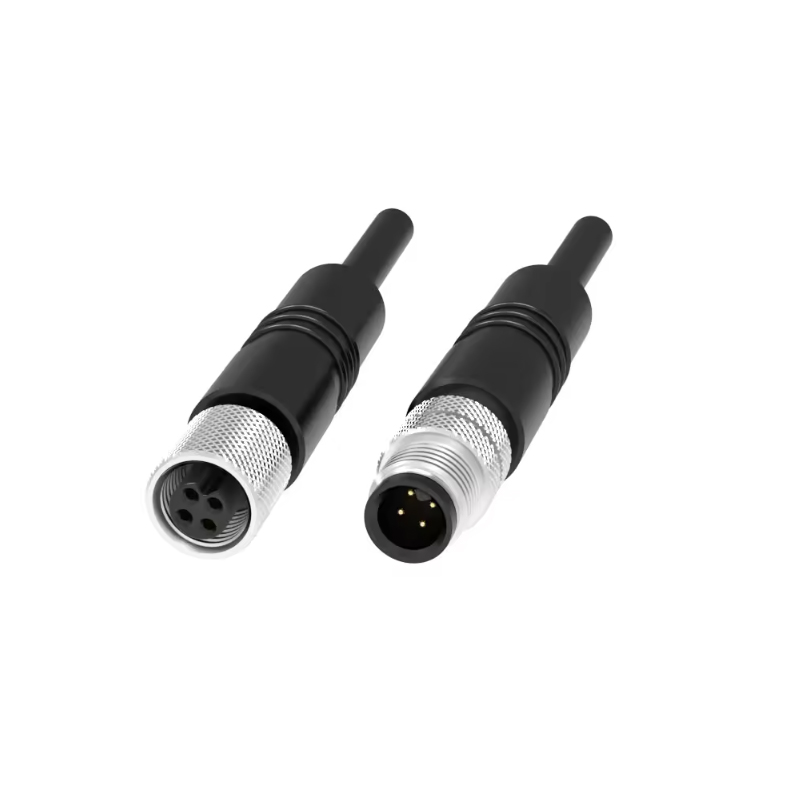
An IP67 badge tells you a product survived a one-time dunk in calm, shallow water for thirty minutes under lab conditions. It says nothing about what happens after months of UV exposure, temperature swings, or the constant flexing of a cable jacket. A connector that passes the test on day one can still leak when a cheap O-ring hardens in the cold or a gasket takes a permanent set after being clamped too long. If you rely only on the label, you're trusting a snapshot instead of a track record.
Look for design details that show the manufacturer actually thought about water ingress beyond the test tank. Redundant seals, wide compression surfaces, cable glands with strain relief that keeps the seal centered, and materials specified for your real operating range all point to long-term reliability. A brand that publishes torque values, seal replacement intervals, or pressure test data is far more useful than one that just prints "IP67" on the housing. Ask what happens when the seal is dirty, when the cable bends sharply near the entry, or when the enclosure breathes through daily thermal cycling.
The most honest evidence often comes from field failures and how they were handled. Does the vendor share revised gasket compounds or updated installation guides after a batch of outdoor returns? That kind of transparency beats a wall of certifications. An IP67 rating is a starting point, not a guarantee. The real question is whether the sealing system holds up under the conditions your product will actually face, not the ones in the test specification.
Evaluate Locking and Contact Materials for Vibration and Washdown Duty
Harsh washdown environments punish hardware that isn't chosen with care. The locking mechanism on an enclosure or access panel must hold tight while pumps, conveyors, or spray nozzles run through their cycles, and the constant mist, detergent, and temperature swings work against anything loosely specified. A cam latch with a zinc die-cast body can look sturdy on a shelf, but after months of chemical exposure the plating thins, the pawl starts to drag, and the operator begins forcing the handle. That's when doors get left half-seated or hardware gets bent, both of which invite more moisture into the cabinet.
For vibration duty, the contact surfaces matter as much as the locking force. Stainless steel on stainless steel holds up better than mixed metals, especially if the pawl has a slight ramp or over-center travel so it stays engaged under harmonic shaking. Adding a non-metallic bumper, like a glass-filled nylon strike or an acetal wear pad, gives the latch a bit of give without letting it rattle open. The key is to keep the mating faces from fretting against each other. Where washdown is frequent, look for a smooth profile with few crevices, and avoid springs or retaining rings that can collect residue. A sealed or shielded pivot point helps prevent the kind of gritty buildup that turns a smooth twist into a two-hand struggle.
Field changes are rarely isolated. If you're replacing a latch on a machine that runs 24/7, grab a sample and cycle it wet—open, close, twist, slam—until it feels consistent. Check the finish after a week of exposure to your actual cleaning agent, not just water. A stainless latch with electropolished surfaces may show no staining, while a passivated 304 part could begin to pit if chlorides are in the mix. When vibration is severe, add a secondary retention like a hasp with a padlock loop or a quarter-turn fastener with a detent that keeps the cam from backing off. The goal is straightforward: the door stays shut until a person intentionally opens it, and the hardware doesn't fight back after a few hundred cycles in a wet, shaking line.
Ask Whether the Company Can Provide Custom Cable Assemblies or Overmolding
Before you settle on a supplier, find out if they actually have in-house capabilities for custom cable assemblies and overmolding—or if they're just farming the work out to a third party. A quick conversation about tooling, material choices, and lead times can tell you a lot. Some shops only handle simple cut-and-strip jobs, while others can design a full overmolded connector from a rough sketch. Ask for photos of past projects that involved tight bend radii, unusual jacket materials, or multi-shot molding. If they hesitate or keep saying "we can probably do that," it usually means you'll be the one dealing with the learning curve.
Custom overmolding is not just about sealing out moisture. It's also about strain relief, color coding, and creating a finished look that doesn't feel like an afterthought. A company that does this well will ask about your operating environment, flex cycles, chemical exposure, and even how the cable gets handled during installation. Those questions are a sign they understand the failure modes. On the other hand, a company that only quotes based on wire gauge and length is likely missing half the picture. Push them on whether they can recommend a material for a specific durometer or a bonding method for a particular jacket.
If you need something beyond a standard catalog part, don't make assumptions. Ask directly whether they can modify an existing design or build from scratch, and ask how they handle low-volume prototypes versus full production runs. The answer should include specifics: mold design fees, overmold material options, minimum order quantities, and testing. When a company can walk you through those details without vague hand-waving, you're probably talking to the right team.
Probe Lead Times, Buffer Stock, and Minimum Order Quantities Early
Asking about lead times, buffer stock, and minimum order quantities at the start of a sourcing conversation can feel like opening a negotiation before you've even said hello. Yet waiting until drawings are finalized to raise these questions often leaves teams scrambling when a supplier quietly mentions a twelve-week production window. The conversations that go smoothest are the ones where these constraints surface during the first technical review, not after the purchase order is drafted.
Buffer stock habits vary more than you might expect from one factory to the next, even when they quote similar prices. One vendor might carry enough raw material to absorb a two-week demand spike, while another builds strictly to order and treats any inventory as waste. Knowing which mindset you are dealing with changes how you plan safety margins internally, and it is far easier to adjust that plan before a production slot is locked.
Minimum order quantities are rarely as fixed as a catalog suggests. If the MOQ feels out of reach, early probing usually reveals flexibility tied to shared tooling, combined production runs, or phased delivery schedules. But that flexibility disappears quickly once a supplier has committed their line capacity elsewhere. Early questions do more than gather data; they tell the factory you are serious about matching their constraints to your own instead of discovering them too late to matter.
Use Technical Questions to Test Whether the Supplier Understands Industrial Automation
Instead of asking a supplier if they have done automation projects, put a real problem in front of them. Show a section of a line with a VFD, a safety relay, and a barcode scanner, then ask what has to happen before the motor can restart after an e-stop reset. A supplier who actually understands industrial automation will start talking about feedback signals, reset conditions, and whether the safety circuit needs a manual confirmation. Someone who only knows catalog language will fall back on generalities about uptime and reliability.
Follow that with questions about devices that do not play nicely together. Ask how they would connect a legacy Modbus RTU scale to a newer EtherNet/IP PLC, or why a profinet line might need shorter cycle times on one segment. The goal is not to hear the right acronyms. It is to see whether their answers account for addressing limits, noise, cable length, and the way a PLC scan interacts with fieldbus timing. Those details rarely appear in brochures.
Finally, describe a realistic failure and ask them to trace it back to a cause. A palletizer jams and the infeed conveyor keeps pushing boxes for several seconds before an operator hits the stop. A knowledgeable answer will mention the location of the photo eye, the delay in the interlock logic, and what should be logged in the alarm history. If the response jumps straight to replacing a sensor, the supplier has probably learned the vocabulary without learning the machine.
FAQ
Look beyond the catalog rating. Ask for test summaries under washdown, thermal cycling, and rapid tool changes. A supplier that can show realistic failure modes and explain how the connector holds up against cleaning agents gives you more than a generic IP67 claim.
Neither alone is enough. Third-party marks confirm a baseline, but in-house data often covers the conditions that matter to you, like repeated autoclave cycles or specific cable flex patterns. A good company shares both and can tell you where the test setup differs from your floor.
Make the pilot mimic your worst shift, not your average one. Run the connectors through rapid connect-disconnect cycles, expose them to your actual cleaning or vibration profile, and watch how the vendor handles any failures. Their response during a small pilot usually predicts how they will behave on a larger order.
Ask about sealing after repeated mating, chemical compatibility with common coolants or sanitizers, and the cable strain relief design. If they immediately discuss the overmold geometry, contact plating, and torque specs rather than just listing IP codes, they likely understand field conditions.
Not automatically. A focused maker can offer deeper design support and faster custom changes, but a broader supplier may have better inventory and shorter lead times. The deciding factor is whether the people you talk to can trace a part back to its production lot and give clear failure data.
Capable manufacturers can usually handle alternative cable lengths, pigtail orientations, custom labeling, and modified overmold materials without treating every request as a special project. Box movers tend to quote long tooling changes for small variations because they do not control the production process.
If your line downtime costs more per hour than the savings from a lower unit price, the longer lead time is already too expensive. This becomes critical for replacement parts on aging machines, where waiting weeks for a connector can mean losing production, while a slightly higher unit cost from a company with local stock pays for itself quickly.
Conclusion
Sorting out the electrical requirements early changes the whole conversation. A supplier that asks for pin count, voltage, and current before quoting is usually one that has dealt with real control cabinets and sensor drops, not just catalog parts. But electrical fit is only half the picture. An IP67 rating on paper does not tell you how the connector behaves after thermal cycling, chemical exposure, or repeated mating in a wet area. Ask to see test data or field examples for the exact housing, grommet, and contact arrangement you plan to use. In washdown-heavy lines, pay attention to the locking mechanism and contact material. A stainless or nickel-plated brass body with a machined thread tends to survive vibration and aggressive cleaning far better than a generic molded lock that feels tight on day one but loosens after a few hundred cycles.
Beyond the component itself, the company's ability to handle the full assembly matters. If they can provide custom cable lengths, overmolding, or pre-wired connectors, you save time and avoid creating another point of failure at the panel. Ask early about lead times, buffer stock, and minimum order quantities because a great connector is useless if it arrives after the line is supposed to be running or forces you to buy thousands of pieces for a pilot cell. A handful of pointed questions about noise, shielding, and common automation protocols will quickly show whether the supplier has spent time on a plant floor. One that understands why a short M5 run on a robot arm needs different strain relief than a static conveyor sensor is far more likely to catch problems before they reach your floor.
Contact Us
Contact Person: Hayley Liang
Email: [email protected]
Tel/WhatsApp: +86 13480625451
Website: https://www.reunion-china.com/