

Low Power Consumption Air Compressors to Reduce Operational Costs Efficiently
2026-08-16
Energy costs can account for up to 80% of an air compressor’s lifetime expenses, yet many facilities still run units that quietly drain their budgets. Low power consumption air compressors flip that equation—delivering the same reliable output while slashing electricity bills and reducing carbon footprints. At Seize Air, we’ve seen how the right efficiency-focused design turns a hidden cost center into a competitive advantage. Here’s what makes these machines different and how to choose one that pays you back month after month.
Why Low-Power Compressors Cut More Than Just the Electric Bill
A low-power compressor rejects far less heat into its surroundings. In a confined mechanical room or a temperature-sensitive production floor, that reduction in thermal load means the air conditioning system doesn't have to run as hard to keep conditions stable. Over a year, the avoided cooling expense can rival the direct energy savings from the compressor itself. It's a quiet kind of efficiency that shows up on a different utility meter.
The acoustic profile changes too. Lower power draw typically comes with a slower, more balanced rotating assembly, which translates into less vibration and a noticeably softer operating noise. For workers who spend entire shifts near the equipment, this isn't just comfort—it's fewer distractions, lower stress, and better compliance with workplace noise exposure limits. Vibration reduction also means less fatigue on fittings, flanges, and pipe welds, cutting down on slow leaks that erode system performance over months.
Maintenance burdens shift in your favor when components run cooler and under less mechanical stress. Bearings, seals, and valves don't degrade at the same rate, so service intervals stretch out and unplanned downtime becomes rarer. When you add up avoided repair labor, spare parts, and lost production hours, the real payoff isn't the smaller electric bill—it's the operational resilience that hides in plain sight.
Matching Air Supply to Actual Demand Without Waste
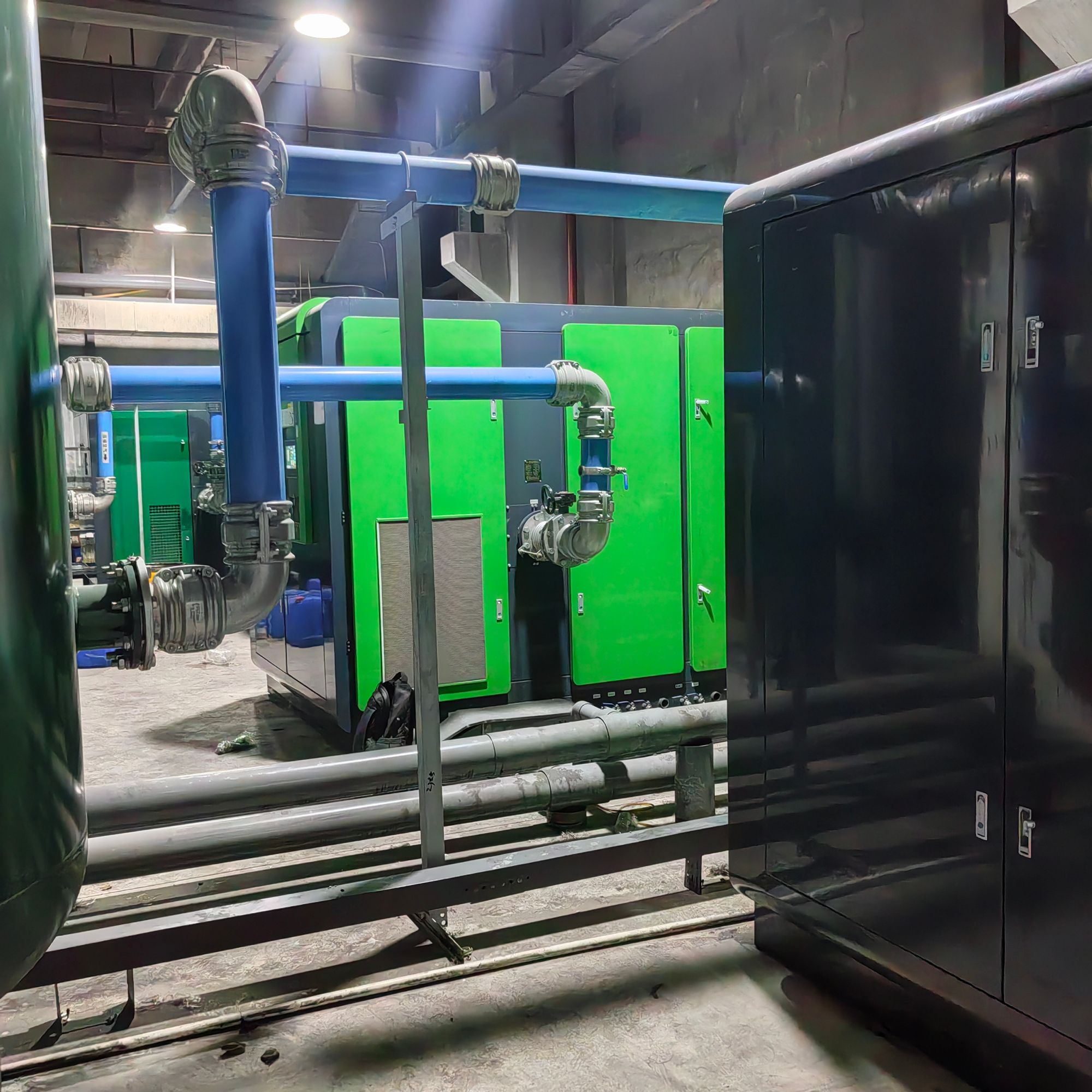
Compressed air systems often run at full pressure regardless of what the production floor actually needs, which quietly burns electricity and drives up operating costs. The core of waste-free operation is measuring real-time demand at each point of use, then letting the compressor controls trim output or bring units online only when pressure dips below a useful threshold. This isn't about running compressors at their maximum rating; it's about flattening the gap between generated air and consumed air.
A practical approach starts with logging pressure and flow over a full production week. Look for the lowest stable pressure that every tool and valve can accept, then set the load/unload or variable-speed drive to target that band instead of a generic factory default. Some plants discover they can switch off an entire backup compressor during second shift, or shorten the purge cycle on desiccant dryers, simply because the data shows demand never reaches the level the system was designed for. The result is less runtime, lower kWh per unit of air, and fewer maintenance intervals, without ever asking operators to work around a starved supply.
Fine-tuning storage and piping also matters. A receiver tank sized to buffer peak draws lets compressors cycle less often, and fixing leaks, which often account for 20-30% of demand, is a direct removal of phantom load. When supply follows actual demand rather than a fixed schedule, the system uses only what the process truly requires.
Heat Is Lost Money When Compressors Run Hot
Every degree above the optimal operating range translates directly into wasted electricity. Compressors already rank among the most energy-hungry machines in a facility, so when the discharge temperature creeps up, the motor works harder, amp draw increases, and the power bill follows. That excess heat is not harmless; it is cash escaping through the cooler, the aftercooler, and the pipe walls.
Hot running compressors also accelerate oil breakdown and wear on seals, rotors, and bearings. The more heat the system retains, the shorter the service intervals and the higher the chance of a mid-shift failure. Instead of treating high temperature as a normal operating quirk, view it as a leak in your budget. Fixing blocked coolers, low oil levels, or restricted airflow often costs far less than the energy and downtime that heat is causing right now.
Rethinking Motor Efficiency Beyond the Nameplate
Nameplate efficiency figures are useful for comparing motors under tightly controlled lab conditions, but they rarely reflect what happens once the motor is bolted into a real system. A motor stamped at 95% efficient can end up wasting far more energy than expected if it's oversized, running at light loads, or fed by an older drive that introduces harmonic losses. In many industrial plants, motors spend the bulk of their operating hours below 50% load — and that's where the gap between lab-tested and real-world efficiency widens considerably.
Part of the rethink involves looking past the motor itself to the entire power delivery chain. Voltage imbalance, poor power quality, long cable runs between drive and motor, and even ambient temperature shifts can quietly erode efficiency. A 2% voltage unbalance, for instance, can force a motor to draw noticeably more current to produce the same torque, pushing losses up without any visible change on the nameplate. Facilities that only track energy use at the main switchboard miss these local losses entirely.
A smarter approach treats efficiency as a dynamic, field-measured property rather than a static rating. Portable power analyzers or permanently installed sensors can reveal how a motor actually performs under varying process loads, and the data often surprises plant engineers. In one case, a 30 kW pump motor labeled IE3 was found to operate at just 78% system efficiency during typical throttled conditions — not because the motor was defective, but because the pump and valve combination forced it into a poor efficiency zone. Upgrading the motor alone would have yielded minimal savings; adjusting the process and adding a variable speed drive cut energy use by a third. That's the kind of insight you only get when you stop trusting the nameplate and start measuring reality.
Longer Service Cycles From Lower Thermal Stress
Heat is the silent enemy of any mechanical system. When components run hotter than their design intends, seals harden, lubricants thin out, and metals expand past their comfortable tolerances. By engineering designs that deliberately keep thermal stress low, each operating hour exacts a smaller toll on moving parts. This isn't just a matter of adding cooling fins or larger radiators—it often means rethinking airflow paths, using materials that shed heat faster, or placing heat-generating sections away from wear-sensitive areas. The result is that the machine doesn't have to fight its own temperature before it starts the day's work.
Lower thermal stress translates directly into fewer unscheduled stops. Bearings that don't overheat keep their preload longer, electrical windings avoid insulation breakdown, and hydraulic fluids don't oxidize into sludge. A system that runs cooler can also stretch the time between routine teardowns: there's less carbon buildup on pistons, less corrosion on exhaust components, and less chance of warped mating surfaces. Operators notice this as a calendar that fills with productive hours instead of maintenance windows. The savings compound quietly—fewer replacement parts on the shelf, less labor tied up in inspections, and a machine that's simply available when it's needed.
The design philosophy behind extending service cycles through thermal management often shows up in subtle choices. Maybe the oil cooler is oversized by twenty percent, or the cylinder head uses a heat-dissipating coating, or the fan kicks in earlier than strictly necessary. These aren't flashy features you'd put on a spec sheet headline, but they're what separates equipment that needs attention every few hundred hours from equipment that runs for thousands without complaint. In the long view, a cooler-running machine isn't just more reliable on paper—it keeps working while the hot-running alternative sits in the bay, waiting for a part that failed because it was always running angry.
The Real Payback of Sizing Compressors for Everyday Loads
Sizing a compressor for everyday loads instead of rare spikes changes the payback math more than any efficiency upgrade on paper. Fixed-speed machines running at 20 to 40 percent load waste a huge share of their input power just holding pressure. A right-sized unit, especially a variable-speed drive model, spends most of its hours in the sweet spot where the motor and airend are actually doing useful work. That cut in unloaded run time and pressure hysteresis shows up on the electric bill within the first month.
There's also a second payback: longer service life and fewer nuisance trips. Oversized compressors short-cycle, heat up, and pull moisture through the system because they're never fully loaded enough to drive off condensation. A properly matched compressor runs longer, steadier cycles, keeps oil and air temperatures in a healthy range, and extends the life of filters, separators, and downstream dryers. That lowers both parts spend and unplanned downtime.
Field audits consistently find that plants can drop one or two frame sizes without losing production. The capital savings from buying a smaller unit often covers the cost of storage or piping improvements that further flatten demand. Payback typically lands between 18 months and three years, and after that the savings compound every time the compressor starts.
FAQ
The savings come from two directions. First, they draw less electricity during every hour of operation, which shows up directly on the utility bill. Second, many designs reduce waste heat and pressure drops, so the system doesn't have to work as hard to deliver the same output. Over a year in a typical workshop, that combination can cut energy spending by 20–35%.
Not necessarily. Modern variable-speed and direct-drive designs match motor output to actual demand instead of running at full blast all the time. A well-sized low power unit can deliver the same cubic feet per minute at the working pressure you need, just with less idle current and fewer wasted starts.
Fixed-speed units are simpler and cheaper up front, but they cycle on and off and can waste energy during idle. Variable-speed units adjust the motor speed to the air demand, which keeps the pressure band tighter and avoids repeated starts. In applications where air use fluctuates, variable-speed often pays for itself within one to two years.
Yes, in many cases. Adding a pressure controller, fixing leaks, upsizing storage tanks, and installing a start-stop control can lower consumption without replacing the whole machine. If the motor is old and oversized, however, switching to a right-sized low power compressor usually brings the biggest improvement.
Any operation with long daily runtimes or fluctuating demand gets the strongest results. Small workshops, dental clinics, food packaging lines, textile plants, and electronics assembly often see rapid payback because compressed air runs for hours even when the actual need is intermittent.
Many low power designs run cooler and with fewer mechanical stress points, so maintenance can be lighter. But you still need to keep intake filters clean, check belts if present, drain moisture, and monitor for leaks. A neglected system wastes far more energy than the compressor rating suggests.
They can cost 10–30% more than a basic fixed-speed unit of the same size, but the premium is often recovered quickly. When you calculate the total cost over five to seven years, energy use usually dominates the purchase price, so the efficient model ends up cheaper.
There isn't one universal figure. Lowering system pressure by just 1 bar can reduce energy use by roughly 7%, so the best approach is to set the compressor to the minimum pressure your tools or processes actually require. Clean, dry air at that lower setting keeps both power draw and moisture problems down.
Conclusion
Low-power air compressors do far more than trim monthly kilowatt-hours. They run cooler, and that lower thermal load directly reduces energy escaping as waste heat while easing stress on seals, bearings, and lubricants. Instead of paying for heat you never wanted, you keep more energy where it belongs: in compressed air. Pair that with demand-based controls that match supply to actual usage, and the savings stop being abstract. Oversized units cycle on and off, wasting energy and wearing components faster. A right-sized low-power machine holds a steadier rhythm, avoiding the spikes that inflate both power draw and maintenance calls.
Real efficiency also means looking past the motor's nameplate rating. Manufacturers optimise for a narrow window, but most facilities operate well below peak conditions. Compressors tuned for everyday loads, not rare maximums, deliver better part-load performance and longer service intervals. With reduced thermal stress, oil stays cleaner, valves stay tighter, and rebuilds get pushed further out. The payback isn't just a spreadsheet calculation on kWh; it shows up in fewer emergency repairs, lower cooling costs, and a machine that quietly matches the plant's actual air demand without burning money as heat or idle time.
Contact Us
Contact Person: Mia
Email: [email protected]
Tel/WhatsApp: +86 19821985894
Website: https://www.seize-air.com