

How to Choose a High-Quality Laser Hair Removal Glasses Manufacturer
2026-11-24
Laser hair removal glasses often look identical in product photos, but what separates a trustworthy manufacturer from a risky one rarely shows up on a website. It lives in the details: optical density consistency, wavelength-specific protection, certification traceability, and whether the lenses actually hold up after repeated use. If you're sourcing for a clinic or a brand, choosing wrong isn't just an inconvenience—it can compromise safety, damage your reputation, and create serious liability. That's why a smart buying process goes far beyond comparing prices and lead times. It means asking harder questions about testing, materials, and manufacturing controls. Throughout this guide, we'll break down those criteria in plain terms so you can evaluate suppliers with confidence. You'll also discover why experienced buyers increasingly turn to LASERPAIR for laser safety eyewear that combines certified protection, consistent quality, and practical design. Whether you're evaluating your first factory or replacing a long-time vendor, what follows will help you spot the difference between marketing language and real optical performance.
Separate Real Optical Data From Marketing Claims
Marketing materials lean heavily on words like “ultra-sharp,” “HD clarity,” and “lab-grade precision,” but those phrases rarely correspond to a measurable specification. Real optical data shows up as MTF curves, transmission percentages at specific wavelengths, distortion values, and stray light coefficients. If a product sheet doesn’t cite test conditions or tolerances alongside those numbers, the claim isn’t optical data—it’s copywriting.
A more dependable approach is to ask what was measured, how it was measured, and under what conditions. A transmission figure without a wavelength range or a resolution claim without line-pair thresholds tells you almost nothing. Batch-to-batch consistency matters as well: a single hand-picked sample can perform well in a demo while production units vary noticeably. Suppliers worth taking seriously can provide the raw data, not just a summary chart with a glowing adjective attached.
Pricing, brand reputation, and packaging design often create the impression of superior optics, but none of these are substitutes for clear numerical performance. When comparing options, put the claimed benefits side by side with actual test reports. If the gap between the two is wide, or if the vendor hesitates to release detailed results, that separation between evidence and enthusiasm is exactly what you need to pay for.
Why Frame Fit Decides Whether Staff Actually Keep Them On
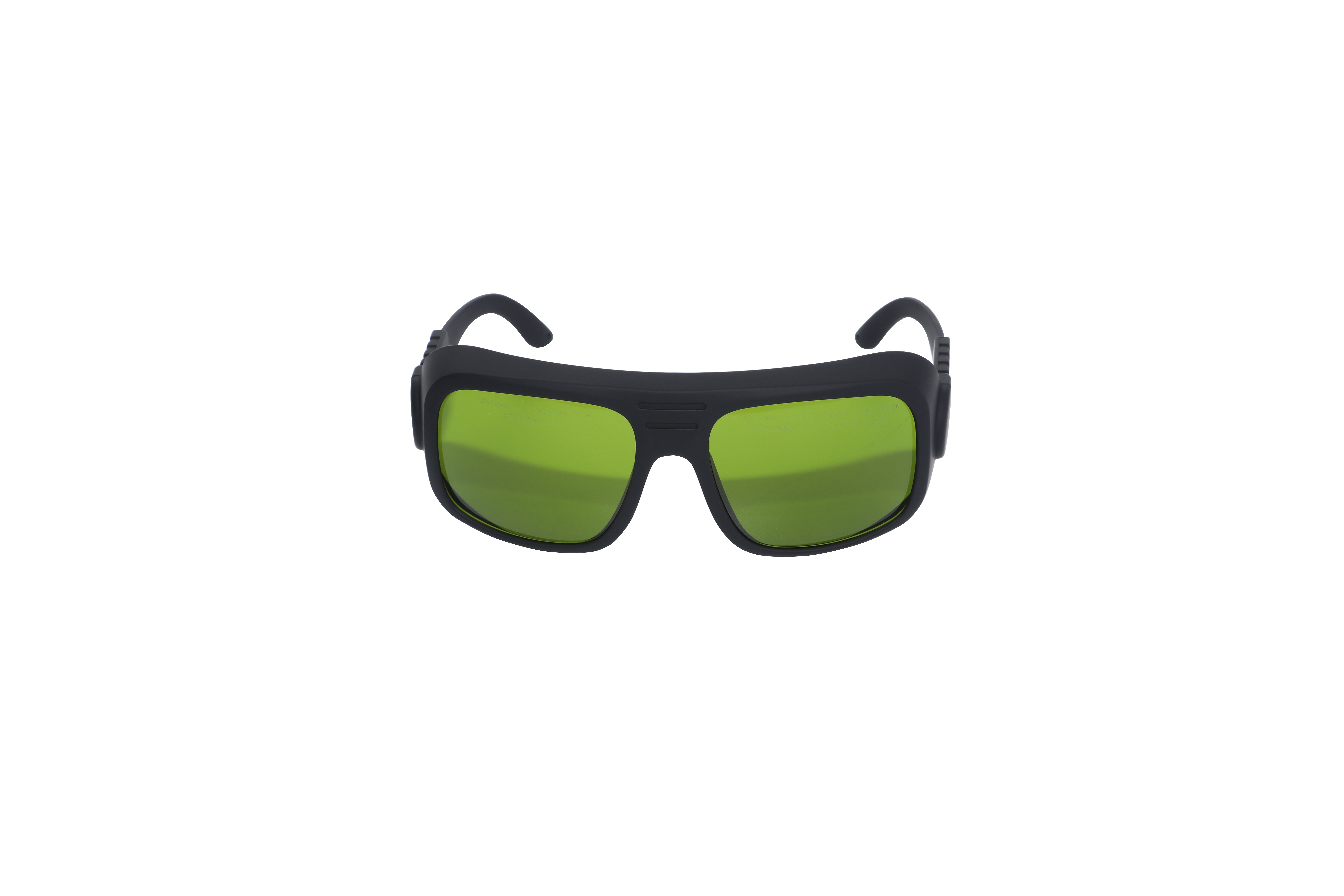
Comfort complaints in safety programs usually get blamed on lens coatings or frame weight, but the real reason glasses end up shoved into a pocket is a fit that fights the face all shift long. A temple that pinches behind the ear or a nose pad that leaves a red groove by lunch turns a supposedly mandatory piece of PPE into a constant, low-grade irritation. When that happens, people stop wearing them not because they forgot, but because their body remembers the discomfort faster than any training video ever could.
A frame that sits too low slips every time someone looks down at a parts bin or a patient chart. One that sits too high cuts into the brow and makes overhead work miserable. Neither problem gets solved by tightening the temples harder—that just trades one pressure point for another. The frames that actually stay on are the ones where the wearer stops noticing them within the first hour. That kind of invisible fit comes from matching bridge width, temple length, and pantoscopic tilt to the individual face, not from handing everyone the same one-size-fits-most model.
It is easy to assume staff are being careless when compliance numbers drop, but a more useful question is whether the frame is fighting the natural movement of the job. Someone who bends, turns, and looks down constantly needs a different fit than someone standing at a workstation. When the fit matches how the person actually moves, the glasses stop being a separate object they have to manage and become something they forget they are wearing. That forgotten feeling is the real measure of whether a safety frame works.
Look for Evidence of Laser-Specific Testing
Requesting a spec sheet is not enough. Ask the vendor to walk you through their laser-specific test logs, especially any measurements taken after the laser head was assembled rather than just bench data from the diode manufacturer. Look for pulse-to-pulse stability, beam profile over a range of temperatures, and actual power at the work surface. These details tend to reveal whether the system was tested as a complete tool or described from component datasheets.
Also check whether the testing covers the exact material and speed you plan to run. A laser can cut clean circles in acrylic but struggle with edge quality on polycarbonate or thin stainless steel. If the supplier cannot show test coupons, cut samples, or a short video with the settings used, treat that as a gap rather than a dealbreaker—but push for a trial before committing.
Finally, ask how failures are recorded. Real laser testing produces outliers: overheated optics, gantry drift, or inconsistent engraving depth on corners. A vendor who shares only polished marketing shots may be hiding that record. One who can show a raw test log with occasional flagged issues is usually the one who understands the equipment well enough to support it later.
Questions That Reveal a Manufacturer’s Real Expertise
Ask how they handle tolerance stacking when a customer requests both tight dimensional specs and a cost-reduction target. The answer tells you whether they are quoting a number or engineering a solution. A manufacturer with real expertise will walk you through the trade-offs upfront, explain which features can absorb variance, and propose a few alternative approaches before committing to a price. If the conversation stays on price per part and lead time, you are likely talking to a shop that only knows how to run the machine, not how to think through the part.
Another telling question is what they do when a first-article inspection fails on a dimension that was never flagged as critical. Strong manufacturers do not just rework the part and hope for the best. They trace the root cause back to tool wear, workholding deflection, or an unstable process parameter, then document the correction so the next run does not repeat the same mistake. The willingness to share that failure story, including the messy details, is often a better indicator of expertise than a flawless sample part.
Finally, ask about the design changes they have suggested to past customers that had nothing to do with lowering cost. If they can name a specific example, such as moving a parting line to improve sealing or adjusting a draft angle to eliminate a secondary operation, you are dealing with people who understand how a part actually behaves in production. Those who answer with vague claims about 'working closely with clients' rarely have the manufacturing depth to back it up.
How Minor Defects Expose Quality Control Standards
A loose thread on a newly finished hem rarely matters on its own, but it can show whether a factory has a defined standard for trimming and final inspection. When a sample requires seams to lie flat under particular lighting, one missed thread usually means a step was skipped or the tolerance was never made clear to the person at the bench. The defect itself is small; the reason behind it is not.
Minor flaws also expose consistency across a production run. Two supposedly identical jackets with slightly different pocket placement or a color shift visible only in daylight rarely point to the fabric. They point to weak incoming material checks or a lack of proper alignment guides during assembly. Each small deviation becomes a clue about which stage of the process is not being measured carefully enough.
How a brand reacts to tiny imperfections is often more revealing than a flawless final sample. A workshop that marks a subtle zipper scuff, records it, and adjusts the polishing step has a system designed around repeatable checks. One that waves off the same scuff as acceptable for the moment exposes a standard that bends under schedule pressure. Over time, those small defects separate operations that treat quality as a controlled process from those that simply hope for the best.
Custom Orders Shouldn’t Mean Chasing the Supplier
Placing a custom order often feels like signing up for a part-time job in supplier management. You email a revision, wait three days, get a spec sheet that misses the point, then repeat the cycle. The real problem is not the customization itself, but the assumption that every tweak requires you to become the project manager. A better approach is to front-load the details: clear measurements, material preferences, and tolerance limits in the first message. That single step shifts the burden back where it belongs, and suddenly the supplier is chasing clarity instead of you chasing the supplier.
When the process is set up poorly, every minor adjustment becomes a fresh negotiation. You end up spending more time explaining what you meant than actually reviewing the product. The trick is to treat the initial brief like a contract, not a conversation. List what must be exact, what can vary, and what happens if either side misses. This isn't about being difficult; it's about removing ambiguity before it turns into another round of follow-up emails. Once the supplier knows you've thought things through, the tone shifts from defensive to cooperative.
There will always be revisions, and that's fine. What shouldn't happen is a back-and-forth loop that burns a week over a two-millimeter difference. By putting the decision-making criteria on paper early, you turn customization from an open-ended chase into a defined workflow. The supplier knows the finish line, you know the checkpoints, and neither of you has to wonder who drops the ball next.
FAQ
Ask for the actual test reports, not just a certificate. A serious manufacturer will be able to send you spectral transmission curves from an accredited lab, showing exactly how much light passes through the lens at specific wavelengths. If they hesitate or only provide a generic CE mark, that is usually a sign their quality control stops at the brochure.
The easiest way is to request a compatibility table that lists laser types, wavelengths, and optical density values side by side. Then test a sample with your own equipment if possible. Manufacturers that truly understand laser safety will ask about your device's wavelength and operating mode before recommending anything.
Peripheral exposure is a common reason protective eyewear fails in real use. Look for wrap-around frames, side shields that do not leave gaps, and nose bridges that stay put during long sessions. If a manufacturer cannot explain how the frame blocks stray reflections, their lens specs may not protect you in practice.
Pay attention to how they respond when you change a detail. A capable supplier will discuss mold availability, lens curvature, branding placement, and packaging adjustments without immediately pushing you toward stock options. The ones that only say yes to everything often lack the technical depth to deliver what they promise.
Request batch records or ask how they control tint density and lens thickness from one run to the next. You want to hear about incoming material checks, in-process measurements, and final sampling rates. If the answer is vague or they claim zero defects without explaining how that is achieved, treat it as a red flag.
Beyond replacement policies, ask if they can help with user training materials, storage guidance, and periodic inspection reminders. A manufacturer that understands laser safety will care about how the glasses perform over their service life, not just whether the shipment arrived on time.
It is not mandatory, but it usually shortens the feedback loop when something goes wrong. In-house spectrophotometers, impact testers, and accelerated aging chambers let them investigate issues quickly instead of waiting on a third-party lab. That speed often translates to faster corrective actions for you.
Lower minimums are not automatically better. A manufacturer with realistic MOQs and stable lead times usually has a steady production flow and reliable material sourcing. Extreme flexibility can sometimes mean they are outsourcing heavily or cutting corners, so ask them to explain what drives their quoted figures.
Conclusion
Most suppliers can quote a wavelength range, but the more useful question is whether their lenses still perform after repeated exposure to the specific diode wavelengths and pulse energies used in laser hair removal equipment. Request test reports that name the laser types and energy densities instead of accepting marketing sheets that repeat generic OD values. A manufacturer that dodges this request usually has not done the relevant testing, or is relying on data borrowed from other products. You can also judge quality control through small details: slightly warped frames, uneven lens tint, rough hinge screws, or side shields that do not sit flush are rarely isolated issues. They indicate a production line without tight inspection gates, and the same gaps can later appear in optical clarity or coverage reliability.
Comfort decides whether staff actually keep the glasses on during long treatment sessions. If the frame slides, pinches, or fogs too easily, people will lift them off between pulses and the protection becomes theoretical. Ask about adjustable temple lengths, weight distribution, nose pad options, and how the frame performs on different face shapes. A serious manufacturer will talk about temple pressure, lens angle, and peripheral coverage, not just style. Also test their project handling before you commit to a custom order. A supplier that confirms every dimension, material spec, and proofing step up front is far easier to work with than one that needs repeated reminders. If you are already chasing them at the sample stage, that pattern usually continues after production begins.
Contact Us
Contact Person: Jenny
Email: [email protected]
Tel/WhatsApp: +86 13537713281
Website: https://www.laserpair-safety.com/