

High-Quality Rotary Joints: Unveiling Their Critical Role in Seamless Operations
2026-07-21
In the world of modern machinery, seamless rotation is not just a luxury—it’s a necessity. High-quality rotary joints serve as the silent backbone of countless industrial processes, enabling the reliable transfer of fluids and gases while parts spin at high speeds. Yet, their critical role often goes unnoticed until something fails. This blog pulls back the curtain on how these precision components keep operations running smoothly, spotlighting the engineering excellence behind MOFLON’s innovative solutions. Get ready to discover why investing in the right rotary joint can be a game-changer for your equipment’s performance and longevity.
Beyond Basic Connections: The Engineering Marvel of Rotary Joints
Rotary joints, often overlooked in the grand tapestry of mechanical design, accomplish a feat that static connections can only dream of: the seamless transfer of fluids, gases, or electrical signals across a continuously rotating interface. Unlike a simple pipe fitting, which remains motionless, a rotary joint must maintain a dynamic seal while accommodating everything from slow, ponderous turns to blistering rotational speeds. This delicate balance between motion and containment makes them indispensable in applications ranging from wind turbines yawing into the wind to high-speed printing presses churning out thousands of pages per hour. The core engineering challenge lies not just in preventing leaks but in doing so with minimal friction, wear, and maintenance, all while handling extreme pressures, temperatures, and sometimes multiple media types simultaneously through the same rotating union.
Delving deeper into their anatomy reveals a world of precision-engineered components working in harmony. At the heart of every rotary joint sits a sealing mechanism—often a combination of spring-loaded carbon graphite, advanced polymers, or ceramic faces lapped to astonishing flatness. These materials are chosen not just for their wear resistance but for their ability to conform to minute imperfections, creating a micro-thin fluid film that lubricates the interface. In more complex designs, you’ll find sophisticated ball bearing assemblies that counteract axial and radial loads, ensuring alignment remains true even under stress. The housing itself might incorporate cooling channels or drainage ports to protect sensitive electronics in nearby slip ring assemblies. What separates a truly exceptional rotary joint from an ordinary one is this holistic attention to thermal expansion, pressure surges, and the relentless vibration that threatens to undo even the most robust construction.
Looking beyond the workshop floor, the impact of advanced rotary joints ripples through industries in transformative ways. In robotic arms, they enable the continuous rotation of welding torches without tangling hoses, dramatically improving cycle times. Deep beneath the ocean’s surface, rotary joints on remotely operated vehicles withstand crushing pressures while transferring hydraulic power to manipulators. In the realm of semiconductor manufacturing, ultra-clean rotary unions transport aggressive chemicals with leak rates measured in parts per billion, directly influencing chip yields. Perhaps most critically, in concentrated solar power plants, high-temperature rotary joints allow heat transfer fluids to circulate from the mirror array to the central tower without escape, pushing the boundaries of renewable energy efficiency. These are not mere connectors; they are enablers of motion, silent partners in the relentless pursuit of better, faster, and more reliable machinery.
Precision in Motion: How High-Quality Joints Eliminate Downtime
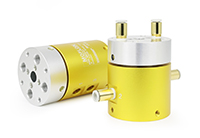
In industrial machinery, even the smallest misalignment can cascade into hours of lost productivity. High-quality joints are engineered to maintain exact tolerances under demanding conditions, ensuring that every rotation, pivot, and transfer occurs without deviation. By absorbing vibration and resisting wear, they prevent the micro-movements that lead to premature failure. This precision keeps production lines moving, avoiding the unplanned stops that erode output and reliability.
The secret lies in material selection and manufacturing consistency. Premium joints use hardened alloys and advanced sealing technologies to block contaminants that degrade performance over time. Unlike standard components, they undergo rigorous testing to verify load capacity and fatigue resistance, meaning they simply work longer without attention. For operations where every second counts, this translates directly into less maintenance intervention and sustained throughput.
Downtime often originates from overlooked connection points that gradually drift out of spec. A high-quality joint maintains its integrity across thermal cycles and pressure fluctuations, acting as a stable foundation for complex assemblies. When you eliminate that variability, you eliminate the root cause of most unexpected shutdowns. It’s a quiet but powerful advantage—one that transforms motion from a potential failure point into a dependable, repeatable asset.
Seamless Synergy: The Hidden Heroes Behind Uninterrupted Workflows
Uninterrupted workflows don’t happen by chance—they’re quietly sustained by a mesh of often overlooked elements. From automated alerts that nudge a stalled process back to life, to the cache layers that remember your last action so you don’t have to, these guardians work without fanfare. They bridge gaps between systems that were never meant to talk to each other, turning potential friction into a smooth, continuous hum.
Consider the real-time sync that keeps a distributed team on the same page, or the fault-tolerant design that reroutes data when a server blinks. These aren’t features listed on a sales page; they’re the quiet architecture of reliability. They absorb shocks, correct tiny errors before they cascade, and let humans stay immersed in their craft instead of wrestling with tools. The result is a flow so natural you might never notice the intricate coordination happening behind the curtain.
Material Integrity: Why Top-Tier Components Defy Wear and Tear
High-end components aren't simply machined to tighter tolerances—they're born from materials engineered at the molecular level to resist the slow, persistent assault of friction, heat, and chemical exposure. In a standard steel bearing, microscopic carbides can fracture over time, creating pits that spiral into catastrophic failure. Premium alternatives, however, often use vacuum-remelted alloys where impurities are virtually eliminated and grain structures are uniformly refined. This means the surface isn't just hard; it retains a kind of fatigue-resistant toughness that shrugs off the repetitive stress cycles that would initiate cracks in ordinary metals.
The defiance of wear and tear also stems from advanced surface treatments that alter the outermost atomic layers without compromising the core. Consider a titanium valve: untreated, it galls against its seat, gradually losing material through cold welding. But when that valve undergoes oxygen diffusion hardening or receives a diamond-like carbon coating, the interaction changes fundamentally. The surface becomes chemically inert, dramatically reducing adhesive wear, while the underlying metal stays ductile enough to absorb shock. This duality—a Ceramic-hard exterior over a resilient bulk—is what allows critical parts to endure millions of load cycles without measurable degradation.
Finally, the holistic approach to material integrity extends to how components interact under real operating conditions. Top-tier manufacturers don't merely select a robust steel; they consider thermal expansion compatibility, lubricant retention at microscopic crevices, and the way a stressed component redistributes load. For instance, a racing engine's connecting rod might be shot-peened to introduce beneficial compressive stresses on its surface, a treatment that would be overkill in a commuter car but proves transformative at 10,000 RPM. Such meticulous layering of inherent material properties and secondary treatments transforms a collection of parts into a cohesive system that simply outlasts the ordinary.
Fluid Dynamics Mastery: The Role of Rotary Joints in Optimal Performance
Rotary joints, often overlooked in larger system designs, serve as critical gateways where fluid must transition between stationary and moving parts. Their internal geometry directly shapes how energy dissipates or is conserved, with precise tolerances minimizing turbulence at the junction. In high-pressure hydraulic circuits, a poorly machined rotary union doesn't just leak—it creates chaotic vortices that erode sealing surfaces and steal torque. Mastering these interfaces means understanding that every groove, chamfer, and bearing clearance either subtracts from or adds to the overall fluid efficiency. Designers who treat rotary joints as simple connectors miss the chance to tune flow characteristics, often losing 5–15% of system potential before the primary workload even begins.
Beyond basic sealing, the true art lies in matching joint architecture to the fluid's behavior under dynamic conditions. For low-viscosity media spinning at thousands of RPMs, centripetal forces can starve the seal interface unless the internal sleeve incorporates a self-pumping helix. Conversely, high-viscosity fluids demand wider internal channels and slower pressure drops to prevent cavitation. A well-designed rotary joint doesn't just allow rotation—it becomes an active participant in flow conditioning, straightening distorted streams and damping pressure pulsations that would otherwise rattle through the rest of the circuit. This subtle orchestration keeps downstream components from absorbing fatigue cycles they were never rated for.
Field performance consistently shows that systems built around properly matched rotary joints exhibit steadier gauge readings, cooler operating temps, and fewer nuisance maintenance events. The difference often traces back to how the joint handles the transient moments—startup surges, abrupt reversals, or flow drops—where off-the-shelf units tend to flutter. By honing these transition zones, fluid circuits achieve a rhythm that feels almost self-regulating, with emergency bypasses actuating less frequently and lubricity remaining stable across wider load bands. In essence, fluid dynamics mastery isn't just about straight pipes and efficient pumps; it's about cultivating intelligence at every point where the flow path bends, and rotary joints represent the most concentrated opportunity to exercise that control.
Future-Proofing Operations: Innovations Driving Rotary Joint Evolution
Rotary joints have quietly become the unsung heroes of modern industrial machinery, channeling fluids or gases into rotating parts without missing a beat. Yet as production lines speed up and tolerances shrink, the old guard of brass-and-rubber designs is starting to show its age. Leaks, heat buildup, and unplanned downtime are no longer accepted as the cost of doing business. Manufacturers are now demanding components that can keep pace with smart factories and punishing duty cycles. This shift has sparked a wave of engineering that doesn’t just patch outdated models but rethinks how rotary unions should function from the ground up.
The real breakthroughs are happening at the material and seal interface level. Advanced ceramics and proprietary carbon composites are replacing traditional metal-on-metal contacts, delivering higher pressure ratings and cooler operating temperatures. Meanwhile, hydrodynamic seal geometries are being tuned with computational fluid dynamics to turn lubricant flow into a self-cleaning mechanism, drastically extending service intervals. Integrated sensors—once a luxury—are becoming baseline features, offering real-time feedback on wear, temperature, and pressure. These aren’t incremental gains; they redefine what reliability means in applications ranging from semiconductor fabrication to wind turbine pitch control.
What truly guards against obsolescence, however, is the move toward modular architectures. Instead of scrapping an entire unit when one channel fails, operators can swap out individual seal cartridges or upgrade communication modules on the fly. This adaptability meshes perfectly with Industry 4.0 environments where data-driven maintenance and rapid reconfiguration are the norm. Pair that with global certifications for extreme environments and media compatibility, and you get a component that isn’t just built for today’s specs but primed for whatever the next decade throws at it. The evolution is clear: rotary joints are no longer passive hardware but active enablers of operational resilience.
FAQ
A rotary joint, often called a rotary union, is a precision device that allows the transfer of media—like steam, water, thermal oil, or air—from a stationary source to a rotating machine part. It becomes indispensable in systems where continuous rotation and reliable sealing are both required, preventing leakage while maintaining flow under high pressure and temperature. Without a well-designed rotary joint, many industrial processes would face frequent downtime and dangerous fluid loss.
Several factors distinguish premium rotary joints: advanced seal technology using engineered materials like tungsten carbide or silicon carbide, tighter machining tolerances for reduced vibration, and design features such as balanced mechanical seals that compensate for pressure changes. High-quality units also undergo rigorous lifecycle testing, ensuring they handle thermal expansion and shock far better than generic alternatives, directly leading to longer service intervals and fewer unexpected failures.
In paper mills, for instance, a rotary joint supplies steam to dryer cylinders, enabling consistent heat transfer that directly affects sheet moisture and quality. Any interruption or temperature fluctuation causes rejects or web breaks. A robust rotary joint maintains uniform flow and temperature, eliminating production bottlenecks and start-stop cycles. Similarly, in steel continuous casting, they cool rollers uniformly, preventing thermal cracks and ensuring the slab surface remains flawless, which translates to uninterrupted, high-speed production.
A well-sealed rotary joint drastically reduces media loss—steam leaks, for example, don’t just waste energy but also create safety hazards and increase makeup water treatment expenses. Additionally, by maintaining optimal heat transfer efficiency, the process requires less energy input to achieve the same output. Over time, the savings from reduced fuel or electricity usage and lower maintenance manpower can exceed the initial cost difference between a mediocre and a top-tier joint.
Proper alignment during installation is non-negotiable—misalignment even by a few thousandths of an inch accelerates seal wear and causes vibration. Flexible hoses or guided supports should absorb mechanical offsets. Regular inspection of seal faces and drainage paths prevents contaminant buildup. Using the right lubrication cycle for bearings and monitoring internal leakage through sight glasses or sensors allows predictive replacement before catastrophic failure. Documenting these steps turns a reactive maintenance culture into a proactive one.
Newer designs incorporate split-body configurations for easy on-site seal replacement without complete disassembly, saving hours of downtime. Multi-spring seal technology ensures even face loading even if the joint encounters angular misalignment. Composite seal materials and diamond-like carbon coatings extend life in abrasive or chemically aggressive media. Moreover, integrated condition-monitoring sensors that track temperature, vibration, and leakage in real time are becoming standard, enabling Industry 4.0 connectivity and data-driven decision-making.
The selection begins with a full parameter mapping: media type, temperature range, pressure, rotational speed, and flow rate. From there, the seal type—pusher, bellow, or elastomeric—must match the media’s cleanliness and thermal cycling profile. For aggressive chemicals, stainless steel wetted parts and chemically resistant seals are essential. Consulting with manufacturers’ application engineers who use performance simulation tools can reveal the best balance between initial cost and lifecycle value. Always consider serviceability: can the joint be rebuilt easily on site?
Lean manufacturing targets waste elimination and flow efficiency. Rotary joints, though hidden inside equipment, directly affect both. A leaking joint creates physical waste (media loss) and process instability (waiting, defects). A reliable joint enables faster line speeds, smaller buffer inventories, and predictable maintenance windows. By removing the variability caused by inferior components, high-quality rotary joints become a cornerstone of stable, continuous improvement initiatives—quietly enabling just-in-time production without drama.
Conclusion
Rotary joints are far more than simple connectors; they represent a fusion of precision engineering and material science that keeps critical operations flowing without interruption. Every aspect, from the micro-tolerances in their sealing surfaces to the advanced alloys that resist corrosion, is designed to eliminate the kind of unexpected downtime that can cascade through a production line. When these components are built to the highest standards, they handle extreme pressures and temperatures while maintaining a silent, vibration-free rotation that protects both the machinery and the fluids being transferred. This level of reliability is not an accident—it’s the result of rigorous testing and a deep understanding of how fluid dynamics interact with mechanical motion. The best rotary joints create a sealed environment where steam, water, oil, or coolant moves with zero leakage, ensuring that every cycle of a machine operates at peak efficiency.
Behind the scenes, these unassuming units play a decisive role in future-proofing industrial operations. Innovations such as self-lubricating bearings, hybrid ceramic seals, and integrated sensor systems are transforming rotary joints from passive components into active contributors to overall equipment effectiveness. By adopting top-tier designs, facilities gain a silent partner that not only extends maintenance intervals but also adapts to changing demands without compromising performance. The hidden cost of inferior joints—premature wear, contamination risks, and energy losses—is replaced by a seamless synergy that keeps workflows humming. As automation and high-speed manufacturing become the norm, the demand for rotary joints that embody material integrity and fluid dynamics mastery will only intensify. Investing in quality today is a strategic move to safeguard tomorrow’s productivity, making these engineering marvels indispensable for any operation that refuses to settle for mediocrity.
Contact Us
Contact Person: Xiangpin Li
Email: [email protected]
Tel/WhatsApp: 86 186 1706 8578
Website: https://www.moflon.com