

High-Precision Optical Power Meter Supplier for Reliable Fiber Optic Testing
2026-10-25
When fiber optic networks demand exact measurements, the choice of optical power meter supplier makes all the difference. DVP brings high-precision instruments built for real-world testing—where a fraction of a decibel can mean the difference between clear signal and costly downtime. In this post, we explore why precision isn't just a specification, but the foundation of reliable fiber optic testing.
The Real Cost of a 0.05 dB Measurement Error
A 0.05 dB measurement error sounds harmless, but in precision RF and optical systems it quietly shifts every downstream decision. Convert that fraction of a decibel to linear power and you get roughly a 1.16% error. On a 500 W broadcast transmitter, that is nearly 6 W of uncertainty. When you are trying to stay just under a regulatory emission limit or avoid clipping a satellite transponder, that small percentage is the difference between a clean pass and an expensive retest.
The trouble compounds when the error is not isolated. A receiver chain might have a dozen components, each with its own 0.05 dB uncertainty. Stack them together and the aggregate uncertainty grows, turning a supposedly tight link budget into a guessing game. In satellite or microwave backhaul, an underestimated path loss of 0.05 dB can force a shift to a lower modulation scheme, cutting throughput by several percent. Over a year, that lost capacity has a direct dollar value on leased bandwidth or service level agreements.
Then there is the hidden cost in manufacturing and compliance. A power meter calibration error of 0.05 dB may let hundreds of units ship with output just outside the allowed tolerance. Field failures, warranty claims, and regulatory fines follow. On the other side, engineers who distrust their measurements often add extra margin—bigger amplifiers, larger antennas, more expensive filters—just to be safe. That conservatism inflates bill of materials without improving real performance. The true cost of a 0.05 dB error is rarely the error itself; it is the chain of overcorrections and undercorrections it triggers.
Why Your Current Meter Fails on 5G Fronthaul Tests
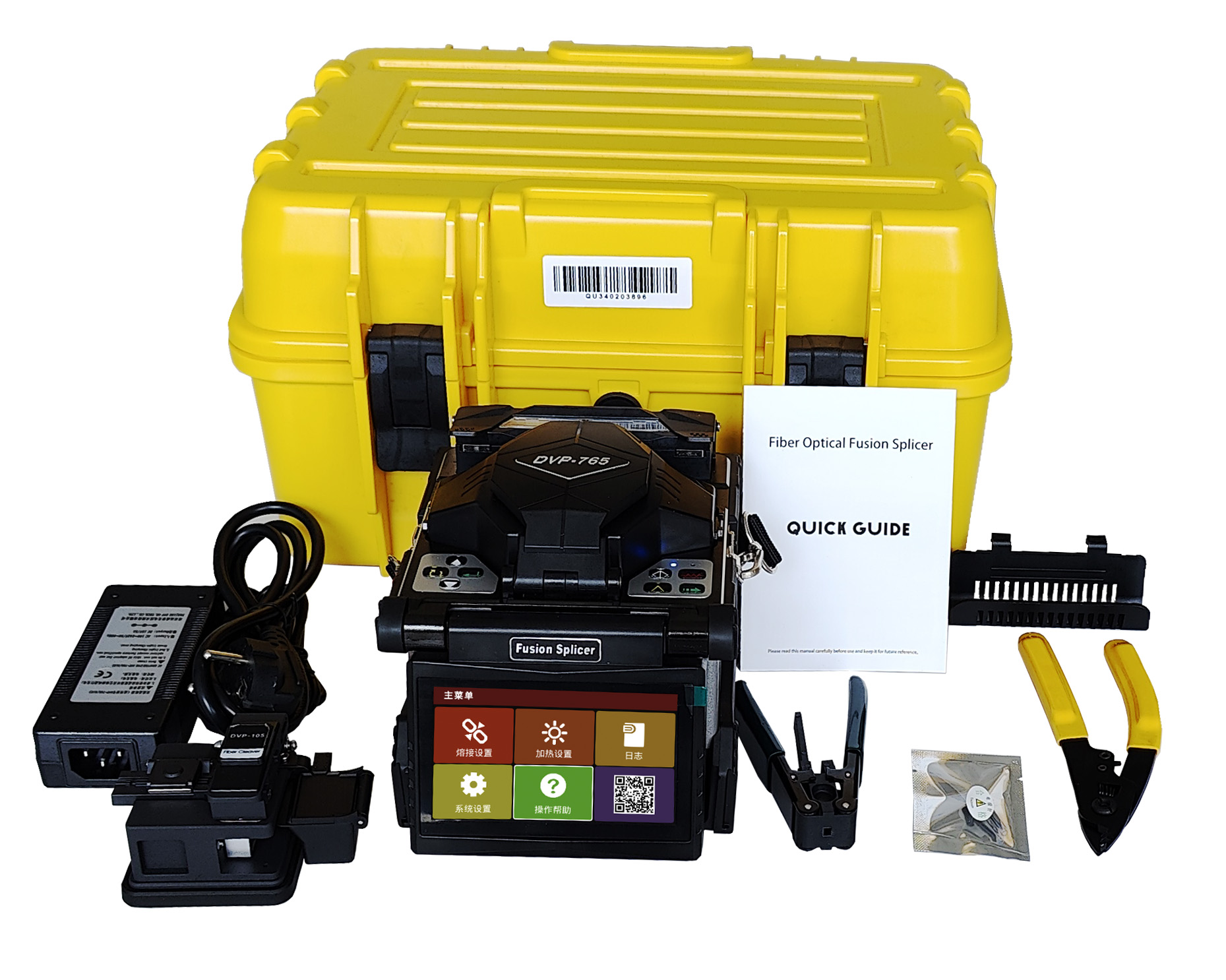
Most test meters built for 4G or generic RF work assume a relatively stable, narrowband signal path. 5G fronthaul between the baseband unit and remote radio head runs over eCPRI or RoE, where the traffic is packetized, bursty, and often rides on high-speed optical or Ethernet links. Your current meter likely samples power or basic error rates over a window that misses these microbursts entirely. It may show a clean average while the actual fronthaul link is dropping occasional packets that kill synchronization or beamforming updates.
Another failure point is latency measurement. Fronthaul demands strict one-way delay and jitter control, especially for split 7-2 or split 6 architectures. Traditional meters report round-trip time or rely on ICMP pings that get deprioritized by network hardware. That gives a false sense of margin. The real issue is that your meter cannot see inside the eCPRI frames to mark the actual timestamp of IQ data leaving one end and arriving at the other, so it cannot distinguish between network congestion and processing delay inside the radio or baseband unit.
Finally, many current meters lack support for the synchronization plane. Fronthaul depends on IEEE 1588 PTP or SyncE to keep radios phase-aligned. A general-purpose Ethernet tester might not parse PTP messages correctly, or it might treat them as ordinary data and add delay without reporting packet delay variation on the sync flow. This leaves you blind to the very drift that causes inter-cell interference or dropped connections at the cell edge. The tool fails because the architecture has moved to a packet-switched, time-sensitive network, and your meter is still looking at a point-to-point RF cable.
A Supplier That Answers Calibration Questions Before You Ask
When you work with this supplier, the calibration concerns that usually surface weeks into a project are already addressed in the initial documentation. They don't wait for you to ask about drift tolerance, environmental effects, or software compatibility — the answers are sitting in the spec sheet, in a dedicated FAQ, or in a short video tour of the device's self-check routine.
Their technical team reviews every support ticket and field report to spot patterns, then updates the knowledge base before the next customer even encounters the same issue. That means you're not the one doing the legwork; you get a ready-made troubleshooting path and clear calibration intervals based on real usage data, not generic recommendations.
This approach comes from a design philosophy that treats calibration as part of the product's lifecycle, not an afterthought. From easily accessible test points to onboard diagnostics that flag when a check is due, the hardware itself helps answer your questions — often before you realize you had them.
Waterproof, Dustproof, Drop-Proof: How Much Protection Do You Actually Need?
Most people never dunk a phone in a lake, but they do get caught in rain or spill coffee. Waterproof and dustproof ratings sound impressive, yet IP68 immersion is overkill for a desk job. A basic IP54 or IP65 rating handles splashes and dusty trails without adding the bulk or cost of a fully sealed device. Think about where your gear actually goes, not where it might go in a fantasy adventure.
Drop-proof specs are similar. Military-grade MIL-STD-810H testing involves repeated falls onto plywood over concrete from about four feet. If you're clumsy around the house, that's useful. But a rugged phone with a thick rubber bumper and reinforced corners adds weight and screen bezel. A slim case with a raised lip often prevents the common waist-high slip just as well. Pay attention to how the device lands—corner impacts cause most cracked screens.
The sweet spot is matching protection to your daily friction. Commuters and parents need mild water resistance and moderate drop survivability. Outdoor workers or frequent hikers need higher dust sealing and shock absorption. If you rarely leave climate-controlled rooms, standard durability is plenty. Buying maximum protection you'll never use just makes the device heavier, hotter, and more expensive.
One Meter, Five Wavelengths, Zero Recalibration Between Jobs
The one-meter reach isn't just a spec—it's the difference between measuring a small gear and a full-length shaft without swapping fixtures. Five wavelengths ride that range together, so you can bounce light off polished steel, anodized aluminum, or even a slightly oily surface and still get a clean return. No guessing which setting works.
Most systems punish you for switching parts. This one doesn't. Zero recalibration between jobs means morning shift can check valve bodies, afternoon shift measures bearing races, and nobody touches a reference standard. The five wavelengths handle the optical variety, so the only thing you reset is your expectations.
In practice, that translates to fewer interruptions. One meter of working distance, five wavelengths doing the heavy lifting, and a setup that stays locked from first part to last. It's the kind of reliability that makes you forget calibration was ever a step.
What Happens When Your Power Meter Drifts Mid-Project?
You are deep into a battery life validation run when the numbers start sliding sideways. A power meter that drifts mid-project rarely announces itself with a hard fault. Instead, the baseline creeps, the peaks soften, and each logged data point carries a little more quiet doubt. The real harm is not the stray milliwatt. It is the slow erosion of confidence in every decision tied to that data, from firmware tweaks to thermal budgets.
Mid-project drift turns a trusted instrument into an unreliable narrator. Engineers start compensating with gut feel, re-running tests, or adding headroom to hide the uncertainty. Those workarounds cost schedule time and mask the true shape of the power profile. Worse, if the drift is intermittent or temperature-dependent, it can pass a spot check and then distort the overnight capture that matters most.
The practical response is to treat drift as a trigger, not an annoyance. Re-reference the meter against a known load, log the ambient temperature, and compare a few fast pulses to the project baseline. If the offset is stable, a correction factor can salvage the run. If it is moving, stop and swap in a reference unit. A few minutes spent verifying mid-stream is far cheaper than explaining later why the final efficiency curve looks like a weather report.
FAQ
Its high-resolution detector captures light levels down to -70 dBm, while the fast sampling rate enables real-time monitoring during connector alignment. The compact design also includes interchangeable adapters for common fiber interfaces.
Each unit ships with a traceable calibration certificate, and the supplier offers annual recalibration services. Internal temperature compensation keeps readings stable even when ambient conditions shift.
Yes, it supports wavelengths commonly used for both fiber types, including 850 nm, 1300 nm, 1310 nm, and 1550 nm. Users can toggle between modes directly from the front panel or through the companion software.
Telecom network installation, data center maintenance, and fiber sensor calibration all depend on precise power readings. Even small errors can cause signal loss budgets to be miscalculated, leading to network instability.
Look beyond the hardware—ask about calibration traceability, technical support response times, and whether the supplier stocks replacement connectors. A reliable partner will provide clear documentation and not overpromise on specs.
The meter's rubberized housing and shock-resistant display were designed with field technicians in mind. It also runs on standard AA batteries, so you can easily replace power during long outdoor jobs.
Yes, the team provides application notes and can walk you through common setups, such as measuring splice loss or verifying optical transmitter output. They also offer a software development kit for automated test systems.
Conclusion
In fiber optic testing, a seemingly minor 0.05 dB measurement error can silently eat into a link budget, turning a supposedly clean installation into an expensive revisit. That hidden cost is why field teams are moving toward high-precision optical power meters from suppliers who treat accuracy as a base requirement, not an optional extra. The problem grows sharper with 5G fronthaul tests, where legacy meters often struggle to maintain repeatability across tight, multi-wavelength scenarios. A meter that covers five wavelengths with zero recalibration between jobs removes one of the most common sources of human error and downtime. But hardware specs only tell part of the story—what separates a dependable supplier is how they handle questions. When calibration uncertainty hits, you don't want to chase support tickets; you want a supplier who answers calibration concerns before you even think to ask, with clear documentation and accessible expertise.
Durability is another factor that gets overlooked until a sudden rainstorm or a slip off a ladder. Waterproof, dustproof, and drop-proof ratings determine whether the meter survives real-world field conditions or becomes another line item on the replacement budget. However, the most frustrating failure is not physical but optical: drift. What happens when your power meter drifts mid-project? Every reading after that point becomes suspect, and you may not notice until a link fails acceptance testing. A reliable supplier addresses this by pairing rugged enclosures with low-drift electronics and fast recalibration support. When one meter combines high precision, multi-wavelength stability, field-ready protection, and proactive technical help, the result is not just a tool but a partner in reliable fiber optic testing.
Contact Us
Contact Person: Mr XU
Email: [email protected]
Tel/WhatsApp: 86-25-85582828
Website: https://www.dvp.cn/en/