

Heterocyclic Intermediate Distributors: Navigating the Supply Chain for Advanced Compounds
2026-07-24
In the complex world of advanced pharmaceuticals and agrochemicals, heterocyclic intermediates are the unsung heroes driving innovation. Yet, securing a reliable supply of these specialized building blocks often feels like navigating a labyrinth. From quality inconsistencies to logistical hurdles, the challenges can stall even the most promising projects. That's where a trusted partner like DSL Chemicals makes the difference—transforming supply chain chaos into a seamless, strategic advantage. Discover how to cut through the complexity and keep your R&D pipeline flowing.
Sourcing Purity: How Distributors Ensure Quality in Heterocyclic Building Blocks
Heterocyclic building blocks often come with hidden impurities that can sabotage even the most carefully planned synthesis. Distributors who specialise in these compounds don't just rely on a certificate of analysis—they actively re-test batches using orthogonal techniques like NMR, HPLC, and Karl Fischer titration to catch issues that suppliers might miss. For nitrogen-rich heterocycles, residual amines or metal catalysts from earlier steps can linger, so they may run additional ICP-MS screens or repurify materials through column chromatography or recrystallisation before shipping them out. This extra layer of scrutiny is what separates a reliable partner from a simple reseller.
Beyond the lab, quality hinges on how the compounds are handled and stored. Many heterocycles are moisture-sensitive or prone to ring-opening under acidic conditions, so distributors invest in dry-room packaging and argon-blanketed vials to extend shelf life. They also track lot-specific stability data, sometimes going as far as performing accelerated aging studies on new batches. When a pyrazole building block arrives with a purity guarantee that holds up months later because it was stored at -20°C and kept desiccated, you know the distributor's process is built around the chemistry itself, not just logistics.
The Hidden Complexities of Heterocyclic Intermediates Logistics
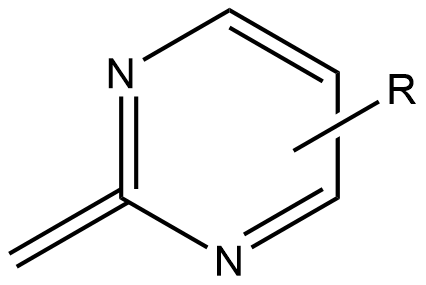
The logistics of heterocyclic intermediates often appear straightforward on paper, but beneath the surface lies a web of challenges that can unravel even the best-laid supply chain plans. Temperature sensitivity, moisture reactivity, and structural fragility turn routine transport into a high-stakes operation where one misstep can degrade entire batches. What makes these complexities truly hidden is that they rarely appear in standard hazard classifications—a compound might be legally non-hazardous yet demand handling protocols closer to those of high explosives in terms of environmental control.
Customs and regulatory hurdles add another layer of opacity that few anticipate until shipments are held at borders. Heterocyclic intermediates often fall into ambiguous chemical categories, triggering unexpected scrutiny from authorities who may lack the technical context to classify them swiftly. Delays are not just inconvenient—they can expose sensitive molecules to conditions outside their stability window, silently eroding yield and purity before the material even reaches the production line. Documentation that over-explains can raise as many red flags as documentation that under-explains, turning paperwork into a delicate art of precisely matched disclosure.
Packaging, too, becomes a hidden engineering challenge disguised as a simple decision. Off-the-shelf solutions fail routinely: a liner that works for one heterocycle may leach plasticizers into another, while static-dissipative requirements clash with moisture-barrier needs. The real complexity is not in the cost of premium packaging, but in the iterative testing required to prove a configuration maintains integrity across every leg of a multimodal journey—a burden that falls on shippers who must anticipate conditions in facilities they may never see.
Strategic Partnerships: Choosing a Distributor for Niche Heterocyclic Compounds
Building a reliable supply chain for niche heterocyclic compounds requires more than just standard logistics—it demands a distributor who truly understands the unique challenges of these specialized chemicals. From storage sensitivity to regulatory hurdles, a partner with deep technical knowledge can make the difference between a seamless operation and a costly delay. Look for teams that don’t just ship boxes, but engage with your R&D goals and offer proactive solutions.
When evaluating potential distributors, prioritize those with established relationships within the heterocyclic compound community. Access to a vetted network of trusted manufacturers and a track record of handling sensitive materials under strict conditions are non-negotiable. A distributor’s ability to provide transparent documentation, consistent batch quality, and responsive communication often signals a long-term commitment rather than a transactional mindset.
Ultimately, the right partnership goes beyond transactional efficiency—it becomes an extension of your own capabilities. Seek a distributor who offers flexibility in scaling quantities, custom packaging, and even compliance support for complex international shipments. The ideal partner anticipates your pipeline needs, helping you navigate the intricacies of sourcing scarce or novel heterocyclic building blocks without compromising on timelines or integrity.
Regulatory Roadmaps: Compliance Challenges in the Heterocyclic Supply Chain
Navigating the regulatory landscape for heterocyclic compounds demands more than a cursory glance at regional statutes—it requires a dynamic, layered strategy. These molecules, central to pharmaceuticals, agrochemicals, and advanced materials, often straddle multiple oversight frameworks simultaneously. A single synthetic intermediate might be subject to REACH in the European Union, TSCA in the United States, and analogous regimes in Asia and Latin America, each with their own data requirements, exposure thresholds, and reporting timelines. The real friction emerges when regulators reclassify a common scaffold or impose new impurity limits overnight, forcing supply chain managers to scramble for compliant sources or retrofit their processes without warning.
Equally daunting are the gaps that persist in global harmonization efforts. While initiatives like ICH Q7 and Q11 provide high-level guidance on good manufacturing practice and impurity control, the interpretation of what constitutes a “significant structural alert” or an “adequate control strategy” varies wildly between agencies. This ambiguity hits specialty intermediates hardest—those outside the pharmacopoeia mainstream or with limited toxicological datasets. Suppliers often find themselves caught between the need to invest in expensive genotoxicity assays and the reality that a single positive result, even if mechanistically irrelevant to human risk, can torpedo years of commercial viability. The resulting precautionary paralysis stifles innovation and inflates costs.
Progressive firms are responding by embedding regulatory intelligence into every node of their supply chain, from early-stage route scouting to final delivery. Instead of treating compliance as a post-hoc checklist, they map out probabilistic regulatory scenarios based on intended use, geographic distribution, and structural similarity to known frameworks. This forward-looking approach leverages cross-functional teams where synthetic chemists and toxicologists collaborate to design out problematic features before they invite scrutiny. It’s a costly and personnel-intensive model, but one that transforms regulatory roadmaps from reactive obstacles into strategic assets capable of steering heterocyclic supply chains through an increasingly fragmented oversight environment.
From Lab to Production: Scaling Heterocyclic Intermediates Without Compromise
Moving a heterocyclic intermediate from bench-scale synthesis to full production is rarely a simple matter of enlarging glassware. The complexity of nitrogen-, oxygen-, or sulfur-containing rings often reveals hidden pitfalls only when you push past the multi-gram stage. Solubility shifts, exotherms that were negligible in a flask, and purification bottlenecks can derail timelines and erode purity. Recognizing these pain points early—through rigorous thermal hazard analysis and solvent screening under scalable conditions—is what keeps a promising route from becoming a process chemistry nightmare.
Maintaining the integrity of sensitive heterocyclic cores during scale-up demands more than just robust chemistry; it requires a deliberate focus on mixing dynamics, heat transfer, and reagent addition sequences. What works on a magnetic stir plate can fail miserably in a reactor where gradients form faster than expected. We often turn to techniques like controlled crystallization, continuous extraction, or reactive distillation to preserve the exact ring isomerism and substitution pattern that define the intermediate's function. The goal is always the same: deliver multi-kilogram batches with the same profile that passed the early screening assays, without introducing new impurities that could haunt the downstream API.
Perhaps the most underappreciated factor in scaling heterocyclic intermediates without compromise is the raw material supply chain. Minor variations in starting heterocycle quality—trace aldehydes, residual catalysts, or isomeric contaminants—can amplify into batch failures once you’re producing at scale. Building tight specifications and working backward from the final application helps lock in the critical quality attributes from day one. When the entire team, from medicinal chemists to plant engineers, aligns on these priorities, the transition from lab curiosity to production reality becomes a controlled evolution, not a leap of faith.
Forging Resilience: Tackling Supply Chain Disruptions for Advanced Compounds
Supply chains for advanced compounds are uniquely vulnerable, often relying on a handful of specialized suppliers for rare precursors or custom synthesis. A single geopolitical hiccup or logistical snag can ripple across production timelines, idling high‑value reactors. Companies that once chased just‑in‑time efficiency are now turning to strategic stockpiling and regional multi‑sourcing, accepting higher inventory costs as insurance against sudden shortages.
Building resilience also means rethinking formulation itself. Some manufacturers are investing in drop‑in alternatives—chemically similar materials that can be swapped without requalifying entire production lines. Others are forging tighter collaborations with upstream partners, sharing demand forecasts years in advance to secure capacity. These shifts demand a culture that treats supply chain design not as a back‑office chore but as a core competitive advantage, baked into R&D from the start.
Digital tools are playing a quiet but pivotal role. Predictive analytics sift through weather patterns, port congestion data, and supplier financial health to flag risks months ahead. When disruptions hit, companies with transparent, multi‑tier visibility can reroute shipments or fast‑track alternative qualifications in days rather than weeks. It’s a shift from reactive firefighting to proactive orchestration—exactly the kind of muscle memory needed in an era where the only constant is disruption.
FAQ
Heterocyclic intermediates are ring-shaped molecular building blocks containing at least one atom other than carbon—usually nitrogen, oxygen, or sulfur. They're fundamental to synthesizing active pharmaceutical ingredients (APIs), agrochemicals, and advanced materials. Without reliable sources of these compounds, development timelines for new drugs or specialty chemicals can stretch or stall entirely.
Quality assurance typically involves rigorous supplier audits, in-house analytical testing (like HPLC, NMR, and mass spectrometry), and adherence to documented standards. Many distributors also maintain ISO-certified quality management systems and request full certificates of analysis for each batch. This multilayered approach helps catch impurities or structural anomalies before the intermediates reach the customer.
Lead times can be unpredictable due to complex multi-step syntheses, and some intermediates face strict regulatory controls—especially if they're precursors to controlled substances. Logistics around temperature-sensitive or hazardous materials add another layer of difficulty. A competent distributor will plan buffer stocks for high-demand items and have expertise in customs clearance to avoid delays.
The best distributors act almost like technical partners. They can connect customers with alternative synthetic routes or suggest more readily available structural analogs when timelines are tight. They might also offer custom synthesis support or share insights about upcoming regulatory changes that could affect certain compound classes. That kind of foresight is invaluable when every week counts in process development.
First, verify their track record with the specific class of compounds you need—experience with pyrazoles, oxazoles, or indoles, for example, is not interchangeable. Ask about their relationships with accredited analytical labs and how they handle non-conformance. It's also wise to check if they participate in industry consortia or have published technical articles, as this often signals deeper engagement.
Buyers are increasingly asking for proof of ethical sourcing and reduced environmental footprint. In response, distributors are mapping supplier processes more transparently, favoring manufacturers that minimize solvent usage or utilize flow chemistry. Some now provide "green chemistry" scorecards alongside quotes, helping clients meet their own ESG commitments without compromising on purity or performance.
Absolutely. Many distributors have programs specifically for early-stage companies, offering research-scale quantities without the premium prices often charged by custom synthesis houses. They might repackage kilo-scale batches from a larger campaign or hold dedicated stock for startup clients. This allows smaller teams to progress their R&D without committing to volumes they cannot yet use.
Near-shoring and regional inventory hubs are becoming more common to mitigate geopolitical risks and shipping disruptions. Digitization is another big shift—distributors are adopting platforms that give real-time visibility into stock levels, batch histories, and shipping status. There's also a push for tighter integration with customers' own inventory systems, enabling automated replenishment and reducing the need for manual reordering.
Conclusion
Navigating the supply chain for heterocyclic intermediates demands a blend of scientific rigor and operational agility that few appreciate. These building blocks are central to pharmaceuticals and agrochemicals, yet their complexity introduces challenges from the very first step: sourcing. Distributors must enforce exhaustive quality protocols, utilizing techniques like NMR and HPLC to guarantee purity, because even trace impurities can derail downstream synthesis. But purity assurances mean little if logistics fail. The inherent instability of many heterocycles requires temperature-controlled shipping, meticulous hazard classification, and customs expertise to avoid costly delays at borders. A single misstep in storage or transit can compromise entire batches, making logistics a strategic pillar, not an afterthought.
Beyond daily operations, the strategic selection of a distribution partner can accelerate or cripple a project. It's not just about catalog access; it's about finding a collaborator with deep knowledge of niche chemistries and a proven ability to scale from milligram pre-clinical runs to multi-kilogram GMP production—without sacrificing consistency. This partnership must also navigate an increasingly tangled regulatory web, from REACH to FDA guidelines, proactively managing documentation so researchers can focus on innovation rather than paperwork. When unforeseen disruptions hit, as they inevitably do, resilience differentiates the exceptional from the ordinary. Forward-looking distributors invest in buffer stocks, alternative synthetic pathways, and transparent communication, turning supply chain vulnerabilities into competitive advantage for the scientists who depend on them.
Contact Us
Contact Person: Wei Zhang
Email: [email protected]
Tel/WhatsApp: 862163529955
Website: https://www.dslchem.com