

Hand Valve Company Questions to Ask Before You Buy
2026-11-25
Choosing a hand valve supplier isn’t just about price or catalog specs. The right questions can reveal whether a company actually understands your operating pressures, temperature swings, and maintenance realities. Before you commit to a purchase, it’s worth digging into lead times, material traceability, and how responsive their engineering support really is. At HONGSEN, we’ve seen how the wrong assumptions lead to downtime and costly retrofits. This guide walks through the questions that separate dependable valve partners from those who just take orders.
Which parts of your hand valves tend to wear out first under frequent cycling?
In many manually cycled ball and needle valves, the first sign of trouble usually shows up at the seat-to-ball or seat-to-needle contact line. Each open/close stroke drags the same sealing surfaces across one another, and once a small groove or flat spot develops, the leak path only gets wider. Soft seats tend to cut or extrude long before metal parts show measurable wear.
Stem packing and stem seals are rarely far behind. Frequent rotation or lifting of the stem works the packing like a slow grinder, compacting it, drying it out, or tearing small chunks loose. The result is often a weep at the top of the valve while the internals still look fine. On valves with O-rings or lip seals on the stem, those elastomers can take a set and lose rebound after repeated cycles.
Handle-to-stem connections also loosen with heavy cycling, especially square drives, splines, or pinned joints. Every torque pulse slightly peens the mating surfaces, and before long the handle develops slop or begins to slip. In diaphragm valves, the diaphragm itself is the part that fatigues first, usually cracking near the center or at the clamping edge rather than failing at the sealing bead.
How do you verify pressure ratings after final assembly instead of relying on paper specs?
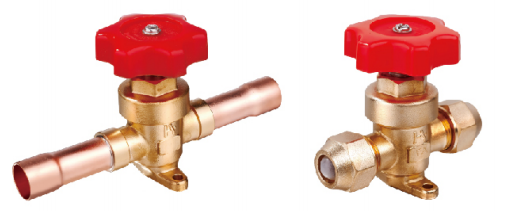
Once the unit is fully assembled, the only rating that matters is what it holds under test. We cap every opening, fill the cavity with water, and bleed trapped air before bringing the pressure up slowly to the required verification point, usually 1.5 times the design pressure for a set hold time. During that hold, we are not just watching for drips; we are watching for any movement in the needle, because even a small pressure drop at final assembly usually points to a seat, seal, or joint that paper specs will never catch.
After the hydrostatic hold, we often run a low-pressure pneumatic or tracer gas check on assemblies where water is not practical or where a tiny leak path would be unacceptable. The test setup uses calibrated gauges or transducers with current certificates, so the measured value is traceable to a lab standard rather than an assumption on a drawing. Any fitting or closure that was touched during final build gets included in the tested boundary. If it sees pressure in service, it sees pressure in the test.
After the test is complete, the actual numbers go into the assembly record: test pressure, hold time, temperature, and pressure drop or leak rate. That record is what allows us to say the assembly is rated for a specific pressure. The drawing can say whatever it wants, but after the final bolt is torqued and the last weld is inspected, the verified test result is the only rating we stand behind.
Can you provide full traceability for wetted materials before the order ships?
We treat wetted material traceability as a closed loop rather than a last-minute paperwork exercise. Each fluid-contact component is linked to its heat number, mill test report, and incoming inspection record before it ever reaches the assembly floor. That link stays intact through machining, cleaning, and final build, so the record you receive reflects the actual parts in your unit, not just a generic certificate.
Prior to shipment, our quality team compiles a serial-specific package that includes material certifications, elastomer and polymer batch data, surface finish readings where applicable, and any special process logs tied to your order. If a raw material was sourced from an approved mill or supplier, that origin is documented with dates and lot references, making it possible to trace backward in minutes instead of days.
If your requirements demand deeper evidence, we can also include positive material identification results, corrosion test reports, or a signed certificate of conformance from the manufacturer. The full package is reviewed against your purchase order and our internal traceability matrix before the order is released to shipping, so nothing leaves the dock with an open question about what touched the process fluid.
What does a non-standard end connection do to your typical lead time?
A non-standard end connection usually means the assembly cannot be picked from finished inventory and shipped. Instead, the shop has to machine a one-off flange, cut a custom thread, or weld on a different coupling before the unit moves into testing. If that special fitting or raw material is not already on the shelf, purchasing alone can add five to ten working days before the actual work begins.
Beyond materials, the real hit comes from setup and scheduling. Standard products run in predictable batches, but a special end connection pulls the order into a smaller, often manual work queue. The extra setup, possible fixture changes, and any additional pressure or fit-up checks typically stretch the normal lead time by three to eight working days. First-time configurations sit at the longer end of that range, while repeat builds with existing drawings usually move faster.
Who actually handles field failures or warranty claims after the sale?
At first glance, this looks like a customer service issue. In practice, the work usually splits across three groups. The first point of contact is often a dealer, distributor, or field service partner. They log the failure, confirm the serial number and operating conditions, and decide whether the unit comes back for teardown. That local contact is the person the customer talks to, but they rarely make the final engineering or financial call.
Once a returned part reaches the factory, a quality or reliability engineer steps in. They pull production records, trace the batch or lot, and lead the root cause analysis with the plant team. If the failed component came from an outside supplier, the supplier quality group joins the discussion early and may absorb part of the cost under a separate commercial agreement.
The warranty side has its own workflow. A warranty analyst or after-sales administrator checks coverage dates, verifies the claim details, and issues approvals or credit notes. In a smaller company, one person may handle all of this. In a larger operation, a cross-functional team often meets weekly to review repeat failures or claims above a certain dollar threshold.
Has a customer installation problem ever led you to change a hand valve design?
Yes. A few years ago we kept seeing the same failure on a 1/2-inch stainless hand valve used in mobile hydraulic carts. Installers were tightening the inlet fitting with a pipe wrench because there was very little room for a standard wrench, and the body would deform just enough to make the stem bind. We changed the valve body to include wider wrench flats and moved the seat slightly deeper, which gave installers a clear clamping area and ended the binding complaints.
Another change came from a food processing line. The customer mounted a row of valves close together, and the original lever handles overlapped when opened. They sent us a photo of the cramped panel, and we shortened the lever travel by changing the internal stop geometry. That kept the same flow capacity but let the handles open without hitting each other.
FAQ
We handle the body machining, stem threading, and final assembly under one roof, which lets us control concentricity and seat alignment instead of relying on a third party for the tricky steps. Each build is tied to a work order with material heat numbers and the torque values used during final packing adjustment.
You would send us the valve, photos of the installation, and the original purchase order number. We pull the as-built records first, inspect the returned unit in our shop, and then issue a written root cause summary. If it is our defect, we cover replacement or repair, including freight on the replacement.
Most of our manual valves go out as Class 150 and Class 300 flanged or threaded units, with a growing share of NPT and socket weld ends in smaller sizes. The biggest risk area is thread depth on stainless bodies, so we gauge every threaded end rather than spot-checking.
Yes. Every heat of bar stock, cast body, stem material, and seat blank is received with a mill cert, and we link those heat numbers to the serialized work order. You can request a copy of the cert package when you place the order or after delivery.
Every valve gets a shell test and a seat test based on the pressure class, using water or air depending on the service. We record test pressure, duration, and the operator who signed off, and we can include those records in your shipment or email them before the pallet arrives.
Stock items in standard carbon or stainless usually ship within three to five working days. If the order includes a made-to-order size, special trim, or an unusual end connection, the whole line tends to run four to six weeks, though we are often able to split the shipment if you need the stock pieces sooner.
We avoid soft-seated designs where operators cycle the valve frequently against high differential pressure, and we would steer you toward reinforced PTFE or metal seats instead. For stems, plain 316 stainless can gall against certain packing materials, so we often recommend a hardened or coated stem for high-cycle jobs.
We stock common carbon steel and 316 stainless ball, gate, globe, and check valves in sizes up to four inches. Larger sizes and exotic alloys are generally built to order or sourced from our overseas partner, but we tell you before quoting whether the stock is on our shelf or on a longer supply chain.
Conclusion
Catalog figures rarely reveal which parts actually suffer first when a hand valve is opened and closed day after day. Before committing to a purchase, ask the manufacturer to name the wear items they see most often in returned units, whether that means stem threads, seat surfaces, packing, or the stop collar. The answer often tells you more about real service life than any brochure chart. Along the same lines, pressure ratings should not be taken on faith from a stamped plate. A credible supplier should be able to walk you through the final assembly checks, including shell or seat testing on the actual valve you will receive, not just a representative sample. Traceability matters just as much for anything that touches the process fluid. Request clear links between heat numbers, melt records, and finished serial numbers for all wetted components before the order leaves the shop.
Non-standard end connections deserve more attention than a quick yes or no. A flanged or threaded variation can pull a supplier away from stocked components and quietly extend lead times, so pin down whether the change adds days or weeks and what it does to price. After the sale, find out who actually handles field failures or warranty claims. Some companies route you to a local distributor, while others put you in touch with an engineer who can troubleshoot the installation directly. The more valuable question may be whether any past customer installation problem has forced the company to rethink a design. If the answer is yes and they can describe the change, you are likely dealing with a manufacturer that treats field experience as part of the product rather than as a nuisance.
Contact Us
Contact Person: KOPASS HO
Email: [email protected]
Tel/WhatsApp: 8613606566112
Website: https://www.hongsenref.com/