
Filling and Aluminum Foil Sealing Machine Manufacturer: Essential Tips for Choosing a Reliable Partner
2026-10-24
When a filling line goes down because a foil seal didn't hold, the search for a new machine suddenly becomes urgent. Yet comparing filling and aluminum foil sealing machine manufacturers often feels like reading the same brochure twice. The real difference isn't in the spec sheet—it's in the partner behind the equipment. Whether you're scaling up a beverage line or switching to viscous sauces, asking the right questions upfront can save months of downtime. At Wanying Machinery, we've seen how the right fit transforms packaging efficiency, and this guide lays out what to look for before you sign.
Insist on a Trial Run with Your Actual Bottles and Foil
There's a reason this step gets skipped, and it's usually time. But if you're not testing with the exact bottles and foil you plan to run in production, you're essentially guessing. Bottle neck finishes vary subtly between suppliers, and foil thickness or coating differences can change how heat transfers during sealing. A trial run with the real materials reveals those mismatches before they turn into a line stoppage or a batch of leaking containers.
Run a small batch first—maybe two or three dozen units—and pay attention to things you won't see in a spec sheet. Check the seal integrity by squeezing the bottle or using a vacuum tester if you have one. Look at the foil indent pattern: too deep and you're overheating, too shallow and you'll get leakers. Write down the exact settings that worked, including any preheat time, because even a minute of warm-up drift can change the result.
Don't fall for the idea that a similar bottle from the same supplier is close enough. It isn't. Thread pitch, neck diameter, even the surface finish of the glass or plastic can affect how the foil liner seats. And if you've changed foil suppliers recently, redo the trial even if everything else stayed the same. The cost of a few wasted bottles now is trivial compared to discovering a sealing problem after you've filled five hundred units.
Ask How the Sealing Jaws Handle Irregular Rim Thickness
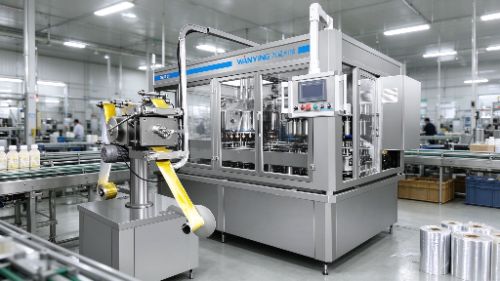
Not every container rim is perfectly even, and that's exactly where the sealing jaws show their worth. Instead of forcing a single flat pressure point, the jaw profile uses a spring-loaded or floating alignment mechanism that lets each segment conform to small variations in thickness. This means a rim with a subtle dip or bulge gets the same consistent contact as a perfect circle.
During the sealing cycle, the jaws apply graduated pressure rather than one abrupt squeeze. Softer contact near the outer edge gives the film time to settle into any uneven areas before full pressure locks the seal. The result is fewer wrinkles, less chance of a weak spot, and a seal that holds even when the container isn't perfectly uniform.
Get a Written Changeover Time for Your Three Most Common Formats
When you ask for a written changeover time for your three most common formats, you're not chasing paperwork—you're pinning down a baseline that people can actually discuss. Too often, changeover times live in someone's head as a vague "about fifteen minutes" or "depends on the day." A written figure forces a specific number, tied to a particular format and a particular line, so there's something concrete to improve against.
Start with the formats you run most often, not the ones that are easiest to measure. If your top three account for most of the weekly volume, even a small reduction in their setup time pays back quickly. Get the number from the crew that actually performs the changeover, and make sure it reflects the full window—from last good piece of the previous run to first good piece of the next. That way the figure includes all the small delays that get left out of informal estimates.
Once those written times exist, they become a reference point for scheduling, training, and spotting drift. A shift that consistently beats the written time has a method worth copying; a shift that misses it may need spare parts, clearer instructions, or a different sequence of tasks. The goal isn't to create a report card—it's to turn changeover from a vague interruption into a measurable, manageable routine.
Find Out Who Answers the Phone After the Installation Crew Leaves
The installation crew packs up their tools, hands you a final walkthrough, and drives off. The moment something goes wrong—a leak, a tripped breaker, a misaligned door—you grab the phone and dial the number on the invoice. Who picks up? Not the person who actually did the work. In many cases, that line routes to a central dispatch or a third-party call center, where a scripted voice logs your complaint and promises a callback within 48 hours. That gap between the crew leaving and a real human taking ownership is where frustration breeds.
Ask before you sign the contract: after the installers wrap up, am I calling your office directly, or a service hotline that could be states away? Some companies keep a dedicated post-install support line staffed by the same project manager who oversaw your job—those are the ones worth paying a premium for. Others pass you to a rotating roster of subcontractors who may never have seen your house. It's not about avoiding automation entirely; it's about knowing whether the person on the other end can actually dispatch a technician who understands your specific setup, not just open a ticket number.
Test it before the crew leaves. Call the number on your paperwork while the installers are still on site and see who answers. If it's a generic greeting with no mention of your project, ask the crew lead for a direct line to their supervisor or the service manager. Write down a name, not just a department. That single contact can mean the difference between a same-day fix and a week of chasing voicemails. The best contractors don't hide behind a call tree—they hand you a cell number and say, "Call me if anything feels off." That's who you want answering after the truck pulls away.
Request Photos of Recent Lines Running Similar Container Shapes
Instead of waiting for official fleet updates, try a direct ask to the terminal supervisor or a port captain on the next call. A quick note about the sailing date, vessel name, and the exact yard slot often turns up phone photos within the hour. Those shots tend to show the container’s side profile and roof bows better than any staged brochure image.
If the first photo is blurry or only catches one end, don’t hesitate to follow up for the door hinges and the underside tunnel. Recent sailings frequently mix older builds with new high-cube frames, and a single angle can hide the difference. Mention that you’re comparing corrugation depth and corner block shape, and the person on site will usually know which stack to walk to.
Probe Their Experience with Hot-Fill or High-Acid Products
Ask about the specific hot-fill or high-acid products they've worked with, not just the general categories. A processor who has run mango nectar with pH 3.2 and a 185°F fill temperature has dealt with a different beast than someone only familiar with tomato sauce. Their answers should reveal whether they understand how acid level, fill temperature, and container type interact to determine hold time and cooling requirements.
Pay attention to how they describe troubleshooting. Did they mention times when a hot-fill line produced bulging caps or secondary fermentation? Did they adjust acidulants, switch to a tunnel pasteurizer, or change the headspace? Real experience shows up in the details—specific bottle sizes, headspace volumes, and inversion times, not vague claims of knowing the process.
Also probe what they learned from failures. High-acid products can surprise you: a preservative-resistant yeast, a PET bottle that deformed at 190°F, or a fruit puree with higher pH than the spec sheet claimed. The best candidates will talk about those moments with curiosity, not defensiveness, and explain how they fixed the issue without shutting down the line for a full shift.
FAQ
A dependable partner digs into details like your product viscosity, container material, and daily output before quoting a single price. They let you see a trial run with your own bottles, show real factory footage, and give a firm delivery window instead of vague estimates.
Ask for a live video of the machine running with a similar container, and pay attention to the frame thickness, brand of electrical parts, and whether the sealing head adjusts smoothly. It also helps to know the stainless steel grade and where major components are sourced.
Usually yes, especially if your product is thick, foamy, or comes in odd bottle sizes. A good manufacturer can modify the number of filling heads, tweak the sealing temperature curve, or adjust the height range so you avoid expensive retrofits later.
Beyond a basic warranty, look for remote video diagnostics, fast shipment of critical spare parts, and clear maintenance documentation. The real test is whether someone still answers your calls after the payment clears, so ask about response times and whether they have a dedicated service team.
CE marking, ISO 9001, and familiarity with GMP environments are solid starting points, but don't stop at a wall of certificates. If you work in food or pharmaceuticals, ask for material certificates on product-contact parts and examples of machines they have built for similar applications.
A suspiciously low quote, refusal to share trial videos, vague delivery dates, unknown component origins, or contract terms that dodge warranty responsibility are all warning signs. If the conversation stays on price and never touches on process or materials, walk away.
Distance can turn a minor breakdown into a week-long stoppage if you need to ship parts overseas. Check whether they have a local distributor, a spare parts consignment program, or at least a clear courier arrangement so you are not left waiting on customs.
A physical visit is ideal but not always practical. At minimum, ask for a live video walkthrough of the assembly area, recent shipping records, and contact details of current customers. Factory visits often reveal the little things that photos hide, like cable management and how they test each machine before crating.
Conclusion
Before committing to a filling and aluminum foil sealing machine manufacturer, push beyond glossy brochures and insist on seeing your actual bottles and foil run through their system. A trial run reveals far more than spec sheets ever will—how the jaws grip uneven rim thickness, whether the foil seats cleanly on containers with slight molding drift, and whether the machine can maintain seal integrity at production speed. Equally telling is a written changeover time for your three most common formats; if the builder hesitates to put numbers on paper, you are likely inheriting a line that stalls between SKU changes. Ask pointed questions about who answers the phone after the installation crew leaves, too. A reliable partner has a support path that does not vanish once the final invoice clears, and they should be able to walk you through real service scenarios without vague reassurances.
Another layer of due diligence is visual evidence. Request recent photos of lines running containers with similar shapes and neck finishes—not stock imagery, but candid shots from their floor or a customer site. This tells you whether their experience aligns with your packaging reality and not just their demo room. Finally, probe their track record with hot-fill or high-acid products if your process involves those conditions. Sealing foil under thermal stress or acidic residue is a different animal than room-temperature water, and a manufacturer who cannot discuss headspace condensation, liner adhesion, or corrosion resistance in concrete terms is not ready for your line. Choosing a partner is less about finding the cheapest quote and more about verifying that their engineering instincts match the quirks of your own filling environment.
Contact Us
Contact Person: Tyson
Email: [email protected]
Tel/WhatsApp: +8613396971296
Website: https://www.wanyingmachinery.com