

Eco-Friendly Paper Box Manufacturer Shares Smart Sustainable Packaging Choices
2026-11-26
Most packaging claims to be sustainable, but very few suppliers show you how the choices actually compare. In this post, Zemeijia skips the empty buzzwords and walks through practical paper box decisions that reduce waste, improve recyclability, and still keep products protected. If you have ever wondered whether recycled board, water-based inks, or a simpler structural design are really worth it, the breakdown below may change the way you plan your next packaging order.
Choosing Fiber That Already Has a Second Story
Old fiber carries a residue of the life it lived before it reached your hands. A faded patch, a slight unevenness in the twist, a color that has softened past its original dye lot—these are not flaws to work around. They are the reason to choose the material in the first place. When a yarn or cloth already has a second story, you are not starting from zero, and that changes the way a finished piece feels.
Look for fiber that shows honest wear rather than the kind of distressed finish that gets manufactured in a factory. Yarn reclaimed from a worn sweater, linen cut from an old household textile, or mill ends with an odd dye shift all carry a record of a previous use. That record rarely repeats itself, so the piece you make will have a texture and color logic that cannot be duplicated by buying new skeins.
Let the material set the pace. Busy stitch patterns can bury the very qualities that make this fiber worth choosing, while plain rows, open textures, and visible mending let the older surface stay legible. Working this way is less about preserving something precious and more about giving the fiber another turn at being useful.
Strength From Shape, Not From Extra Layers
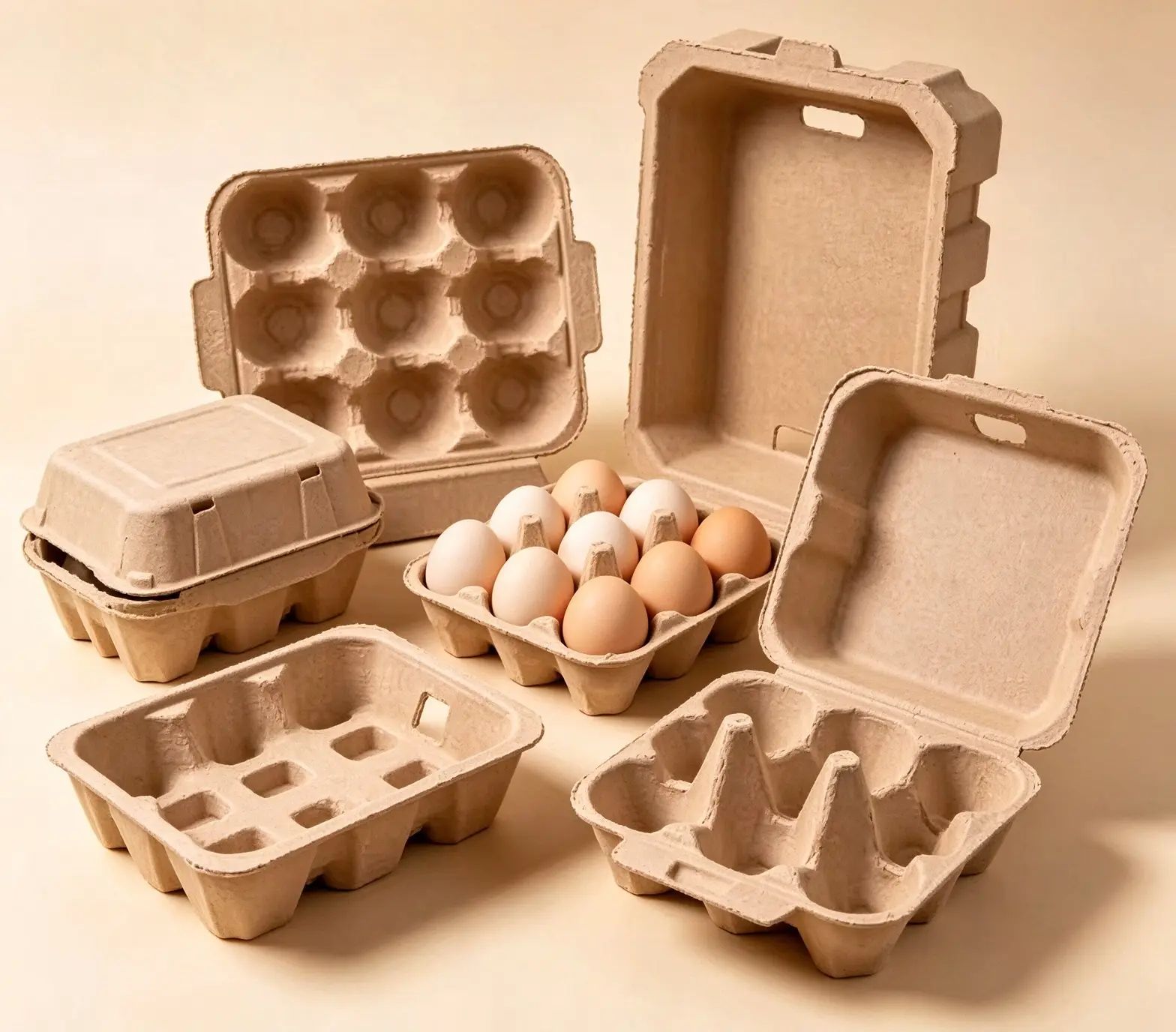
A flat sheet looks efficient until it meets a load. Then it flexes, buckles, and asks for more material. Shaping the same sheet—adding a slight crown, a rib, or a wave—changes how forces travel through it, often making it stiffer without a single added gram.
That is the quiet logic behind corrugated panels, stamped ribs, and curved edges. The geometry directs compression and tension along paths that suit the material, instead of relying on another bonded layer that adds weight, cost, and a new place to fail. Extra layers also introduce shear between surfaces, whereas a folded or curved profile spreads the work through the section itself.
For designers, it means the first question is not “what else can we add?” but “what can the form already do?” A crease, a bead, or a deeper draw can often outperform another ply, delivering durability that comes from the shape rather than from stacking.
Coatings That Don't Outstay the Box
Picture a cereal box after the last bowl has been poured. The cardboard is ready to become something else, but the glossy layer on the outside often has other ideas. It hangs around, clings to the fibre, and forces recyclers to peel or screen it out. A coating that doesn't outstay the box knows when its job is over. It separates without a fight once the box hits the pulper.
That exit matters more than most people assume. When a coating lingers, it shows up later as specks in a new sheet of paper or as a waxy residue on equipment. A properly short-lived coating avoids that by releasing under the same conditions that break the box down. The fibre comes out cleaner, and the mill spends less time chasing leftovers.
The trick is making the coating durable enough for shelf life but not so stubborn that it survives the recycling loop. That balance doesn't come from a single ingredient; it comes from designing the binder system to respond to moisture, agitation, or temperature. The box gets the protection it needs in transit, then loses the coating exactly when it should.
Cutting Plastic Before It Reaches the Doorstep
The most effective place to reduce plastic waste is often the least visible: the moment a product is packed and shipped. Instead of asking customers to sort through layers of film and padded mailers at home, more retailers are rethinking the materials that leave the warehouse in the first place. Corrugated cardboard inserts, molded pulp cushions, and paper-based tape have moved from niche experiments to standard practice in a growing number of fulfillment centers.
Some of the biggest shifts are happening behind the loading dock. Brands are redesigning packaging to remove the need for poly bags altogether, switching to compostable wraps or right-sized boxes that eliminate the air pillows and foam sheets once used to fill empty space. This not only cuts down on plastic before it arrives, but also reduces the weight and volume that carriers have to transport, which lowers damage rates and return-related packaging waste.
There are still trade-offs. Paper alternatives can tear more easily in wet conditions, and not every compostable film breaks down in a backyard pile. But the direction is clear: reducing plastic upstream, before it ever reaches a doorstep, is cheaper in the long run than trying to recover it afterward.
Right-Sizing and the Hidden Expense of Empty Air
Most infrastructure budgets quietly leak through capacity that nobody uses. A cluster provisioned for a traffic spike that never arrived still draws power, consumes licenses, and occupies rack space months after the launch party ends. The waste is rarely dramatic; it shows up as a few percent here, an idle database replica there. Over a quarter or two, those small gaps add up to what could have funded an entire feature team.
Right-sizing starts with measuring actual demand instead of relying on vendor defaults or old assumptions. Profiles change after every release, data retention policy shift, and seasonal campaign. Revisiting instance families, storage tiers, and load balancer capacity on a rolling basis exposes resources that are technically running but not doing meaningful work. The uncomfortable part is that trimming them often requires someone to say no to a previous decision, which is more a cultural challenge than a technical one.
The hidden expense of empty air also includes the operational drag. Every underused server still needs patching, monitoring, backup schedules, and someone to answer pages at 2 a.m. When those obligations are weighed against actual utilization, many teams find they are paying twice: once for the unused capacity and again for the attention it demands. Treating unused capacity as inventory with a carrying cost makes the case for right-sizing clearer than any dashboard alone.
Planning the Box's Next Life Before the First Fold
Most packaging decisions stop at the moment a customer opens the box. But planning for that box's second life should begin long before the first crease is scored or the first tape strip is applied. This means mapping out whether the material can be flattened for a school project, broken down for curbside pickup, or repurposed as a storage bin in someone's closet. The design choices made upstream—ink type, adhesive strength, perforation lines—either open up those possibilities or quietly close them off.
On a busy production floor, this kind of forward planning often gets pushed aside because it sounds like extra work. Yet the simplest moves deliver the biggest payoff: printing reuse instructions directly on the inner flap, avoiding plastic lamination that complicates recycling, or choosing a structural fold that lets the box collapse without tearing. When those decisions are locked in before the first fold, the box doesn't just protect a product—it walks into its next role with a little more dignity.
The difference shows up later, at the curb or in a child's craft corner. A box designed with a clear end-of-life path tends to be flattened neatly, saved for a move, or handed off without a second thought. One that wasn't planned that way ends up fighting for space in a landfill, its useful years cut short by a glossy coating or a stubborn seam. Planning the next life first is less about being eco-conscious on paper and more about giving the material a realistic chance to keep working.
FAQ
It usually comes down to how easily the material can re-enter the loop. Paperboard is widely recyclable, breaks down faster in real-world conditions, and can be sourced from certified or recycled content without forcing a complete redesign of the packaging line. Plastic often wins on moisture resistance, but for dry goods, apparel, cosmetics, and food items that do not need a moisture barrier, a well-designed paper box is the more practical baseline.
Look past the green claims and ask about the actual board stock, the percentage of post-consumer recycled content, the type of coatings, and whether the mill has chain-of-custody certification. A supplier should be able to name the specific board, the source, and the adhesive or ink system used. If those details are vague or the answer leans only on the word recyclable, it is worth digging deeper.
A slightly higher caliper board can allow you to remove plastic inserts and extra layers while keeping the structure rigid. Fold-over flaps, interlocking tabs, and built-in dividers cut the need for separate filler. Adjusting the box dimensions to fit the product more closely also removes empty space that would otherwise require padding or oversized shipping cartons.
Not always. A thin water-based coating typically breaks down fine in standard recycling streams, while full plastic lamination or foil stamping can make the box harder to process and sometimes contaminates the batch. The practical move is to use matte or gloss aqueous coatings for scuff resistance and reserve plastic-based finishes for products where that surface durability is absolutely necessary.
Start with the least glamorous step: right-sizing the box and removing unnecessary layers. Even a 10 percent reduction in board area lowers cost and shipping weight. Then choose one material family, skip mixed-material inserts, and order a modular size that works across multiple products. Working with a manufacturer that offers low minimums and stock board options can also avoid paying for custom tooling before sales volume justifies it.
The material gets most of the attention, but production can be just as important. Efficient die-cutting layouts reduce offcuts, water-based adhesives lower solvent use, and energy from renewable sources trims the carbon side of the equation. A manufacturer that recovers and reuses board scraps, prints only what is needed, and sources board from nearby mills can deliver a meaningfully lighter footprint than one using identical material with a wasteful process.
Yes, and the texture often works in your favor. Recycled board can have subtle natural flecks or a softer touch that gives the unboxing moment more character. Embossing, blind debossing, a well-chosen closure, or a simple paper wrap can add perceived quality without relying on plastic lamination. The premium feel comes from precision folds, clean edges, and thoughtful proportions rather than from virgin material alone.
Ask for a sample made from the actual board stock, not just a digital mockup. Request the recycled content percentage, the type of ink and adhesive, whether the structure has been drop-tested, and what the minimum order quantity is. It also helps to ask how the supplier handles offcuts and whether they can recommend board alternatives if the first option becomes too expensive or unavailable.
Conclusion
Smart packaging decisions rarely begin with the box itself. They start with the fiber, where recycled cardboard, post-consumer waste, and agricultural leftovers are treated as first-choice materials instead of downgraded fillers. Strength is engineered through creases, folded geometry, and corner supports rather than additional layers of board. When a barrier is truly needed, the coating is chosen to break down with the carton, so it never lingers as a contaminant at the recycling plant. This keeps the whole structure honest, useful, and far easier to reclaim.
The same logic continues at the packing bench. Plastic tape, foam inserts, and poly mailers give way to paper-based or fully omitted alternatives, stopping unnecessary plastic before it reaches a doorstep. Boxes are also sized closer to the product they carry, eliminating empty air, reducing material draw, and lowering shipping weight without sacrificing protection. Most importantly, the end of the carton is considered before the first fold; a well-planned box can be flattened quickly, reused for another trip, or returned to the pulp stream with minimal sorting friction. Taken together, these choices make packaging quieter, lighter, and far less likely to outstay its welcome.
Contact Us
Contact Person: Sasha Du
Email: [email protected]
Tel/WhatsApp: +86 13869836645
Website: https://www.zmjpackagings.com/