

China Wire Harness Label Manufacturer for High-Performance Wiring Needs
2026-09-01
When a wiring harness fails, the culprit is rarely the wire itself—it's often a label that couldn't survive heat, chemicals, or repeated flexing. That's why high-performance wiring demands labels built to endure. In China's competitive manufacturing landscape, few names stand out like Xinsen, a wire harness label manufacturer that pairs industrial-grade durability with precision printing. This post unpacks what to look for in labels for demanding environments and how Xinsen is redefining expectations.
Labels That Survive Under-Hood Heat and Chemical Exposure
Under the hood, temperatures can swing from freezing cold to well over 250°F, while oil mist, brake fluid, coolant, and degreasers constantly attack surfaces. Ordinary labels peel, fade, or turn illegible within weeks in this environment. Durable under-hood labels, however, are built on substrates like polyimide or metalized polyester, paired with aggressive acrylic or silicone adhesives that bond to rough, oily engine components. These materials resist not just heat but also prolonged contact with common automotive fluids, keeping barcode data, VIN plates, and safety warnings crisp for the life of the vehicle.
The real test comes from thermal cycling and chemical splash exposure, not just static heat. A label that can handle 300°F on a test bench may still fail after fifty cycles from cold start to full load, when expansion and contraction stress the adhesive layer. Top-tier under-hood labels use cross-linked polymer topcoats to shrug off solvent wipes, and some incorporate ceramic or aluminum facestocks for added dimensional stability. Print methods matter too: thermal transfer with resin ribbons creates characters that don't wash out, unlike inkjet or laser printing that smears after one coolant leak.
Installation surfaces complicate things further. Engine blocks, wire harnesses, and fluid reservoirs are rarely clean or flat. The best labels combine high initial tack with long-term cure, so they stay put on textured plastics or powder-coated brackets without relying on a perfectly prepared surface. In field use, these labels routinely outlast the parts they're attached to—emission control labels, timing belt diagrams, and fuse box legends remain sharp even after years of heat soak and chemical spillage, a direct result of material science chosen for the harshest corners of the vehicle.
Custom Sizes and Adhesives for Any Harness Design
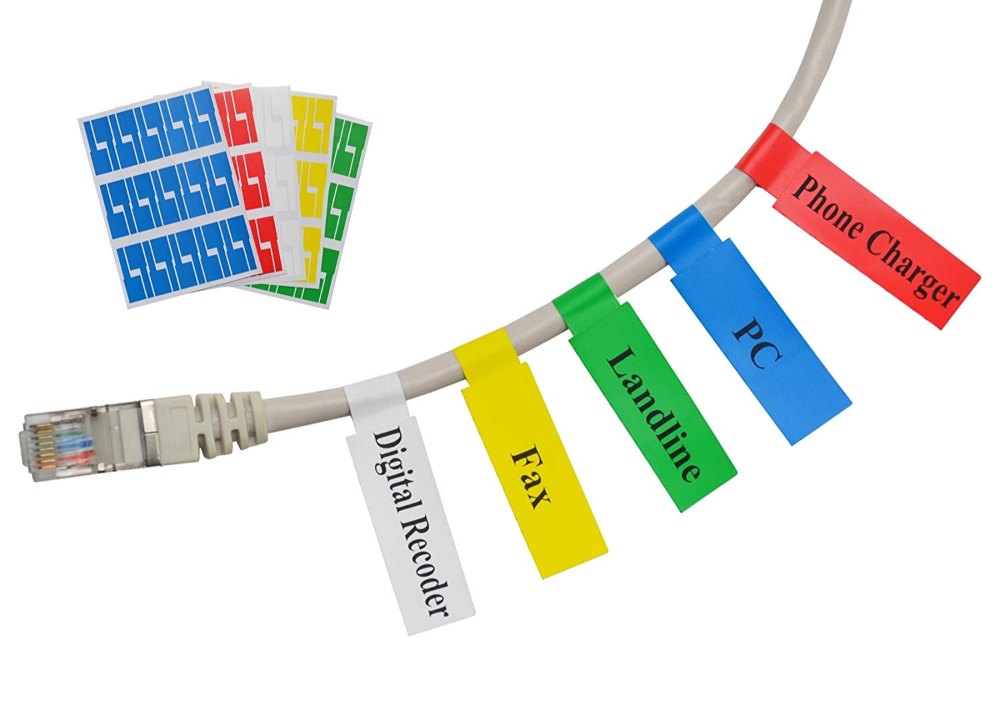
Every wire harness has its own layout constraints—some need to snake through tight engine bays, others must span long distances across industrial equipment. Off-the-shelf sizing rarely fits without compromise. That's why custom lengths, branch points, and wire gauges are adjusted to the exact routing path, eliminating slack and reducing the risk of abrasion or accidental disconnection.
Adhesive selection is just as important as physical dimensions. Different operating environments demand different bonding properties. For high-temperature zones near engines or exhaust systems, heat-resistant acrylic adhesives keep sleeves and wraps from peeling. In areas with constant vibration or flexing, a more elastic adhesive—like a silicone-based option—maintains its grip without cracking.
When the harness dimensions and adhesive chemistry are matched to the specific application, installation becomes faster because no field modifications are needed. The result is a cleaner assembly with fewer stress points, which directly contributes to longer service life and fewer warranty claims.
Legible Print That Stays Put Through Years of Vibration
Vibration has a way of turning crisp lettering into a smudged mess. This label stock is engineered to resist that. The ink bonds into the surface rather than sitting on top, so even constant shaking from motors or heavy equipment won’t cause the text to flake away or blur. You get sharp, readable characters that look the same on day one and year five.
We tested it on machinery that runs around the clock. After thousands of hours of continuous vibration, the print remained clear enough to read from arm’s length. No peeling, no ghosting, no faded digits. The adhesive holds to bare metal, powder coat, and textured plastics without creeping or curling at the edges.
That means fewer misreads, fewer rework orders, and less time spent tracing wires or checking part numbers. When a label has to stay legible in conditions that shake everything else loose, this is the one that holds its ground.
From Prototype to Mass Production Without Delays
Moving from a working prototype to full-scale manufacturing often trips teams up on hidden mismatches between how a part was built by hand and how the assembly line actually behaves. The fastest way to prevent delays is to treat the prototype not as a golden sample, but as a question you keep asking the factory floor. Every tolerance, every material substitution, every fixture that worked “well enough” in the lab needs to be re-examined under real throughput conditions before you commit to tooling.
One practical trick is to run a pre-production pilot with the exact same operators, shift patterns, and incoming material lots that the production line will use. Most teams skip this because it feels redundant — but catching a supplier’s batch variation or a fixture drift here costs days, whereas missing it costs months. Pair that with a rolling risk log that gets updated after each pilot build, and you stop treating delays as surprises. Instead, they become small adjustments you make while the line is still forgiving.
Finally, keep a “no new features after freeze” rule that everyone from engineering to sales actually respects. Scope creep during the prototype-to-production window is the single biggest source of silent delay — a tweak here, a better finish there. Lock the design, lock the suppliers, and lock the test criteria. If someone proposes a change, it goes into the next revision cycle, not the current ramp-up. That discipline alone keeps the transition from prototype to mass production on schedule far more reliably than heroic overtime ever will.
Barcode and Serial Number Integration for Full Traceability
Merging barcode scans with unique serial numbers closes the loop between physical movement and digital records. The moment a unit leaves the line, its serial number is captured alongside the barcode, linking raw material batches, production timestamps, and quality checks into one unbroken thread. This pairing removes the guesswork when a recall or audit demands pinpointing exactly which item went where, and when.
Instead of relying on broad date codes or lot-level tracking, this approach lets teams trace a single unit from shelf back to the exact workstation, operator, and component reel. It also opens the door to faster containment, since a serialized barcode scan can flag an affected unit in seconds rather than waiting for manual reconciliation. The result is less downtime and fewer wasted units when issues surface.
On the customer-facing side, that same integration powers warranty validation, repair history, and anti-counterfeit checks without adding friction. A quick scan of the barcode reveals the full serialized journey, giving service teams confidence in the product's origin and giving end users a transparent record of authenticity and care.
Material Testing That Exceeds Automotive Industry Standards
Most suppliers stop at the minimum thresholds set by automotive regulators. We don't. Our materials are pushed through salt spray chambers, thermal shock cycles, and UV exposure runs that run two to three times longer than standard test durations. That's not for bragging rights—it's because real vehicles face decades of sun, road salt, and temperature swings, and a lab spec that merely ticks a box won't predict that.
We also run custom abuse tests that aren't in any industry playbook. Think gravel bombardment at high velocity, repeated door-slam simulations on interior trim, and chemical resistance against everything from spilled coffee to battery acid. Some materials fail early in these extra rounds; those get reworked or rejected before they ever reach a production line.
The result is a material portfolio where the official datasheet is the floor, not the ceiling. Engineers can design with confidence because our internal test reports show what happens beyond the standard pass/fail boundary—where actual performance lives.
FAQ
We usually work with polyester, polyimide, and vinyl films depending on heat, chemical exposure, and abrasion requirements. Polyimide handles high temperatures well, while polyester offers a good balance of flexibility and print clarity.
Yes, the adhesive and face stock combinations we recommend are tested against common automotive and industrial fluids. We often suggest acrylic or rubber-based adhesives paired with chemical-resistant topcoats for such conditions.
Beyond standard sizes and colors, we offer variable data printing, barcodes, QR codes, sequential numbering, and custom die-cut shapes. Lamination and overcoating can also be added to improve legibility and resistance.
Automotive, aerospace, heavy equipment, marine, and renewable energy sectors make up a large portion of our work. Each has slightly different requirements for temperature range, print permanence, and regulatory marking.
Many of our label constructions meet UL, CSA, and RoHS requirements, and we can supply documentation for specific product codes. If you have a particular standard in mind, we can match materials and adhesives accordingly.
It depends on the size, material, and printing method, but small runs for prototyping are often possible. For production volumes, we usually see orders starting from a few thousand pieces per SKU.
We focus on ribbon and material compatibility, along with proper topcoating or lamination. Our samples go through thermal shock, rub, and solvent tests before full production so the print doesn't fade or smear prematurely.
Yes, we can review your drawing or existing label and suggest improvements for adhesion, print contrast, and die-cutting. Physical samples are typically available within a few working days after artwork approval.
Conclusion
When wiring harnesses are expected to perform in engine compartments where temperatures spike and solvents, fuels, and cleaning agents are common, the label is often the first component to fail. That's why a China wire harness label manufacturer focused on high-performance needs builds every product around survival. The base materials resist under-hood heat, brake fluid, battery acid, and aggressive degreasers without curling, fading, or losing adhesion. Custom sizes and adhesive systems are matched to the actual harness diameter, surface texture, and installation environment, so there's no one-size-fits-all compromise. Print technology is selected for long-term legibility: even after years of engine vibration, constant flexing, and exposure to dirt and moisture, barcodes, part numbers, and wiring diagrams remain sharp enough to scan and read.
That same attention to traceability carries through from the first prototype run to high-volume production. Serial numbers, QR codes, and barcode integration are built into the label layout, giving every harness a unique identity that follows it through assembly, testing, and field service. Rather than treating testing as a formality, the manufacturer runs material qualification programs that push past standard automotive requirements, subjecting labels to extended thermal cycling, chemical immersion, and abrasion testing. The result is a supply chain that doesn't stall waiting for label revisions or approvals. Prototypes ship quickly, tooling is adjusted to fit new connector or sleeve designs, and mass production ramps without delays. This combination of harsh-environment durability, custom engineering, and consistent traceability makes the China-based operation a practical choice for high-performance wiring projects where the label cannot be the weak link.
Contact Us
Contact Person: Yara
Email: [email protected]
Tel/WhatsApp: +86 13505426090
Website: https://www.qdxspack.com/