

China Window Glass Protection Film Supplier Guide for Long-Lasting Clarity and Safety
2026-11-21
When window glass starts looking tired, most people assume replacement is the only fix. But Shire protection film quietly challenges that idea. Keeping clarity and safety intact doesn’t have to mean expensive downtime or risky exposure. The right supplier changes how long your glass stays clean, scratch-free, and ready for what’s next. This guide covers what actually matters when choosing a film that lasts.
Why Some Chinese Window Films Stay Clear Longer Than Others
The clarity of a window film over time comes down to how the adhesive layer and the polyester base interact with UV light and moisture. Cheaper films often use a single-layer construction with a soft adhesive that can haze up as plasticizers migrate to the surface, giving that milky, tired look after a couple of summers. Films that stay clear longer usually rely on a denser base film and a cross-linked adhesive system that resists those microscopic shifts. In practical terms, that means the film's optical quality is baked in from day one, not just protected by a hard coat on the outside.
Another factor that separates long-lasting clarity from early fogging is how the film handles thermal stress. A film applied to a west-facing window in a hot climate expands and contracts dozens of times a day. If the layers have slightly different rates of expansion, tiny gaps can form at the interface where the adhesive meets the glass. Once that happens, air and trace moisture seep in, scattering light and dulling the view. Better window films are built so the base, adhesive, and coating expand in near-lockstep, so the whole stack moves as one piece instead of pulling apart.
There's also a difference in the type of UV inhibitors used. Lower-cost films may rely on a surface-level chemical that wears off after a few years of direct sun, leaving the film vulnerable to yellowing and micro-crazing. High-clarity films tend to incorporate UV blockers directly into the adhesive or the base layer itself, so the protection doesn't scrub away during cleaning. That's why two films can look identical on day one, but after thirty months of real sunlight, one still reads as smooth glass while the other turns hazy and faintly amber around the edges.
Reading Between the Lines of Thickness and Optical Haze Ratings
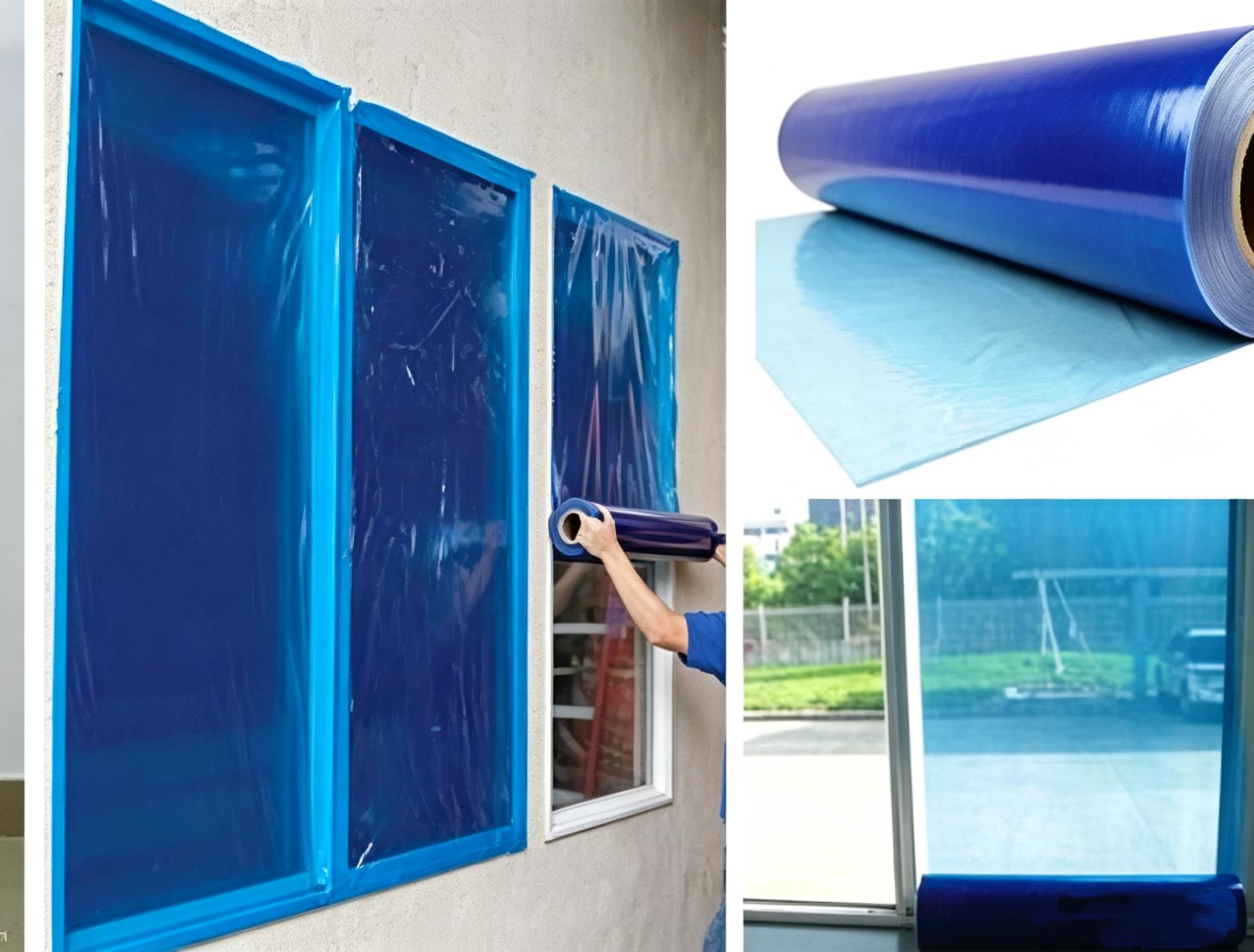
Thickness has a way of quietly shifting optical haze numbers even when the material itself hasn't changed. A 2 mm sheet and a 6 mm sheet cut from the same resin rarely produce the same haze reading, simply because light spends more time traveling through the thicker slab, bumping into particles and internal boundaries along the way. What looks like a material difference on paper can turn out to be mostly geometry.
That is why a haze rating without a stated thickness is only half the story. Many data sheets report values measured at a standard gauge, but real parts rarely share that exact thickness. When comparing films or sheets, it helps to normalize the numbers or at least keep the test thickness consistent; otherwise a thinner, lower-haze product might not actually be clearer once formed into a thicker part.
There is also a practical side to reading between those lines. Optical haze can shift with surface texture, weathering, and even minor processing changes, so a single rating should be treated as a baseline rather than a promise. Asking how the measurement was made, and at what thickness, often reveals more than the printed number itself.
Adhesive Choices That Preserve Glass Integrity Under Sudden Impact
Glass rarely fails because the adhesive is too weak in a single direction. The trouble usually starts when a sudden load finds a rigid bond line and has nowhere to go. A useful adhesive for impact-prone glazing keeps a lower modulus after cure, so the material can stretch slightly and absorb energy instead of handing it straight to the glass edge. Modified silanes and certain two-part polyurethanes tend to behave this way without turning soft over time. Pay more attention to elongation at break and tear resistance than to the highest lap shear number on a datasheet.
The way the joint is built matters just as much as the chemistry. A thick, even bead gives the adhesive room to flex, while a starved joint or hard shims create hard points that concentrate stress exactly where impact will seek out a crack. If a primer is required, it should be tested with the specific glass coating and frame finish rather than assumed compatible. It also helps to check shrinkage during cure; early tension locked into the bond can lower the impact threshold before the assembly is ever installed.
Climate-Specific Testing Many Suppliers Overlook
A lot of qualification reports look fine on paper because they were generated in a steady 23°C lab. Put the same product on a shaded veranda in Kuala Lumpur, and the story changes within weeks: gaskets swell, labels peel, and a thin film of corrosion starts on exposed metal. Suppliers who only test under mild conditions miss these signs entirely.
The gap is rarely about missing one extreme test. It is the combination that causes problems. A unit that survives dry heat may fail after monsoon humidity follows a dusty afternoon, because dust absorbs moisture and creates a conductive paste on circuit boards. Coastal salt fog combined with daily condensation is another pattern that standard chambers often fail to reproduce.
The practical fix is to match test profiles to the climate where the equipment will actually be installed, using local weather data and outdoor exposure samples. Even a small rack of material coupons placed at two or three reference sites gives more useful information than a generic 500-hour humidity test.
How Factory Line Speed Affects Coating Uniformity and Safety
Line speed sets how long a wet coating has to flow out before it enters the curing zone. Run the line too fast and the film doesn't get a chance to level, so edges can pull thin while the center holds more material. Slight surges in speed show up as banding or streaks that become obvious only after the surface is baked. That same rush also shortens solvent flash-off time, which means more vapor is carried into the oven. In a poorly balanced exhaust system, that can push the atmosphere closer to flammable limits than anyone on the floor wants.
Slow speeds create a different set of problems. The coating can build too thick, sag on vertical surfaces, or collect in recesses where it traps air. If the line hesitates long enough, the surface may skin over while solvent remains underneath, leading to pinholes or blisters during cure. From a safety standpoint, a crawling line tends to keep overspray and solvent vapor hanging in the booth longer, so operator exposure and housekeeping risks rise unless ventilation is adjusted to match the lower throughput.
A practical operating window usually emerges when line speed, coating viscosity, and oven airflow are tuned together rather than treated as separate settings. Changes in formulation or ambient temperature can shift that window enough to matter, so what worked in winter may not hold in summer. Watching wet-film thickness at a few points across the part and keeping an eye on vapor concentrations near the oven entrance gives operators a clearer signal than line speed alone.
Building a Supplier Checklist Around Real-World Glass Failure Patterns
Most supplier evaluations rely on spec sheets and lab tests, but those rarely capture how glass actually fails on a roof or facade. A better starting point is to collect field failure data from past projects—thermal stress cracks, impact fractures from hail, spontaneous breakage from nickel sulfide inclusions, edge damage during handling—and group them by root cause. Once that pattern map exists, the checklist shifts from generic yes/no boxes to targeted questions about tempering uniformity, edge finishing, heat soak protocols, and packaging methods that directly correlate with the failure modes you've observed.
The checklist should also account for installation realities, since a supplier can deliver perfect glass that still fails because of frame tolerances or setting block placement. Ask for documentation on allowable edge clearance, recommended bite dimensions, and compatibility with structural sealants. Better yet, include a requirement that the supplier provide field failure case studies—not just marketing claims—along with the corrective actions they took. This filters out vendors who only understand glass in a controlled environment.
Finally, weight each checklist item by how often its associated failure appears in your real-world data. For example, if edge crushing accounts for a third of your warranty claims, then edge finish and packaging criteria should carry more weight than aesthetic color consistency. This keeps the evaluation grounded in observed performance rather than theoretical quality, and it forces suppliers to address the failure patterns that actually cost you time and money.
FAQ
Find out whether the factory controls coating and adhesive mixing in-house. A real manufacturer can usually show extrusion or coating lines, raw material batch records, and custom width cutting. If they only offer stock rolls with no technical team, you are probably dealing with a trading company.
Suppliers that brag about clarity rarely show numbers. Ask for accelerated weathering data such as 1,000 hours of QUV or Xenon arc testing, then compare yellowness index and haze values before and after exposure. A shift below 2% is a better sign than marketing language about ultra clear film.
The usual cause is a weak adhesive layer or insufficient curing time on the film itself. Dust and moisture trapped during installation make it worse. If the film lacks a good pressure-sensitive adhesive and proper edge sealing, bubbles tend to creep in from the edges later.
Before paying anything, get the roll specifications in writing: film width, length tolerance, adhesive type, release liner, and packaging method. Ask for a pre-production sample from the same coating line rather than a lab sample. It also helps to have the supplier mark the exact batch number on both the sample and the final invoice.
Higher price and better clarity do not always go together. Some expensive films cost more because of brand markup or thicker polyester layers. Clarity depends on the base PET quality, adhesive clarity, and coating uniformity. A mid-range film on optical-grade PET can outperform a thicker premium film on standard PET.
A clear safety film with a polyester thickness around 4 mil can hold broken glass together without darkening the room. If heat rejection matters, choose a spectrally selective film that keeps visible light transmission above 60% while cutting infrared. Avoid very dark films in spaces where people need to read or work.
Rolls should be suspended or supported by end caps so the edges do not touch the carton floor. Use moisture-barrier bags and desiccant if the film will pass through humid ports. Mark the roll direction and batch number on each carton to catch mixing or handling damage quickly.
Do not choose based on a small swatch. Ask for a full-width roll sample and tape it to a real window for two to three weeks. If it is hard to peel from the liner, shows distortion, or leaves adhesive residue, those flaws will only become more obvious on a large job.
Conclusion
Long-term optical performance in Chinese window glass protection film rarely comes down to a single spec sheet number. Shops that hold clarity over years tend to buy from factories willing to explain how line speed, coating cure, and adhesive chemistry interact. Slower, controlled coating passes often produce a more uniform layer, while rushed runs can leave micro-variations that later show up as haze or uneven stress distribution. Thickness alone means little unless paired with optical haze ratings measured after accelerated weathering, not just at the roll. Some suppliers quietly run climate-specific cycling tests—humid heat, salt spray, freeze-thaw—because a film that looks flawless in a temperate warehouse may fail on a coastal high-rise or a northern curtain wall.
The more useful supplier checklist starts from real glass failure patterns rather than marketing bullet points. Ask how the adhesive behaves under sudden impact, because a pressure-sensitive layer should hold shards together without ripping or pulling glass fragments inward. Evaluating peel adhesion, tack, and cohesion after thermal aging reveals whether that hold survives real conditions. It also helps to request batch-level data on clarity retention and coating uniformity, not just a sample swatch. Suppliers who can walk through their line-speed controls, optical haze tolerances, and climate-test results are usually the ones whose film stays clear and protective after installation. Filtering out those who avoid these questions will do more for long-term safety than comparing technical brochures side by side.
Contact Us
Contact Person: Jack Xu
Email: [email protected]
Tel/WhatsApp: 8615257328825
Website: https://www.temporaryprotectivefilm.com/