

China Waxed Corrugated Boxes Built for Moisture-Resistant Shipping and Storage
2026-11-24
Moisture has a way of finding the weakest box in a shipment. A little humidity at the port, a cold chain transition, or weeks in a warehouse can turn ordinary corrugated board into a liability. Waxed corrugated boxes made in China are engineered to stop that cycle before it starts—shedding water, holding their strength, and protecting contents through demanding shipping and storage conditions. Below, we look at what actually separates them from standard board and where ShiTeng Packaging fits in.
When Standard Cardboard Quits, Waxed Corrugated Keeps Working
Standard cardboard has a habit of giving up the moment it meets moisture, grease, or repeated rough handling. A little condensation inside a refrigerated truck, a spill near the loading dock, or the weight of stacked boxes in a humid warehouse can soften the walls until they buckle. Once that happens, the box stops protecting whatever is inside. Waxed corrugated takes a different route. The wax coating isn't just a surface detail; it soaks into the fibers enough to create a barrier that shrugs off water and resists the slow breakdown that turns ordinary boxes into mush. This means the container keeps its shape, keeps its strength, and keeps doing its job long after untreated cardboard would have collapsed.
The practical difference shows up most clearly in cold storage and fresh produce handling. Regular boxes absorb moisture from the air and from the product itself, weakening at the corners and along the bottom flaps. Waxed corrugated boxes hold up under those same conditions, retaining their stacking strength so pallets don't lean or topple. They also resist the kind of oil and liquid seepage that happens with meat, fish, or prepared foods. Instead of peeling apart or leaving a soggy trail, the waxed surface keeps liquids on the outside where they can be wiped away or washed off. That durability isn't just about surviving a single trip; it's about making repeated use possible in environments where standard cardboard would be a one-way ticket to the recycling bin.
There's also a subtle shift in how people treat the box itself. When packaging fails early, workers spend extra time wrapping, taping, or double-boxing just to get through a shift. With waxed corrugated, that extra effort drops away because the material doesn't demand constant reinforcement. Loads stay cleaner, handling stays simpler, and the whole flow from cold room to delivery truck feels less fragile. It's not that standard cardboard is useless, but it has clear limits. Waxed corrugated simply extends those limits far enough to matter in places where moisture and pressure are part of the daily routine.
The Moisture Problem Most Shipping Boxes Never Solve
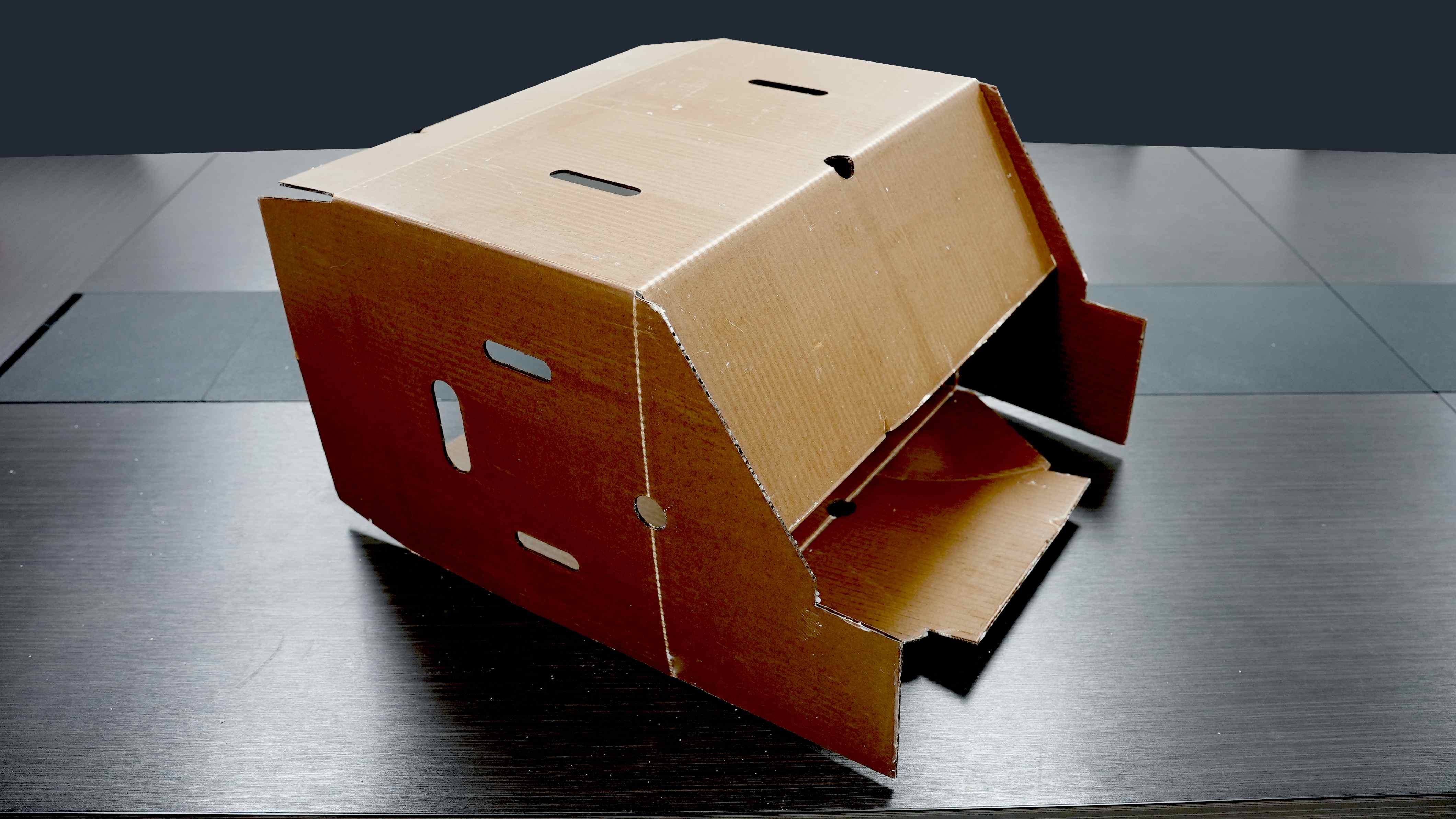
A box that feels dry to the touch can still be quietly pulling water out of the air. Corrugated board is mostly paper fiber, and those fibers behave like tiny straws once humidity rises above roughly 60%. The edges and hand holes are the first places to go soft, but the real trouble starts inside the flutes, where trapped moisture weakens the structure long before anyone sees a stain.
Some suppliers coat the outside with wax or a water-resistant film and call the problem handled. That helps during a direct spill or light rain, but it does almost nothing for vapor moving into the box from the pallet, the truck floor, or a poorly ventilated container. By the time a shipment reaches its destination, the bottom flaps can feel spongy, and stacked cartons lean or crush under loads they should have held easily.
The fix is rarely one dramatic change. It usually comes down to board moisture content at the start, the way cartons are palletized, and whether gaps allow air to circulate near the floor. A box that stays rigid in real humidity swings is not just stronger; it keeps the product inside from smelling musty or arriving with peeling labels and rusted parts.
What Chinese Waxed Box Makers Do Differently for Damp Freight
Chinese waxed box producers often treat the board itself before the box is even die-cut, not just applying wax to the outer surface. They adjust the wax blend by season and destination route, adding more microcrystalline wax for shipments headed through the South China Sea or the Panama Canal, where humidity swings are hardest on corrugated fiber. This pre-treatment keeps the flute structure from softening because moisture never gets the chance to sit in the paper fibers.
Another difference shows up at the joints and bottom flaps. Instead of relying only on a surface coat, many workshops run a second pass of heated wax along the inside seams and score lines, where cracks tend to open during rough handling. The goal is to keep those small breaks from becoming wicking points. Some also switch to water-resistant adhesives that stay tacky longer in high-moisture air, so the box holds its shape even when the outer surface is sweating.
Packing and palletizing get more attention too. Makers may add a thin wax-impregnated liner sheet between layers of boxes, and they often recommend slightly taller pallets to keep the bottom cartons away from wet container floors. These are not drastic changes, but together they reduce the musty, softened corners that plague ordinary wax-coated cartons on long ocean hauls.
Why Waxed Corrugated Earns Its Place in Cold Storage and Export
Cold storage punishes ordinary corrugated. Moisture settles into the flutes, edges soften, and boxes start to bow before the week is out. Waxed board pushes back. The treatment works into the fiber rather than sitting on the surface, so the board keeps its stiffness through freezer-to-dock temperature swings and daily handling.
Export lanes add more trouble. A container can sweat for days as it crosses latitudes, and pallets shift with every roll of the ship. Waxed corrugated holds its stacking strength after absorbing condensation that would turn untreated board into a soggy mess. That means fewer crushed corners, fewer repacks, and fewer rejected pallets at the receiving end.
This is not about choosing an upgrade for its own sake. Seafood, produce, and meat shippers work with narrow margins and strict inspection windows. The cost of a failed carton at the destination is rarely limited to the carton. Waxed board buys extra time in a cold chain that is already working against the load.
A Closer Look at Wax Coating, Board Strength, and Real Load Stress
Wax coatings often get dismissed as a purely cosmetic layer, but the way they interact with board fibers under pressure tells a different story. Rather than simply sitting on the surface, a well-applied wax penetrates the outer liner and creates a subtle binding effect that changes how the board distributes force. This is most visible when boxes are stacked for long periods in humid conditions—boards without wax tend to soften unevenly, while waxed boards hold their corners and edges with noticeably less deflection.
Board strength is usually measured in controlled lab conditions, yet real load stress rarely behaves that predictably. A carton rated for a certain compression strength can fail early when vibration, uneven pallet support, or sudden shifts during transport come into play. Wax coating doesn't magically increase burst strength, but it does preserve the board's structural integrity by limiting moisture uptake and reducing fiber fatigue. Over time, that means the difference between a box that slowly sags and one that keeps its shape until the very end of the supply chain.
The real test comes when load stress is applied not as a single static weight but as repeated, fluctuating pressure. Forklift clamps, conveyor drops, and stacked layers settling into each other all create micro-deformations that accumulate. Here, the wax layer acts as a stress buffer, allowing the outer surface to flex slightly without cracking. Field failures are rarely about a single dramatic overload—they're about thousands of small compromises, and wax coating helps delay exactly those compromises.
Choosing a Box That Survives the Full Journey, Not Just the Warehouse
The temptation is to match a box to the warehouse: uniform pallets, flat floors, predictable stacking. But a parcel moves through far less forgiving territory once it leaves the dock. Conveyor belts pinch edges, automated diverters shove packages sideways, and a loosely packed truck can turn a smooth highway into a vibration test rig. If the carton is only strong enough for static compression in a climate-controlled building, the first sorting hub will expose it.
Focus on features that hold up under real handling. Edge crush resistance matters more than burst strength when a box gets squeezed between heavier parcels. Tight, well-glued manufacturer's joints keep corners from peeling open after repeated drops. A slightly larger flute profile or a heavier liner can add weight, but it also stops creases from turning into tears. And moisture matters: overnight condensation inside a trailer can reduce a board's stiffness long before anyone notices visible damage.
The most useful approach is to pack a test box with the actual product, seal it exactly as the fulfillment team would, and send it through a round-trip route. Open it at the end and look at the weak points: dented corners, softened walls, loose tape, shifted contents. That mini field test reveals more than a warehouse compression chart because it accounts for impacts, humidity, and the chaotic mix of parcels riding against each other. A box that survives that journey is the one worth standardizing.
FAQ
Most use a wax coating or wax impregnation that stops water from soaking into the corrugated medium. The board keeps its rigidity longer, which matters when cold chain condensation settles on the outer walls.
Standard coatings often shed light splashes from the outside, but waxed board handles sustained dampness better, especially at the cut edges where uncoated cardboard usually starts to wick moisture.
They are widely used for iced seafood, leafy greens, and meat or poultry packs. For direct food contact, confirm the wax is food-grade and ask the supplier for compliance documentation relevant to your destination market.
It depends on the coating schedule. Printing before waxing gives the sharpest result. If the whole sheet is wax-soaked, simple bold graphics work better than fine halftones or dense text blocks.
Request the linerboard weight, type of wax, coating method, edge crush test values before and after humidity exposure, and a pre-production sample tested under your actual shipping conditions.
Yes, the board remains functional in cold rooms and freezers. The bigger concern is allowing frozen boxes to thaw and dry evenly so the structure does not stay saturated between uses.
They can often be reused several times if dried out between trips. Recycling options vary by region because heavily waxed board may need separate pulping, so check with local waste handlers before disposal.
Conclusion
Most conventional corrugated boxes fail quietly once condensation, humidity, or direct moisture works into the fiberboard. The flutes soften, sidewalls bow, and stacked cartons begin to lean long before anyone notices the damage. China’s waxed corrugated boxes take a different route. Instead of relying on a thin outer barrier, the wax saturates the medium and liners to create a structure that shrugs off damp air, light rain, and repeated temperature swings. The difference shows up in real freight conditions: a waxed board retains its edge crush resistance after standing on a wet dock floor or moving through a refrigerated container, while untreated board turns spongy and unpredictable. Chinese manufacturers have refined this by adjusting wax penetration to match board grade, so the coating does not just sit on the surface but becomes part of the box’s load-bearing profile. That matters when cases are stacked eight or ten high in a cold storage room or lashed to a pallet for export.
Cold chains and ocean freight punish packaging in ways a warehouse test never captures. Condensation forms as cargo moves between climates, frost builds on container walls, and handling crews drag cartons across wet decks. A box that survives the warehouse floor but collapses at the port is a costly failure. Waxed corrugated earns its place because it handles that shift without relying on plastic liners or desiccants alone. The wax works with the board fibers to keep the carton rigid under vertical load, even when the outer surface feels cold and slick. Buyers looking at these boxes should ask less about the price per unit and more about how the board behaves after twenty-four hours at high humidity, after a drop onto damp concrete, or after a sea voyage with repeated condensation cycles. The cartons that last are the ones designed for the full journey, not just the moment they leave the loading dock.
Contact Us
Contact Person: Mr. Ge Man
Email: [email protected]
Tel/WhatsApp: 8613710506492
Website: https://www.shitengzx.com