
China Alkyl Polyglucoside Drives Innovation in Eco-Friendly Cleaning Products
2026-10-21
The global shift toward greener cleaning solutions has placed a quiet yet powerful ingredient in the spotlight: alkyl polyglucoside. As China emerges as a key production hub, POLYKEM is redefining what eco-friendly surfactants can achieve—balancing tough cleaning performance with genuine biodegradability. But what makes this sugar-based molecule so effective, and why are formulators across the world turning to Chinese suppliers for their next breakthrough? The answer may surprise you.
How China's Cassava-Based Surfactant Is Shaking Up Green Cleaning
For decades, the green cleaning aisle leaned heavily on coconut and palm derivatives, but a quiet shift is underway as cassava—a rugged root crop long prized for its starch—steps into the spotlight. Chinese producers, drawing on deep regional expertise in cassava cultivation, have begun refining the tuber into high-purity surfactants that rival traditional plant-based options on foam quality and grease-cutting power. Unlike palm, which carries well-documented deforestation baggage, cassava thrives on marginal land with minimal water input, giving formulators a compelling sustainability story without the usual trade-offs.
What makes the cassava-based approach genuinely disruptive is its fit with cold-water washing and concentrated formulas. The surfactant’s molecular structure, derived from cassava glucose, offers rapid biodegradability and a surprisingly gentle hand feel, even at high active levels. Early adopters among boutique cleaning brands report that cassava-derived glucosides hold viscosity better in low-sulfate systems, a stubborn pain point for many eco-lines. Meanwhile, the supply chain benefits from China’s existing starch infrastructure, allowing surfactant mills to switch feedstock without massive capital outlay—a nimbleness that palm and coconut cannot easily match.
Skeptics once dismissed cassava as a niche player, but the numbers are starting to tell a different story. Provincial processing clusters in Guangxi and Yunnan have moved beyond pilot batches, producing alkyl polyglucosides with batch-to-batch consistency that passes muster with mid-size detergent manufacturers. As European and North American buyers face tightening restrictions on palm-based ingredients, the cassava route offers a way to dodge both supply volatility and the optics of tropical deforestation. The result is a quiet recalibration of what “green” really means—one where a humble root, rather than a trendy marketing claim, does the heavy lifting.
The APG Advantage: Performance Without the Petrochemical Hangover
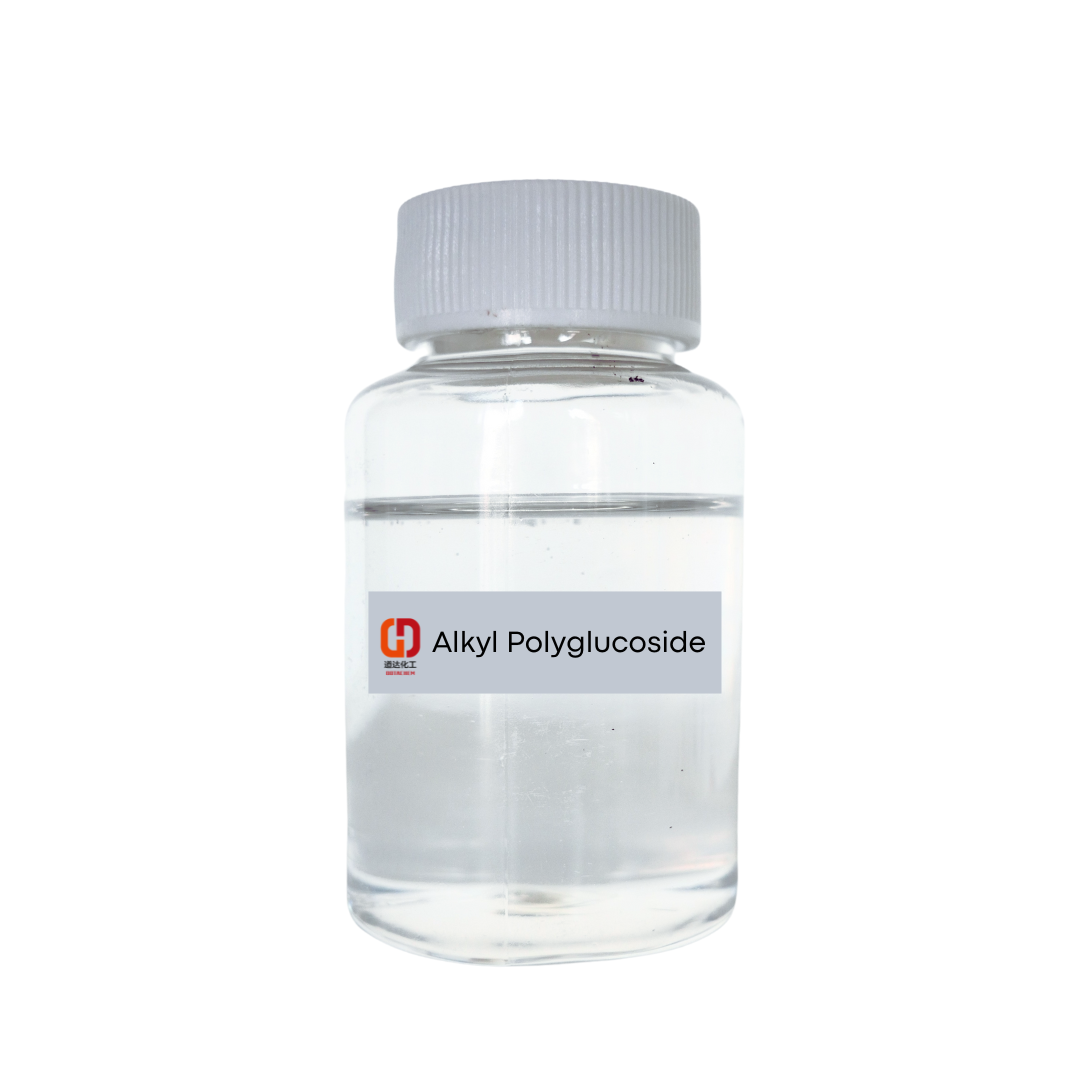
Most industrial-strength cleaners force a choice: either they cut through grease and leave behind a harsh chemical film, or they’re gentle but disappoint when faced with real grime. APG sidesteps that whole dilemma. It strips away oily residue and stuck-on dirt with real muscle, yet it doesn’t cling to surfaces or your skin afterward. The rinse feels clean, not filmy, and the air doesn’t carry that sharp solvent odor.
What you notice over time is what’s missing. No dull buildup on countertops or glass, no dry, cracked hands after a long cleaning session, no faint petroleum smell that lingers for hours. APG comes from plant sugars and natural fatty alcohols, so the cleaning power doesn’t come with the environmental debt of crude oil processing. It simply does the job and gets out of the way.
From Farm Waste to Foam: Inside the Bio-Refinery Shift
The smell of fermentation now drifts from facilities that once processed corn stover and wheat straw. These aren't traditional ethanol plants, but bio-refineries transforming agricultural leftovers into polyurethane foams. Lignin, the rigid polymer that gives plant stems their backbone, is being pulled apart and reassembled into polyols—the chemical building blocks of foam insulation, cushioning, and packaging. It's a quiet replacement of petroleum-based chemistry with something that was previously burned or plowed under.
The shift is driven by more than environmental idealism. Farm waste is cheap, abundant, and already part of local logistics chains. A single biorefinery can take in wheat straw from a fifty-mile radius, eliminating trucking costs that would make the venture unprofitable. Inside, enzymes and mild solvents break down cellulose and hemicellulose, but the real breakthrough has been in lignin valorization—converting this stubborn, irregular molecule into consistent, reactive polyols. Pilot plants have reached purity levels that allow direct substitution into foam formulations without sacrificing compression set or tensile strength.
What does this mean for the furniture and construction industries? Foams made from farm waste are not just green marketing; they perform identically to conventional counterparts in stress tests and fire ratings. And as more bio-refineries come online, the cost curve bends downward. The legacy of the corn ethanol boom taught us that feedstock logistics and byproduct markets make or break a bio-economy. This time, the target isn't fuel—it's the material under your feet, inside your walls, and wrapped around fragile goods. The shift from waste to foam is already underway, one bale of straw at a time.
Why Eco-Label Brands Are Switching to Alkyl Polyglucoside Right Now
Eco-label brands have long struggled to find surfactants that clean effectively without triggering a cascade of environmental red flags. Alkyl polyglucoside, or APG, sidesteps that dilemma entirely. Derived from plant starches and fatty alcohols, it breaks down readily in water and soil, leaving no persistent synthetic residue behind. For certifying bodies that scrutinize every ingredient down to its degradation pathway, APG offers a rare combination: high biodegradability, low aquatic toxicity, and a production process that doesn't rely on petrochemical feedstocks.
What's driving the sudden shift isn't just green credentials on paper. Formulators are discovering that APG performs remarkably well in hard water, produces a rich, stable foam without the need for synthetic boosters, and is gentle enough for sensitive-skin lines that eco-conscious consumers favor. Unlike many conventional surfactants that force a trade-off between mildness and cleaning power, APG delivers both. This means brands no longer have to compromise on efficacy to earn an eco-label, which has historically been the sticking point.
There's also a practical supply-chain angle. As larger cosmetic and home-care companies begin scaling up APG production, costs have dropped enough to make it viable for smaller, values-driven labels. Early adopters report that switching to APG simplifies their ingredient lists and reduces the number of auxiliary additives needed to stabilize formulas. With certification standards tightening and consumer skepticism around vague 'natural' claims growing, APG gives eco-label brands a concrete, defensible ingredient story—one that holds up under lab testing and real-world use.
Cleaning Product Formulators Rethink Harsh Sulfates and Bet on APG
For decades, sodium lauryl sulfate and its ethoxylated cousin have been the workhorses of household cleaners, prized for their cheap, aggressive degreasing. But a growing number of formulators are pushing back, tired of the tightrope walk between cleaning power and skin irritation. The shift isn't ideological—it's driven by consumer complaints, stricter safety assessments, and a realization that harsh surfactants strip more than just grime.
Alkyl polyglucosides, or APGs, have emerged as the most credible alternative. Derived from plant starches and fatty alcohols, these nonionic surfactants offer a rare combination: strong wetting and emulsifying action without the sting or dryness associated with traditional anionics. They also produce a dense, stable foam that feels luxurious rather than corrosive, which matters more than ever in a market where sensory experience drives repeat purchases.
The transition isn't without friction. APGs cost more per kilo and behave differently in formulation—they can thin out thickened systems or require rebalancing of preservatives. Yet many labs are finding that blending APGs with milder anionics like sodium cocoyl isethionate yields performance that rivals, and sometimes beats, the old sulfate benchmarks. That pragmatic middle path is why APG adoption is no longer a niche experiment but a calculated bet on the future of cleaning chemistry.
What China's APG Scale-Up Means for Global Ingredient Transparency
China's aggressive expansion of alkyl polyglucoside (APG) production is quietly rewriting the rules for how formulators and brands disclose what goes inside a bottle. As domestic capacity surges past what most Western regulatory databases can track in real time, the gap between a supplier's spec sheet and what actually ships has narrowed—but not in the way compliance teams expect. The real shift isn't about new certificates or audit trails; it's that the sheer volume forces buyers to ask questions they used to skip, like whether that "plant-derived" surfactant really came from the feedstock listed on the invoice.
The transparency effect works in two directions. First, Chinese manufacturers, competing on price and speed, have started publishing batch-level fatty alcohol origins and residual glucose levels far beyond what EU or US buyers historically demanded. Second, global brands are discovering that a single APG supplier switch can invalidate an entire product's green chemistry narrative overnight. That tension—between cheaper, faster sourcing and the growing expectation of full traceability—is pushing ingredient transparency from a marketing bullet to an operational necessity.
The long-term consequence may be less about China itself and more about how every supplier gets benchmarked against the new normal. When a mid-sized Chinese plant can offer a digital, machine-readable breakdown of its APG carbon chain distribution, the old practice of mailing a paper CoA with a vague "C8-C16" range starts to look like a relic. Ingredient transparency is no longer a premium feature; it's becoming the floor, and China's scale-up just made that floor visible to everyone.
FAQ
Alkyl polyglucoside, or APG, is a surfactant made by reacting natural fatty alcohols with glucose derived from plants like corn or coconut. It stands out because it breaks down readily in the environment, comes from renewable feedstocks, and is exceptionally mild on skin. Unlike many petroleum-based surfactants, it doesn't leave behind toxic residues, which makes it a favorite for green cleaning formulations.
China has built a robust production base for APG by tapping into its abundant agricultural resources and expanding specialty chemical manufacturing. Domestic producers have pushed down costs while improving purity and consistency, which gives formulators worldwide more room to experiment. Beyond raw supply, Chinese companies are actively developing APG blends for laundry liquids, hard surface cleaners, and even personal care, so the country influences both availability and application trends.
You'll typically find APG in dishwashing liquids, all-purpose sprays, laundry detergents, and bathroom cleaners that advertise plant-based or sensitive-skin benefits. It also appears in foaming hand soaps and fruit-and-vegetable washes because it rinses off easily and doesn't overpower with a chemical smell. Some industrial cleaning lines use it too, especially where worker safety and low aquatic toxicity matter.
Traditional surfactants like sodium lauryl sulfate can be harsh on skin and slow to biodegrade, which raises environmental and regulatory concerns. APG offers comparable foaming and wetting performance without those drawbacks, and it works well in hard water. Formulators also appreciate that APG pairs easily with other green ingredients, letting them create products with simpler labels and clearer sustainability claims.
For everyday household soils, yes, APG holds its own. It lifts grease and suspends dirt effectively, especially when blended with a co-surfactant like an amine oxide or a mild anionic. It may not generate the dense, long-lasting foam some consumers expect from SLS-based products, but modern formulations compensate with foam boosters. The trade-off is usually worth it for brands targeting sensitive skin and lower environmental impact.
China's large-scale fermentation and processing capabilities have driven down the unit cost of APG significantly over the past decade. Local manufacturers have integrated raw material sourcing, from starch and glucose to fatty alcohols, which shortens logistics and stabilizes pricing. As a result, even smaller eco-cleaning brands outside China can access APG at a price that keeps their products competitive with conventional cleaners.
APG has a high viscosity in concentrated form, which can make pumping and mixing trickier during production. It also tends to darken at elevated temperatures, so manufacturers must control heat carefully. In high-pH formulas, APG can hydrolyze over time, reducing shelf life. Formulators often need to tweak preservative systems because APG's mildness means it doesn't suppress microbial growth the way harsher surfactants sometimes do.
APG encourages rethink of entire product architectures. Because it's compatible with enzymes, probiotics, and natural chelators, brands can design cleaners that work at lower temperatures or rely on biological action rather than aggressive solvents. Its low irritation profile also opens doors for multi-use products, like a spray that cleans kitchen counters and is safe enough for occasional hand contact. In China, researchers are exploring APG-based microemulsions for targeted degreasing and even agricultural cleaning, pushing the ingredient into new territory.
Conclusion
China's push into alkyl polyglucoside is less a laboratory curiosity and more a supply-chain realignment. The molecule, built by reacting glucose from cassava starch with fatty alcohols, delivers detergency that rivals sulfates yet leaves no ethoxylation byproducts or lingering petrochemical notes. For formulators, that means a surfactant that performs in cold and hard water, works at low concentrations, and doesn't demand a cocktail of stabilizers. Eco-label brands in Europe and North America have taken notice: switching to APG lets them shorten ingredient lists and drop the petrochemical hangover claims from their marketing, because the ingredient itself carries the story. At the same time, China's bio-refinery model is turning what used to be cassava processing waste into a reliable foam-building feedstock, relieving pressure on both landfills and virgin petrochemicals.
The scale-up is what makes the shift durable. China's cassava belt can produce APG at volumes that keep prices within reach of mass-market cleaners, not just premium green lines. That scale has a transparency effect too: when a major ingredient supplier can trace a surfactant back to a specific starch stream, brands face fewer opacity problems and can make cleaner plant-based claims without hedging. Formulators who once leaned on harsh sulfates are now redesigning around APG, often finding they can remove synthetic masking fragrances and dyes because there is no petroleum smell to hide. In other words, China's APG momentum is not merely a green tweak; it changes what cleaning products can say on the label and what they leave behind in the water.
Contact Us
Contact Person: Levi
Email: [email protected]
Tel/WhatsApp: +86 532 84688720
Website: https://www.polykem-intl.com