

Blast Freezer Original Manufacturer Shares Expert Insights on Rapid Freezing Technology
2026-05-19
In the world of commercial refrigeration, rapid freezing is more than just a convenience—it’s a game-changer for food quality and safety. But what truly separates ordinary equipment from cutting-edge technology? As a leading blast freezer original manufacturer, Worldbase is pulling back the curtain on the science and strategy behind high-performance freezing. From preserving cell structure to slashing operational costs, the insights shared here challenge common misconceptions and reveal why smart businesses are rethinking their cold chain. Whether you’re in seafood, baked goods, or ready meals, understanding these fundamentals could transform your production line. Ready to see freezing in a new light?
The Physics of a Perfect Freeze in Seconds
Freezing water in mere seconds sounds like a magic trick, yet it's a dance of thermodynamics that anyone can orchestrate. The secret lies not in chilling the liquid outright, but in supercooling it—a state where water remains liquid well below its usual freezing point, poised on the edge of transformation. By purifying the water and cooling it without disturbances, you trap the molecules in a liquid limbo, waiting for the slightest nudge to snap into ice.
The instant freeze becomes a spectacle when nucleation finally occurs. A single crystal seed—whether from a tap on the bottle, a poured surface, or a speck of dust—unleashes a rapid chain reaction. Latent heat rushes out as hydrogen bonds lock into a hexagonal lattice, spreading through the supercooled water at breathtaking speed. The process is so swift that it captures the imagination, turning clear liquid into a slushy solid before your eyes.
What makes this phenomenon so captivating is its delicate balance. The water must be free of impurities and cooled uniformly, often between -5°C and -10°C, where the molecules are sluggish yet unstructured. One small trigger, and the entire volume surrenders to crystallinity, demonstrating how nature's phase changes hinge on hidden thresholds. It's a reminder that sometimes, perfection is a matter of timing and a tiny push.
Where Standard Freezers Leave Your Product Vulnerable
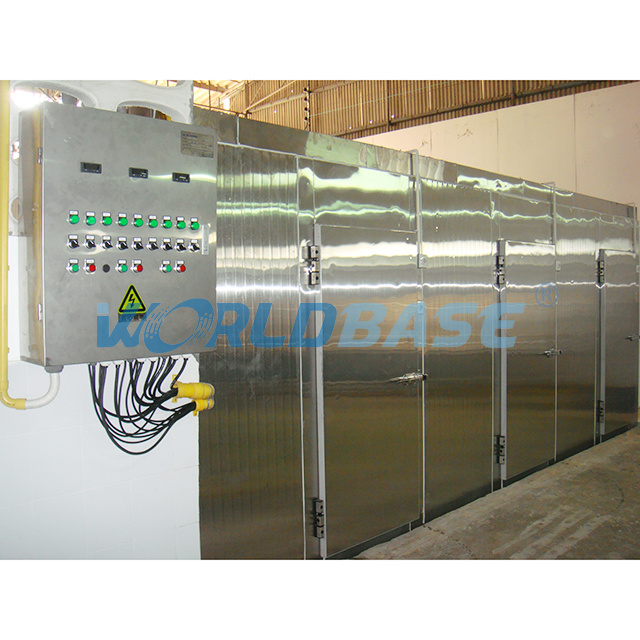
Conventional freezers operate on a simple on/off cycle that creates a sawtooth pattern of temperature swings. Each time the compressor kicks in, the interior temperature plunges several degrees below the set point, only to creep back up before the next cycle. This constant seesawing forces food cells into repeated partial thawing and refreezing, rupturing cell walls and opening microscopic channels through which moisture, flavor, and nutrients steadily leak away. The damage is cumulative and irreversible, dulling taste and leaving behind a dry, spongy texture that no amount of careful cooking can fully disguise.
Another overlooked weakness is air circulation. Standard designs rely on a single fan pushing cold air in one or two fixed directions, creating hot spots near door seals and uneven frost accumulation. Products stored in these neglected zones suffer surface freezer burn while their cores degrade slowly. Every time the door opens, ambient moisture rushes in and instantly condenses on the coldest surfaces, burying your goods under layers of ice crystals that wick away essential moisture. This hidden dehydration concentrates salts and enzymes near the surface, accelerating oxidative rancidity in meats and turning delicate fruits into bland, leathery disappointments.
The very insulation that makes a freezer efficient can become a liability over time. Standard models use polyurethane foam that gradually loses its thermal resistance as microscopic cells collapse under repeated thermal stress. Seals deform imperceptibly after thousands of open-close cycles, allowing a constant trickle of warm air to invade. The control thermostat, often a simple bi-metallic strip hidden behind a panel, drifts out of calibration unnoticed. Together these gradual failures mean your product exists in a limbo zone—cold enough to appear preserved, yet warm enough for enzymatic reactions and fat breakdown to continue their quiet sabotage, long before any visible sign of spoilage emerges.
Why Texture and Nutrients Survive the Deep Chill
Freezing locks in the natural structure of food at a microscopic level. When ingredients are chilled rapidly, the water inside forms tiny crystals that don’t rupture cell walls. This means fibrous vegetables stay crisp, delicate herbs retain their shape, and proteins hold onto moisture instead of turning dry or mealy. The faster the freeze, the less time ice has to expand aggressively, so the original texture is practically suspended in time.
Nutrients fade through oxidation, enzyme activity, and exposure to heat—cold halts all three. Deep freezing immediately after harvest or preparation pauses the breakdown of vitamins like C and folate, which are notoriously unstable at room temperature. Minerals and antioxidants stay locked in because the low temperature inhibits the chemical reactions that would otherwise degrade them. In many cases, frozen produce can outshine fresh items that have spent days in transit and on shelves, slowly losing their nutritional edge.
Modern flash-freezing technology is quietly transformative. Unlike slow household freezers that allow large ice shards to form, commercial methods use blasts of cold air or liquid nitrogen to plunge temperatures in minutes. This speed leaves textures nearly identical to fresh, and because the process often happens at peak ripeness, the flavor and nutritional profile are at their absolute best. The deep chill doesn’t just preserve—it captures a moment of perfection.
Straight from the Assembly Line: Engineering the Cold
The rhythmic clatter of conveyor belts sets the pace as each component finds its place with almost mechanical intuition. There’s a peculiar artistry in how copper tubing, compressors, and evaporator coils come together—every joint brazed with care, every circuit tested under pressures that would make most systems buckle. This isn’t just manufacturing; it’s a choreography of cooling, where the margin for error shrinks to a whisper.
Walk further down the line and you’ll see the real alchemy: refrigerants charged not by volume but by precise thermal calculations, insulation foamed into cavities where every millimeter counts. The cold we take for granted in our kitchens and labs begins here, in a symphony of leak tests and thermal imaging scans. It’s a process that rejects the ordinary—units that merely “work” are sent back to be reworked until they deliver a chill that’s consistent, silent, and almost stubbornly efficient.
At the end of it all, these machines aren’t just assembled; they’re tuned like instruments. Noise dampeners, airflow paths, and defrost cycles are calibrated to defy expectations. The goal isn’t simply to lower temperature—it’s to engineer an absence of heat so reliable that you forget the machinery behind it. That quiet hum in your basement? It’s the echo of countless adjustments made long before you ever plugged it in.
Power Bills vs. Performance: The Efficiency Breakthrough
For years, the assumption in high-performance industries was simple: to get more power, you had to burn more energy and accept steeper electricity bills. This trade-off defined everything from server farms to manufacturing lines, where scaling up meant scaling costs, not just in dollars but in environmental footprint. The efficiency breakthrough changes that calculus entirely. By rethinking core engineering—from chip architecture to cooling systems—a new generation of technology now delivers a steep performance curve that actually bends the cost curve downward. It’s no longer about sacrificing speed for savings or vice versa; it’s about unlocking both in parallel.
What makes this shift so compelling is that it wasn’t achieved through a single invention but through a cascade of optimizations that compound. Advanced power management dynamically allocates electricity where it’s needed most, slashing waste during idle cycles without compromising peak output. Component-level innovations, like more efficient voltage regulators and low-resistance materials, squeeze more work from each watt. These gains stack up quietly, often invisible to end users, until you compare the bills. A facility that once strained under a six-figure monthly energy cost can now handle greater workloads with a fraction of that expense, all while meeting stricter sustainability targets.
The real-world impact is already showing up in unexpected places. Gym owners are swapping out traditional treadmills for self-powered models that feed energy back into the grid, trimming overhead while attracting eco-conscious members. Cloud providers are packing denser compute into cooler-running racks, passing savings downstream to customers. Even in heavy industry, variable-frequency drives are turning motors into intelligent machines that sip power rather than gulp it. The thread connecting these examples is clear: performance is no longer the enemy of your power bill. It’s becoming the engine that drives your savings.
Matching Your Operation to the Right Freezing System
When selecting a freezing system, the first thing to consider is how your production line actually moves. A continuous operation that runs non-stop, pushing out thousands of identical items every hour, will demand a very different setup compared to a small batch kitchen where the menu changes daily. The physical space you have, the product variety, and your throughput goals all shape whether a tunnel freezer, a spiral system, or even a fluidized bed freezer makes the most sense. You’re not just buying a machine; you’re integrating a step that has to keep pace without creating bottlenecks or wasting floor space.
Product characteristics are just as critical—freezing mango chunks for a smoothie pack isn’t the same as freezing marinated chicken breasts. Individual quick freezing (IQF) systems shine when you need loose, free-flowing pieces that won’t clump together, while plate freezers handle flat blocks efficiently. If your items are delicate or have a high liquid content, the freezing rate and air flow become vital to prevent damage or quality loss. Matching the system to the product’s texture, shape, and packaging ensures that what comes out of the freezer looks and performs exactly as intended, with no hidden compromises.
Don’t overlook the long-term costs and adaptability of the system. A freezer that perfectly fits your current line may become a costly mismatch if your production volumes shift or you introduce new product lines. Look at cleaning time, energy consumption, and maintenance access—these daily operational realities often outweigh the sticker price. Sometimes a modular setup or a slight overcapacity built in from the start can save you from a painful retrofit two seasons later. The right match feels almost invisible in your workflow, quietly doing its job while your team focuses on everything else.
FAQ
It’s all about speed and ice crystal formation. Conventional freezers cool slowly, creating large ice crystals that rupture cell walls—leading to mushiness and loss of texture when thawed. Blast freezing pushes cold air at high velocity, dropping the temperature so fast that tiny crystals form, preserving cellular structure and locking in freshness almost instantly.
Freshness isn’t just about taste—it’s about nutrients, moisture, and mouthfeel. Quick freezing inhibits enzyme and bacterial activity before degradation sets in. You get that just-harvested flavor and texture retention that slow freezing can’t touch. It’s the difference between a premium product and a disappointing meal.
We engineer for smart airflow and tight thermal envelopes. Instead of overpowered compressors, we optimize coil placement and fan design to move cold air exactly where it’s needed. Real efficiency comes from reducing thermal drift and waste, not just slapping on a bigger compressor. Many of our systems use variable-speed drives that adapt to load in real time.
The framing and door sealing systems are critical. Condensation and ice buildup around doors can warp gaskets and compromise performance. We use heated door frames with triple-pressure seals and seamless interior linings to prevent frost penetration. A rigid, well-insulated cabinet with minimal thermal bridges saves a lot of headaches down the line.
It’s about airflow modulation and targeting latent heat removal. Delicate items need gentle, even airflow to avoid freeze-burn and clumping, so we might use directed louvers and mild fan pulsing. For dense meat, you need rapid surface heat extraction to pass through the danger zone quickly, so concentrated high-velocity cold streams work best. Custom racking and tray spacing also play a huge role.
Watch the door hinges and check the defrost drainage daily. A slight misalignment pulls in moist air that becomes ice, stressing the refrigeration cycle. Also, monitor the compressor oil acidity annually; acid buildup silently eats away at the system. And never ignore unusual vibration—it often indicates a fan imbalance that can cascade into compressor failure.
We’re moving toward integrated sensors that map heat distribution in real time and auto-adjust freezing profiles per batch. There’s also a push for natural refrigerants with ultra-low global warming potential, combined with phase-change materials for backup cooling during peak energy periods. The goal is smarter, greener systems that think for themselves.
Conclusion
As an original manufacturer of blast freezers, we’ve spent decades refining what happens when you drop the temperature of a product at incredible speed. Rapid freezing isn’t just about cold air—it’s about controlling ice crystal formation at a microscopic level. When you freeze slowly, large crystals rupture cell walls, leaving behind mushy textures and lost moisture. That’s where standard freezing falls short, often leaving products vulnerable to quality drift over time. By contrast, our systems push past that barrier, locking in the structure almost instantly. The result is food that holds its original bite, nutrients, and visual appeal. It’s physics, but it’s also deeply practical: a perfect freeze in seconds means less waste and a better eating experience months later, preserving what matters most to chefs and producers alike.
Behind this performance is an engineering approach that starts on our factory floor. Every coil, fan, and compressor is tuned to deliver consistent, powerful cooling without guzzling electricity. We’ve seen operators significantly cut their power bills while boosting throughput, because today’s designs prioritize efficiency breakthroughs that older or generic units can’t match. Of course, the right system depends on your product and volume—matching the freezer to the operation is where real gains hide. From delicate berries to dense doughs, each load demands a tailored freeze profile. When you align the technology with the task, you’re not just preserving food; you’re preserving profit and reputation. This hands-on insight, drawn straight from the assembly line, ensures that every unit we build turns freezing into a precision advantage rather than a compromised necessity.
Contact Us
Contact Person: Mr Yang
Email: [email protected]
Tel/WhatsApp: +8613809083091
Website: https://en.worldbase.cn