

Best Polyoxyethylene Sorbitan Fatty Acid Ester (TWEEN) for Your Formulation Needs
2026-09-29
If you've ever watched a promising emulsion split or struggled to solubilize a finicky active, you know that not all TWEENs are created equal. Polyoxyethylene sorbitan fatty acid esters are the quiet workhorses behind countless stable creams, lotions, and clear solutions—yet picking the right grade often feels like guesswork. At POLYKEM, we believe formulation success shouldn't depend on trial and error. This post breaks down the key differences in HLB, fatty acid chain length, and purity so you can pinpoint the best TWEEN for your specific needs—without the usual datasheet fog.
The TWEEN Grade You're Using Probably Isn't the Right Ester
Most labs reach for TWEEN 80 or TWEEN 20 out of habit, rarely stopping to check whether the ester tail actually matches the formulation's needs. That habit quietly undermines stability, texture, and even active delivery—yet it persists because the differences between grades are rarely spelled out on the bench.
Each TWEEN variant carries a different fatty acid ester: TWEEN 20 uses a shorter laurate chain, TWEEN 60 a saturated stearate, and TWEEN 80 an unsaturated oleate. These structural shifts change HLB, interfacial packing, and sensitivity to oxidation. A formula that works beautifully with TWEEN 20 may break or turn hazy with TWEEN 80, not because one is better, but because the ester simply doesn't fit the oil phase or ionic environment.
Instead of treating all TWEEN grades as interchangeable, pull the certificate of analysis and confirm the exact fatty acid composition and esterification level. Swapping to TWEEN 40 or TWEEN 60 often fixes long-standing issues with phase separation or pH drift—especially in high-salt or extreme-pH systems where the wrong ester chain becomes a silent failure point.
HLB Values That Actually Predict Emulsion Stability
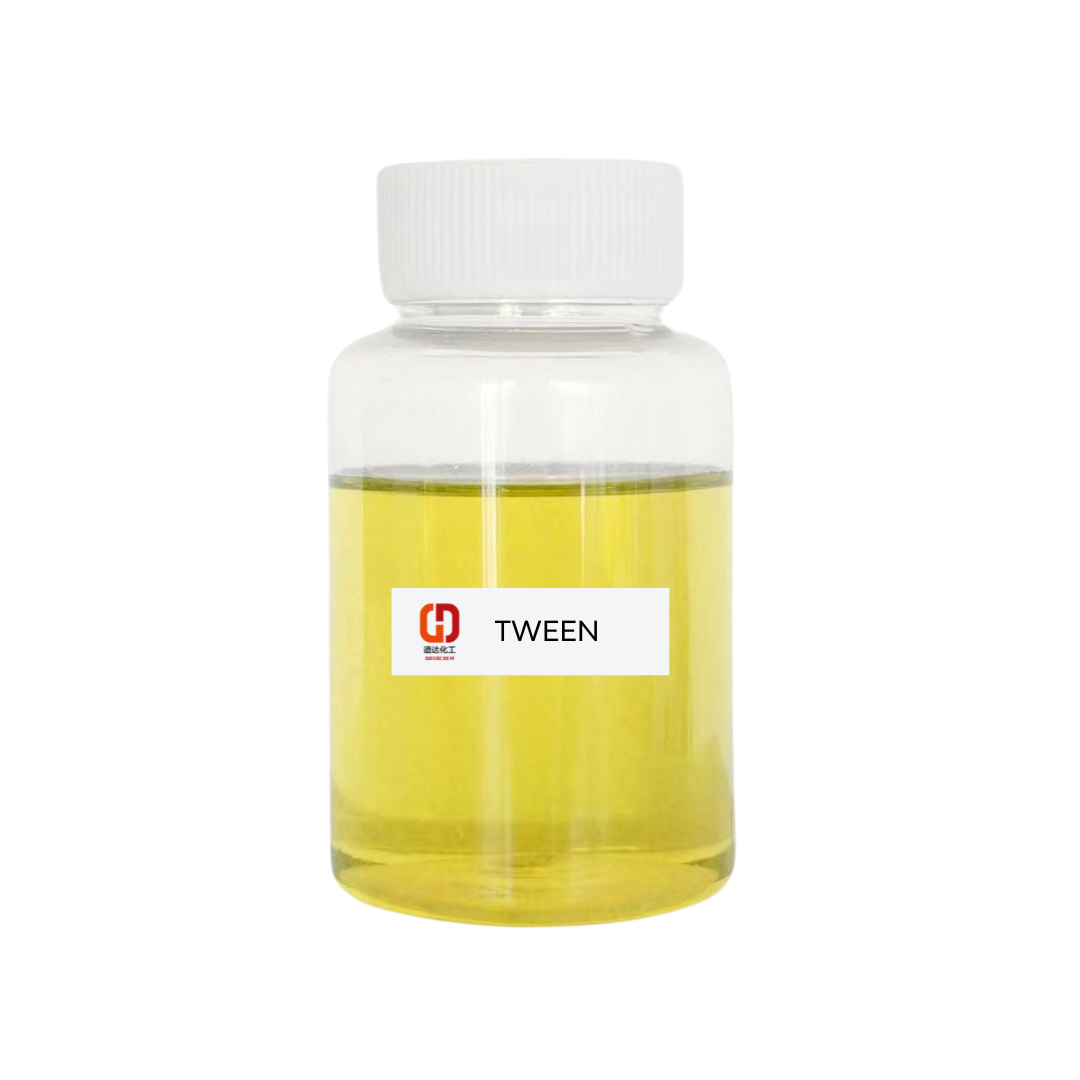
A single HLB number pulled from a supplier sheet rarely lines up with what happens after a few weeks on the shelf. The values that do hold up tend to come from a required-HLB test on the exact oil phase you are using, not from a generic table. For mineral oil, that often lands around 10–12, while many natural esters sit closer to 7–9, but even those shift with traces of free fatty acids or unsaturation.
Mixing two emulsifiers to hit a target HLB is only the first step. What makes the number predictive is whether the pair also forms a tightly packed interfacial film at the droplet surface. A blend with the right HLB but poor film elasticity will still show creaming or coalescence under temperature cycling. That is why experienced formulators watch the HLB against the oil's required value and then stress-test the emulsion, adjusting the ratio slightly rather than trusting the calculated figure alone.
In practice, the most useful HLB values are narrow ranges that survive changes in pH, salt, or heat. A value that works for a simple water-in-oil cream may fail once you add 2% magnesium sulfate or shift the preservative system. So the numbers that actually predict stability are often bench-derived, batch-specific, and paired with a quick freeze-thaw or centrifuge check before scaling up.
TWEEN 20 vs 80: When the Extra Oleic Chain Matters
Polysorbate 20 and 80 often get lumped together as interchangeable nonionic surfactants, but the shift from a saturated C12 laurate tail to an unsaturated C18 oleate tail changes how they behave in water and oil. Tween 20's shorter, fully saturated chain packs tightly at interfaces and gives it a slightly higher HLB, making it more at home in simple oil-in-water emulsions with small, nonpolar oils. Tween 80, by contrast, carries that extra cis-double bond in the middle of an 18-carbon chain. The kink lowers its packing density, raises the critical micelle concentration just enough to notice, and produces larger, looser micelles.
The real difference appears when a formulation includes bulky lipophilic actives or temperature-sensitive lipids. That unsaturated oleic chain in Tween 80 can insert more deeply into lipid bilayers and disordered hydrophobic cores, improving solubilization of larger molecules like vitamin E, essential oils, or certain drug compounds that Tween 20 struggles to hold. The oleic chain also keeps the surfactant fluid at lower temperatures and reduces the tendency to form rigid gel phases during storage. So the extra oleic chain isn't just added length; it's a structural choice that alters micelle architecture, loading capacity, and cold stability in ways that matter once you leave model emulsions behind.
Formulating with TWEEN Under Harsh pH and Salt Loads
Polysorbates like TWEEN 20 and 80 are often considered gentle, but their ester linkages make them vulnerable under low pH and high salt. At pH below 3 or above 8, hydrolysis accelerates, releasing fatty acids and reducing the surfactant's ability to stabilize emulsions. Salt load further disrupts the hydration shell of the ethylene oxide head groups, lowering the cloud point and sometimes causing phase separation even at room temperature. Formulators need to treat pH and salt as linked stressors rather than separate variables.
To maintain performance, select the right TWEEN variant for the ionic environment. TWEEN 80, with its unsaturated oleate tail, tends to be more salt-tolerant than TWEEN 20 in some systems, but it is also more prone to oxidation. Blending TWEEN with a small amount of an anionic co-surfactant, such as sodium dodecyl sulfate or a sulfosuccinate, can raise the cloud point and improve salt resistance through mixed micelle formation. However, adding too much anionic can create charge repulsion issues if the formulation later encounters cationic actives.
For extreme conditions, consider shifting the pH toward neutrality with a buffer system that does not add excessive ionic strength, such as a citrate or histidine buffer at minimal concentration. Pre-dissolving TWEEN in the oil phase or using a low-energy emulsification method can also reduce the time the surfactant spends fully hydrated in the aggressive aqueous phase. If the formula must remain at pH 2 or 3, look to alternative nonionic structures with ether linkages, like alkyl polyglucosides or PEGylated tocopherols, because no amount of TWEEN optimization will fully stop ester hydrolysis over long-term storage.
Polysorbate Blends That Reduce Your Emulsion Trial Count
Formulators often burn through a dozen trials trying to match a surfactant system to an unfamiliar oil phase. Pre-blended polysorbate options turn that process around by giving you a workable hydrophilic-lipophilic balance range without having to mix individual esters from scratch. Instead of testing polysorbate 20 and polysorbate 80 separately, you can pick two or three blends that bracket your target HLB and run a quick bracket screen. The phase separation and droplet size data from that single set of runs usually point you to the right ratio much faster than stepwise single-surfactant testing.
Consistency is the hidden advantage. When you buy a pre-blended polysorbate system, the ethoxylation distribution and ester composition are controlled from batch to batch. That means the HLB value printed on the datasheet actually matches what shows up in your emulsion. If you switch to a new lot, you are not quietly changing your formulation behavior and chasing a phantom variable. This reliability lets you carry a successful trial condition straight into pilot batches without repeating the entire optimization ladder.
Many development labs now keep a compact set of polysorbate blends covering low, mid, and high HLB ranges. When a new oil or active ingredient lands on the bench, they run a quick screen with those blends, check creaming, viscosity, and droplet size under the microscope, then adjust the blend ratio in one follow-up experiment. The trial count often drops from ten or more to three or four, which leaves actual time for stability testing, sensory panels, and scale-up work that usually gets squeezed at the end.
Making Sense of TWEEN Certificates of Analysis
A TWEEN certificate of analysis can look like a wall of numbers, but it breaks down into a few practical checks. Start with the lot number and manufacturing date to confirm the document matches the container in front of you. Then look for the appearance, hydroxyl value, saponification value, water content, and pH. These tell you whether the material has drifted during storage or transport before it ever reaches your process.
The most overlooked line is often the residual ethylene oxide and dioxane section. For pharmaceutical or cosmetic grades, this matters more than a slightly off acid value. Compare the reported result against the limits printed on the certificate, not against a generic textbook range. A value that sits near the edge of the limit deserves a second look, even if it technically passes.
Finally, check the test methods. If the certificate references USP, EP, or an in-house method, that changes how you interpret the numbers. A viscosity measured by one spindle speed is not interchangeable with another. When in doubt, ask the supplier to clarify the method version and the uncertainty. A little time spent here prevents batch rejections later.
FAQ
TWEEN 20 has a shorter lauric acid chain, so it tends to produce lighter, less viscous emulsions and rinses off more easily. TWEEN 80 carries an oleic acid chain with one double bond, which gives it more body and a slightly richer feel, but also makes it more prone to oxidation if the formula lacks a chelator or antioxidant.
Don't rely on a single HLB number for the whole oil phase. Calculate the weighted HLB requirement of each oil component, then blend a high-HLB TWEEN (like TWEEN 20 or 60) with a low-HLB co-emulsifier such as Span 80 until the mixture matches that target. Start around 0.5–1.0 below the calculated HLB and adjust after a stability check, because real emulsions often behave differently from theoretical values.
Haze often appears if the TWEEN is added below its cloud point or if it drags in a small amount of free fatty acid from an acidic pH environment. Warming the water phase to 40–50°C before adding the surfactant, or switching to a more hydrophilic grade like TWEEN 20, usually clears the haze. If the cloudiness persists, check for incompatibility with salts or cationic polymers.
Yes. TWEEN 60 is based on stearic acid and remains solid at room temperature, so it tolerates repeated heating and cooling better in creams and lotions. TWEEN 80 is liquid and easier to handle cold, but excessive heating above 80°C for long periods can accelerate oxidation and darken the product. If the process runs hot, use TWEEN 60 and pre-melt it with the oil phase.
Most topical gels stay within 1–5% total surfactant. Above that, you risk irritation and a sticky after-feel. For sensitive skin, keep TWEEN 80 below 2% and pair it with a co-emulsifier to reduce the total amount needed. Always run a patch test with the final formula, because even low levels can cause redness in some individuals.
Yes, but use it at the minimum ratio that gives a clear solution, typically 1:5 to 1:10 fragrance-to-surfactant. Add the fragrance to the TWEEN first, mix gently, then dilute with water slowly at room temperature. Avoid high-shear mixing at this stage, because it introduces air and leads to foaming that takes hours to settle.
Keep them in tightly sealed, opaque containers away from direct light and moisture. TWEEN 80 benefits from a nitrogen blanket if the container is opened frequently, because the oleic acid is vulnerable to air oxidation. For solid grades like TWEEN 60, store below 30°C to prevent clumping, but don't refrigerate because condensation can introduce water into the drum.
Conclusion
Most formulators grab a polysorbate grade by habit, but the ester composition in your current TWEEN might not match the oil phase you are trying to stabilize. HLB is useful, yet relying on a single number often hides differences in actual emulsion shelf life. TWEEN 20 and TWEEN 80 illustrate this well: the shorter laurate ester in TWEEN 20 gives a higher HLB and faster migration to the interface, while the extra oleic chain in TWEEN 80 provides better compatibility with long-chain triglycerides and improves coalescence resistance in many cream or lotion systems. Choosing between them based only on HLB can lead to weak films and phase separation.
Under harsh pH, high salt, or extremes of temperature, polysorbate esters hydrolyze at different rates, and the fatty acid released can shift your formulation's stability and pH. Blending polysorbates, rather than relying on a single grade, often cuts down the number of emulsion trials by broadening the effective HLB window and reducing sensitivity to process variation. When comparing certificates of analysis, focus on acid value, peroxide value, moisture, and the actual fatty acid profile; two batches with the same trade name can behave differently if the ester distribution or oxidation level drifts. A careful reading of the CoA often explains why a formulation that worked in the lab fails in production.
Contact Us
Contact Person: Levi
Email: [email protected]
Tel/WhatsApp: +86 532 84688720
Website: https://www.polykem-intl.com