

Best Four Shaft Shredders for Heavy-Duty Industrial Applications
2026-06-30
When it comes to tackling the toughest industrial waste, choosing the right shredder can make or break your operation. Four shaft shredders stand out for their unmatched efficiency and precise sizing, but not all machines are engineered for heavy-duty demands. In this guide, we cut through the noise and highlight the top performers in the market, including the robust Shengzhong Shredder lineup. Get ready to discover the powerhouses that redefine reliability and throughput.
Unpacking the Engineering Behind True Heavy-Duty Shredding
Most people imagine a shredder as a bin with spinning blades, but heavy-duty models are built around a completely different philosophy. At the core lies a motor engineered for relentless torque rather than sheer speed, often paired with a gearbox that multiplies force while keeping heat buildup in check. The cutting assembly itself is usually a solid steel rotor with individually replaceable teeth, not a flimsy stamped cylinder. These teeth are angled to pull material inward, but their spacing and overlap are calculated to prevent jams even when handling mixed loads—paper clips, credit cards, and thick cardboard get chewed through without pause because the design never treats them as unexpected obstacles.
Beyond the cutting mechanism, the structural skeleton carries the real load. Industrial-grade shredders use thick, welded steel frames that absorb vibration and resist twisting under strain, unlike the plastic chassis of smaller units. The feed throat is intentionally narrow and guided by a hardened steel comb that pre-stresses materials before they hit the cutters, snapping fibers in advance of the main bite. Lubrication isn’t an afterthought either; automated oiling systems or integrated oil reservoirs keep friction low during continuous runs, and thermal sensors protect the motor by pausing operation if temperatures climb, then resuming autonomously when safe. Every element is designed to sustain hours of operation without degradation.
Even the most overlooked components get a rethink in this category. The waste bin employs a lift-off or roll-out design with reinforced edges, not simple snap-fit plastic, to handle the weight of densely packed debris. Sound-dampening layers are embedded in the housing to muffle the roar without adding bulk. Power management circuits include inrush current limiters, allowing multiple units on the same office circuit without tripping breakers. It’s a machine built from the ground up to disappear into its workload, requiring nothing beyond routine emptying and the occasional blade reversal for wear leveling—a quiet testament to engineering that prioritizes endurance over flash.
The Secret to Handling Bulky Waste Without Jams
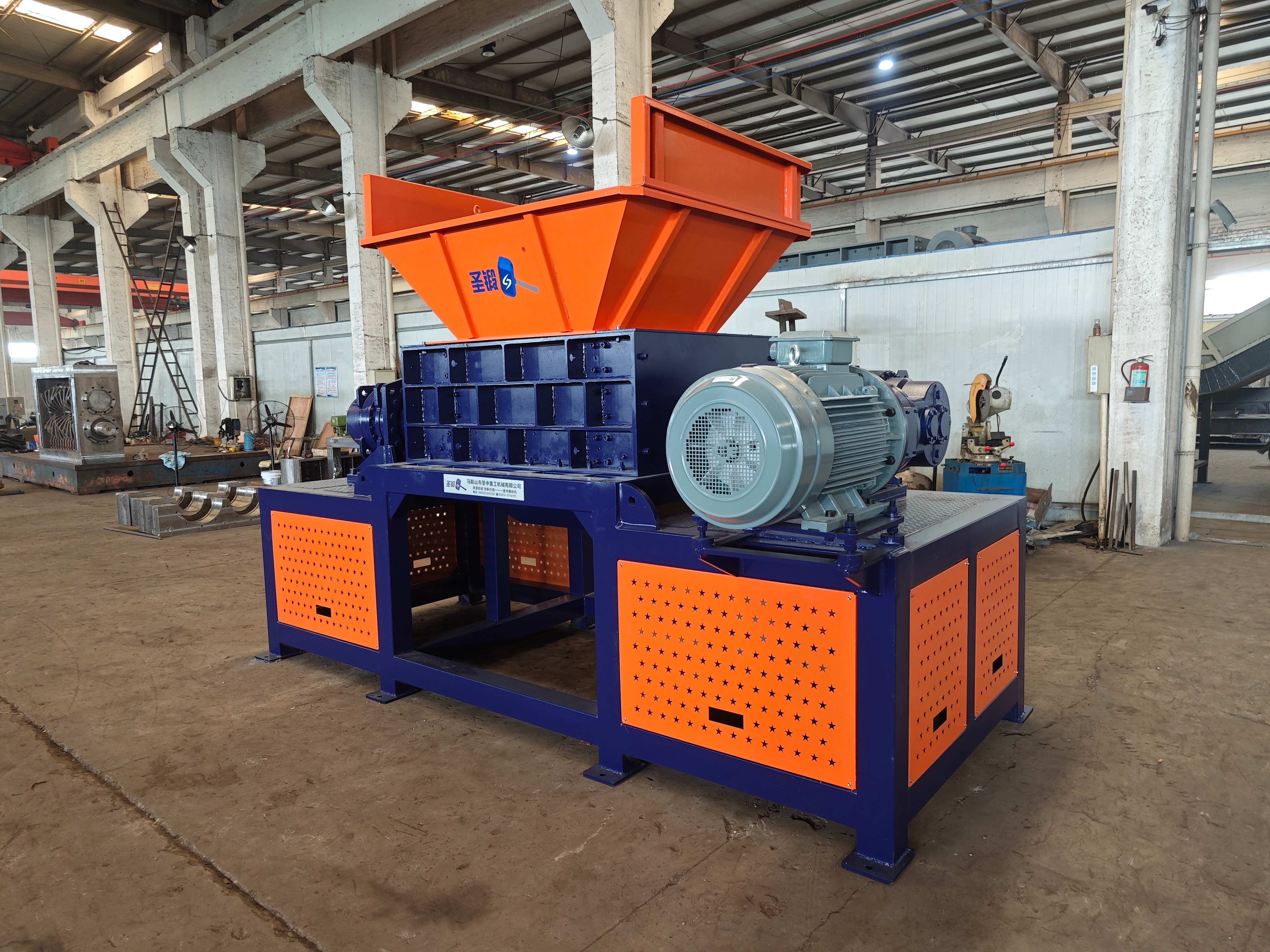
Most people assume bulky waste shredders can swallow anything, but the truth is many jams start with a simple oversight. Items like mattresses, furniture, or large appliances often contain hidden metal springs, dense foam, or tangled wiring that snags blades and clogs the feed. The real secret lies in what you do before the material ever touches the machine. Take a moment to break down oversized pieces and remove obvious contaminants—a few minutes of prep can save hours of downtime.
Another often-ignored factor is the rhythm of feeding. Cramming too much at once or letting the hopper run empty between loads creates uneven stress. Instead, feed steadily, matching the machine’s processing speed. Listen to the motor: a consistent hum means you’re in the sweet spot. Pair this with regular inspections of wear edges and a quick daily cleanup of accumulated debris, and you’ll stop most jams before they even think of forming.
Finally, don’t underestimate the role of moisture. Bulky waste left out in the rain becomes heavier and more prone to balling up mid-shred. Store materials under cover when possible, or let them dry out before processing. Coupled with smart sorting and attentive feeding, this three-pronged approach turns jam-prone sessions into flawless runs. It’s not about high-tech tricks—it’s about respecting the simple mechanics that keep everything flowing.
From Tires to Metal Drums: A Versatile Workhorse
It starts with shredded tires, old conveyor belts, and discarded rubber mats—materials most would deem worthless. Yet inside the grinding chamber, these scraps are transformed. The machine doesn't discriminate; it chews through everything from soft, pliable rubber to rigid industrial plastics with the same relentless appetite. Feed it a steady stream of waste, and it responds with a consistent, uniform crumb, ready for the next life as playground surfaces or molded goods.
But the real surprise comes when you toss in something tougher. Metal drums, once holding chemicals or oil, are no match for its reinforced blades. The process is slow, deliberate, and deafeningly loud, but it never falters. What emerges is a separated stream of clean metal shards and pulverized residue—proof that a single machine can straddle the line between recycling rubber and reclaiming metal. It’s this adaptability that makes it a staple in salvage yards and processing plants where versatility isn’t just a perk; it’s a necessity.
The beauty lies in its simplicity. No complex control panels, no delicate adjustments. Operators quickly learn its rhythms—the growl of the motor under load, the vibration through the floor plates, the occasional need to reverse and clear a jam. Maintenance is straightforward: blade replacements, belt checks, periodic greasing. In a world of hyperspecialized equipment, this grinder remains a rugged generalist, happy to tackle whatever you throw at it, always earning its keep.
Smart Selection: Matching Shredder Specs to Your Operation
Getting the right shredder isn’t about grabbing the biggest or fastest model on the shelf. It starts with knowing what you’re feeding it—paper weight, staple counts, even the occasional credit card or CD. A busy office that shreds stacks of documents daily needs a different workhorse than a small team tackling sensitive files once a week. Overlooking the duty cycle can lead to frustrating pauses mid-shred, so matching the motor’s stamina to your routine matters just as much as sheet capacity.
Security is another layer often underestimated until it’s too late. Strip-cut might be fine for junk mail, but anything with personal data demands cross-cut or micro-cut particles that leave no readable trace. The trade-off? Finer cuts mean slower throughput and more frequent oiling to keep blades sharp. If you’re handling financial records or legal contracts, stepping up to a higher security level isn’t paranoia—it’s practical protection against dumpster divers who still roam.
Don’t ignore the space where the machine will live. A commercial shredder with a giant bin might save time on emptying, but if it blocks a hallway or overwhelms a small supply room, it’s going to be more trouble than it’s worth. Look at the noise levels too—open-plan offices can’t tolerate a constant roar. Casters, bin windows, and auto-feed slots all sound minor until you’re using the device every day. The smartest choice balances what you shred, how often you shred it, and who shares the room with the hum.
Why Hydraulic Drives Could Mean Fewer Downtime Headaches
Hydraulic drives are known for their ability to handle heavy loads with smooth, controlled motion, but their real advantage might be in how they keep operations running longer between failures. Unlike many electromechanical systems that rely on belts, gears, or chains, hydraulics transfer power through fluid, which naturally dampens shock and vibration. This means components aren't rattled loose or worn down as quickly by constant jarring, a common source of unexpected stoppages. When your equipment is built to absorb the kind of punishment that would send a purely mechanical system into early retirement, you spend less time chasing breakdowns and more time getting work done.
Another factor is overload protection. In a hydraulic system, if something jams or exceeds design limits, the pressure relief valve simply opens and bypasses fluid, preventing damage to the pump, motor, or structure. No shear pins to replace, no stripped gears to diagnose. This built-in forgiveness doesn't just save parts—it saves hours of troubleshooting and wait time for replacements. Crews appreciate that a hydraulic drive often signals trouble with a gradual loss of speed rather than an abrupt halt, giving you a chance to finish a cycle and inspect the issue without a panic-driven shutdown.
Maintenance itself becomes more predictable. Because the fluid does much of the cooling and lubricating inside a well-sealed circuit, wear items like bearings and seals can often outlast their counterparts in open, greased systems. Simple, regular fluid sampling can give you an early warning of contamination or metal fatigue long before anything fails, turning what could be a scramble into a scheduled intervention. That kind of transparency turns downtime from a recurring headache into something you can actually plan for—and maybe even forget about for longer stretches.
Real-World Stories: Where Four Shaft Shredders Excel
At a sprawling automotive recycling center in Ohio, mountains of scrap metal and entire vehicle carcasses arrive daily. The facility’s old machinery struggled for years with bulky, mixed-density materials—engine blocks, tires, and mangled chassis parts would jam or pass through unprocessed. Since integrating a four shaft shredder, these headaches have vanished. Its two extra cutting shafts act like a set of precision shears, ripping through layers of steel, rubber, and plastic in one continuous motion. Operators no longer pre-sort the incoming chaos; they just feed it in and watch the over-sized particles discharge in uniformly shredded pieces, ready for easy separation downstream. The plant manager reported a 40% jump in throughput and a dramatic drop in maintenance calls.
Across the Atlantic, a hazardous waste disposal firm in Belgium faced a different challenge: destroying counterfeit goods and expired pharmaceuticals under strict security protocols. The materials were a nightmare—blister packs, syringes, dense plastic casings, and occasional metal components. Using a four shaft shredder designed for heavy-duty industrial destruction, they achieved particle sizes small enough to satisfy regulators, while the low-speed, high-torque tearing action prevented dust explosions and kept noise to a whisper. The machine’s interchangeable screens and intelligent load sensing allow it to adapt on the fly; if a batch of solid metal hits the blades, it automatically slows and powers through, then speeds back up for lighter waste. What used to take two shifts now finishes by lunchtime, and the firm has expanded its service offerings as a result.
Perhaps the most surprising success comes from a textile recycling startup in India. They process filthy, knotted bales of post-consumer clothing and carpet remnants—materials that wrap around traditional grinders like spaghetti around a fork. The four shaft shredder’s overlapping blade geometry and counter-rotating cutters grab and tear instead of spinning wildly, unwinding even the toughest woven synthetics without clogging. The consistent output has allowed them to produce a high-value fiber fluff that spinners actually want to buy, turning what was once landfill-bound waste into a profitable commodity. In every case, the four shaft design proves its worth not through numbers on a spec sheet, but by solving the messy, unpredictable problems that keep other machines idled.
FAQ
Four shaft shredders are highly effective for heavy-duty industrial tasks because their dual-shaft pre-shredding mechanism combined with secondary shredding rotors can handle tough, bulky materials with ease. The aggressive cutting action and high torque allow them to process everything from metal drums to rubber tires without clogging, while the interchangeable screens ensure uniform output size. They're built to run continuously under harsh conditions, making them a workhorse in recycling plants and manufacturing facilities.
Unlike single shaft shredders that rely on hydraulic rams to feed material, four shaft shredders use a positive dual-shaft feeder that grabs and pre-crushers material before the secondary shredding stage, resulting in higher throughput and less bridging. Compared to twin shaft shredders, the additional cutting rotors provide finer and more consistent particle sizing in a single pass, reducing the need for secondary processing. This makes them superior for applications where precise sizing and high volume are critical.
These machines excel with challenging materials like industrial waste, electronic scrap, aluminum billets, rubber tires, plastic lumps, wood pallets, and even baled materials. Their robust cutters can handle mixed waste streams containing metals, minimizing the risk of damage. The ability to adjust the screen size allows operators to switch between materials while maintaining desired output dimensions.
Prioritize hardened steel blades with independent shaft drives for consistent torque, a user-friendly control panel with overload protection, and a hydraulic screen cradle for easy maintenance. Dust- and water-resistant construction is vital for longevity in industrial environments. Look for models with a reinforced frame, low-speed high-torque operation to reduce dust and noise, and safety features like emergency stops and automatic reverse to prevent rotor damage.
Most heavy-duty shredders feature easy-access doors and a hydraulic screen lifting system that simplifies rotor inspection and cleaning. Blades are typically designed for quick replacement with minimal downtime, often using a segmented rotor design where individual cutters can be changed without disassembling the entire shaft. Regular lubrication of bearings and checking of drive belts ensures smooth operation. Manufacturers usually provide wear monitoring guidelines to optimize blade life.
Absolutely. These shredders are often designed with modularity in mind, allowing custom infeed and discharge configurations such as conveyor belts, hoppers, or suction systems. Their speed can be synchronized with upstream and downstream equipment, and they can be equipped with smart controls for automated start/stop cycles based on load. Many models are built to fit into standard container systems for easy relocation within a plant.
Standard safety includes emergency stop buttons, protective guards around moving parts, and automatic rotor reversal upon overload to prevent jamming. Some advanced models feature light curtains, isolation chambers for hazardous dust, and remote monitoring systems that alert operators to anomalies. Noise-reducing enclosures and vibration dampening feet are also common to meet workplace safety regulations.
Conclusion
Four-shaft shredders have redefined heavy-duty industrial processing by combining rugged engineering with intelligent design. Their true strength lies in the interplay of counter-rotating, interlocking blade assemblies that generate formidable cutting forces while maintaining precise sizing control. This configuration isn't just about raw power—it's engineered to handle bulky, irregular waste streams like tires, metal drums, and demolition debris without succumbing to frequent jams. The shredding chamber's geometry and serrated cutters work in concert to tear apart tough materials, simultaneously self-clearing snags that would choke lesser machines. Moreover, hydraulic drives have emerged as a pivotal advancement, offering overload protection and variable speed control that drastically reduce mechanical stress and unscheduled downtime. These features transform what could be a maintenance headache into a stable, continuous process, even under punishing workloads.
Beyond sheer durability, versatility is where four-shaft shredders truly earn their keep across industries. They excel in diverse settings—from scrap yards processing metal turnings to recycling plants tackling electronic waste—often with minimal adjustments. Real-world deployments demonstrate how this machine class thrives on challenging feedstocks that single-shaft alternatives reject outright, all while producing uniformly shredded output ready for downstream sorting or volume reduction. Smart selection, however, demands a clear-eyed assessment: blade geometry, screen size, and throughput requirements must align with the specific waste profile and operational goals. Plants that match these specifications meticulously report not only higher up-time but also lower energy consumption per ton processed. Ultimately, the value of a four-shaft shredder isn’t in any single feature, but in how its integrated design combats the hidden costs of downtime, inefficiency, and material handling bottlenecks.
Contact Us
Contact Person: Leon
Email: [email protected]
Tel/WhatsApp: 8615385558866
Website: https://www.shred-waste.com