

Best China Polyurethane Production Line Features and Buying Guide
2026-09-12
Every buyer starts with the same question: which Chinese polyurethane production line actually delivers after the warranty? The answer rarely lives in glossy brochures. It hides in details like mixhead accuracy, temperature control stability, and how easily the line adapts when your formulations change. This guide maps those details to real purchase criteria. We also look at how YI ZHOU TECHNOLOGY is addressing common pain points that cheaper suppliers ignore. Read on before you commit to a capital expense that could either streamline your production or haunt your maintenance team for years.
Core Modules That Make or Break a PU Line
A polyurethane line lives or dies by how well its core modules hold up under continuous operation. The metering and mixing unit sets the rhythm; if ratios drift even slightly, you get weak foam, bad bonding, or wasted raw material. Pump calibration and sensor feedback are what keep that rhythm tight, not just on day one but after thousands of cycles.
Temperature control is another quiet killer. Polyurethane reactions are exothermic and picky about viscosity, so the preheating stations, mold ovens, and cooling tunnels all need to respond faster than the line speed. A lag of ten degrees can mean the difference between a clean demold and a torn surface. Equally critical is the curing section—if dwell time or humidity isn't managed there, the part may look fine leaving the line and fail later in the field.
Finally, material handling and cutting modules often get overlooked until they jam. A misaligned conveyor, a worn blade, or an underpowered trim station will throttle the entire line, no matter how good the chemistry is upstream. The best PU lines treat these modules as one integrated system, not a collection of machines.
How Chinese Suppliers Handle Custom Specs
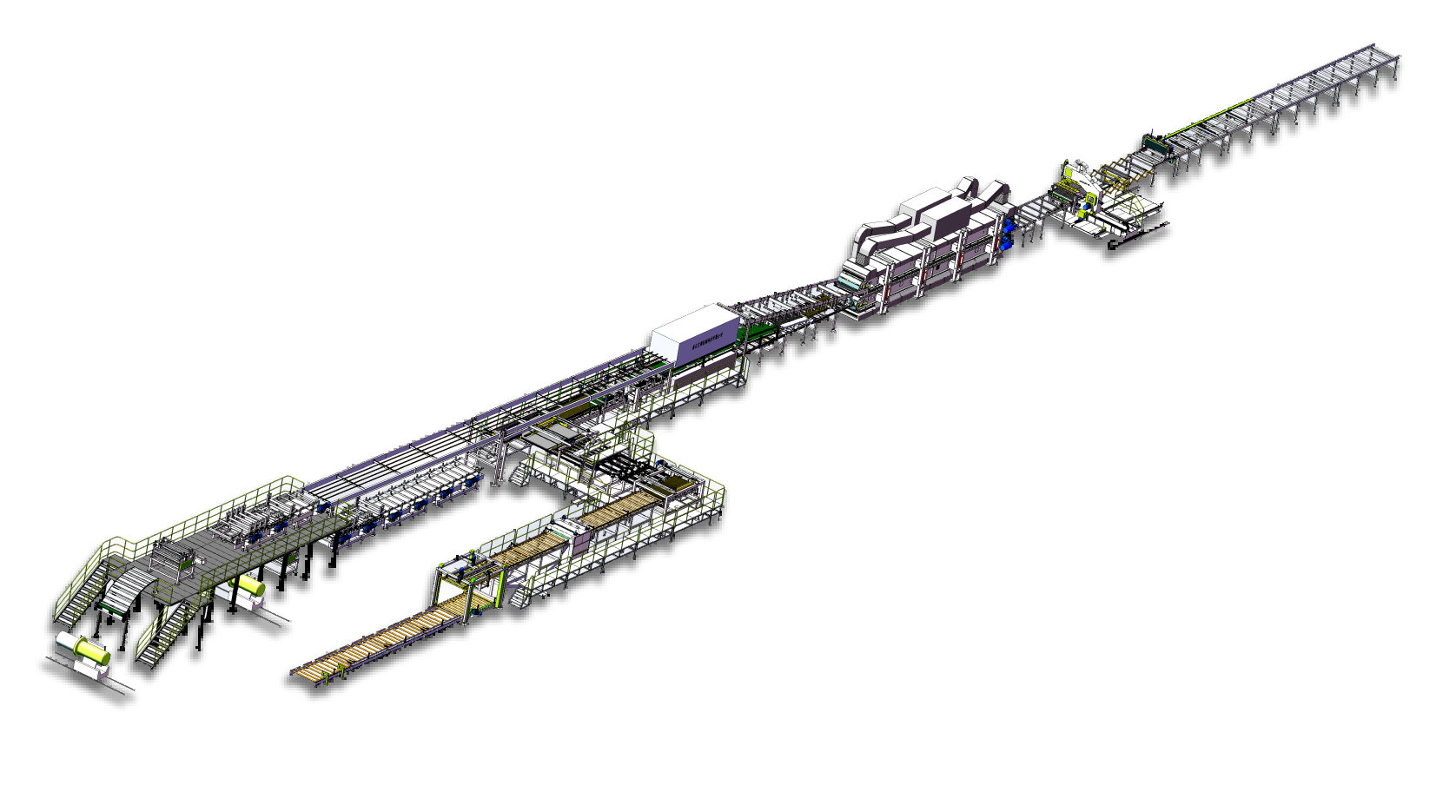
Most Chinese suppliers treat custom specs as a negotiation between the buyer's drawings and the factory's existing production flow. Instead of pushing back with a flat “no,” their engineers usually strip the request down to core functions and suggest workable tweaks: a cheaper alloy that holds the same tolerance, a snap-fit that removes two screws, or a surface finish that hides minor sink marks. This back-and-forth tends to happen fast, often over WeChat voice notes or marked-up photos, so the buyer sees a concrete counter-proposal within a day or two rather than a weeks-long feasibility study.
Sampling is where the flexibility really shows. Many factories will run a single custom sample on a semi-automatic line without demanding a large deposit, and they will film the key steps—CNC setup, injection pressure, hand assembly—so the buyer can catch issues before tooling is finalized. If a dimension is off, the revision loop is typically measured in hours, not weeks. Some suppliers even keep a dedicated “custom specs engineer” who speaks basic technical English and acts as the bridge between the client's CAD file and the floor supervisor, reducing the chance that a note like “no sharp edges” gets lost in translation.
For more complex custom work, a common trick is to split the product into standard modules and bespoke parts. A buyer who wants a non-standard enclosure, for instance, might find that the supplier already has a library of validated internal brackets, seals, and PCB mounts, and only the outer shell needs new tooling. This keeps costs down and lets the supplier quote a shorter lead time than a fully from-scratch project. Before mass production, most will also run a pilot batch of 50 to 200 pieces and ship a few to the buyer for sign-off, documenting every change in a shared spreadsheet so both sides can trace what was altered and why.
Budget Traps in Turnkey Quotes
A turnkey quote often reads like a clean, all-in promise—until you notice the missing line items. Site preparation, permit fees, utility hookups, and even basic trash removal can sit outside the quoted scope. These aren't hidden in the fine print so much as they're simply absent, and the contractor expects you to know that. If the quote doesn't explicitly list what's covered, assume it's not covered.
Change orders are where the real budget damage happens. The initial number looks lean because it assumes ideal conditions: no rock under the soil, existing wiring in good shape, walls that are perfectly square. The moment reality deviates, the contractor issues a change order, and that's billed at a premium. Low initial bids are often just a foot in the door; the profit arrives later through adjustments you can't refuse mid-project.
Material and spec opacity also feeds the trap. A quote might say "equivalent quality" or "contractor's choice" without naming brands or model numbers. Later, you discover the windows are thinner, the fixtures are cheaper, or the insulation is a lower R-value than you expected. Upgrading to what you actually wanted becomes an extra line item, not a substitution. Before signing, push for exact specifications and a clear list of exclusions—otherwise the turnkey price is just a starting point.
Scaling Output Without Sacrificing Mix Quality
Growing a production line often means pushing more material through the same process in less time, but mix quality can slip if the fundamentals get rushed. The easiest way to hold the line is to lock down the variables that actually affect dispersion: shear rate, addition sequence, and the amount of time each component spends in the high-energy zone. When output goes up, these parameters rarely scale in a straight line, so small pilot runs become poor predictors if you just multiply batch size and hope.
A better approach is to adjust equipment speed, blade geometry, or staging rather than simply extending mix time. For example, a larger vessel with the same tip speed may deliver different shear, and that mismatch shows up as streaking, clumping, or uneven distribution once the batch cools or settles. Tracking those visible defects at the line, not just in the lab, gives operators a clear signal for when the process has drifted. That way throughput goes up without consistency becoming the trade-off.
Factory Visits: What to Inspect Before Signing
Walking a production floor tells you more in ten minutes than a polished slide deck ever will. Watch how raw materials are stored—if cardboard boxes sit directly on damp concrete or components are stacked haphazardly, that's a sign of weak process control. Check the calibration stickers on testing equipment; expired dates often mean the quality team is understaffed or disengaged. Ask to see a recent batch's first-article inspection report, not the sample they prepared for your visit. If the factory is proud of its systems, it will hand over real-time data without hesitation.
Pay attention to the flow of work, not just the finish of the final product. A line that stops and starts with no visible reason often hides rework loops or missing parts. Look at the scrap bins near each station—are they overflowing or nearly empty? Occasionally high scrap isn't automatically bad; it can show honest rejection of defects. But if the same bin has been sitting for days with the same parts, the factory may be recirculating rejects instead of fixing root causes. Ask one line worker how long they've been on that specific task; high turnover on critical stations frequently leads to inconsistent output.
Finally, check the documentation trail before you sit down in the conference room. Do work instructions have revision dates and actual operator signatures, or are they generic printouts from a template? Verify that the factory uses the same part numbers and material grades you specified—mismatches here often appear only after a few production runs. If they cannot produce a clear nonconformance log or show how customer complaints are tracked, be cautious. A factory that hides its failures cannot be trusted to prevent yours.
After-Sales Support That Actually Arrives
Most after-sales support stops at a scripted apology and a ticket number. Ours starts with a real person who can pull up your machine’s full service history before you finish describing the fault. No endless hold music, no being bounced between three departments that don’t talk to each other.
When something goes wrong, we don’t ask you to “try turning it off and on again” unless that’s genuinely the next step. Our technicians carry common parts in their vans, and if a part isn’t on hand, we tell you exactly when it will be—then show up on that day, not a week later with a shrug.
We also track recurring issues across our fleet, so a fix isn’t just a patch; it’s a permanent correction. If the same fault appears twice, we dig deeper and update our maintenance protocols. That’s what “arrives” means: not just a visit, but a solution that stays.
FAQ
Look beyond the basic specs. Pay close attention to the metering accuracy of the mixing head, the temperature control range on the tanks, and whether the control system supports recipe storage and automatic calibration. These details affect foam consistency far more than the machine's overall size.
Ask for a live video tour of their workshop and a recent customer reference from your region. Be wary of suppliers who only share polished brochures. If possible, hire a local third-party inspector to check welding quality, electrical wiring, and the actual components used before shipment.
Yes, many of them are, but you need to shop smart. Established manufacturers using European or Japanese pumps, PLCs, and servo motors tend to hold up well. Cheap lines with unbranded parts will fail under 24/7 load, so always ask for the bill of materials.
Most will adjust tank sizes, add extra mixing heads, or modify the frame to fit your factory layout. You can also request specific brands for PLCs, touch screens, or gear pumps. Some will even integrate a robot for demolding if you need higher automation.
Prices can vary by 40% or more for a similar-looking line. The gap usually comes from component brands, steel thickness, and whether the supplier does in-house assembly or outsources. A mid-range line with branded pumps and a Siemens PLC often hits the sweet spot for long-term value.
Confirm that the supplier stocks common wear parts like seals, filters, and mixing chamber components. Ask how quickly they can ship replacements to your country and whether they offer remote troubleshooting via video call. A written response time guarantee is a good sign.
Focusing only on the upfront price and ignoring power consumption, spare part costs, and local installation support. Another common error is not testing the line with your actual polyurethane formulation before signing the final acceptance.
Standard lines usually ship in 30 to 45 days, with another week or two for sea freight depending on your location. Installation and commissioning typically take three to five days if the supplier sends an engineer, but customs clearance can add unexpected delays.
Conclusion
A genuinely dependable Chinese polyurethane production line rarely hinges on a single headline feature. It comes down to how the metering pumps, mixing head, temperature control loops, and degassing stations are engineered to cooperate. When these core modules are poorly matched, even a small drift in isocyanate-to-polyol ratio will ruin foam cell structure or elastomer hardness. The best suppliers pair high-precision gear pumps with closed-loop temperature regulation and offer real-time flow monitoring rather than relying on manual calibration. Custom specifications also reveal a lot: a factory that asks detailed questions about viscosity, filler content, mold cycle time, and ambient conditions before quoting is far more likely to deliver a line that fits your process than one that simply sends a standard proposal. Watch for turnkey quotes that bundle cheap mix heads, undersized vacuum pumps, or minimal PLC I/O—those hidden gaps become expensive retrofits later.
Scaling output without losing mix quality usually means upgrading the mixing chamber design and adding dynamic pressure control instead of just increasing motor size. During factory visits, inspect the actual tolerance of machined components, the cleanliness of assembly areas, and whether test runs use your raw materials rather than idealized reference chemicals. Pay attention to after-sales support as well: ask for remote diagnostic access, local spare parts stock, and a named engineer who understands your exact configuration. A supplier that documents every setpoint change and ships with full electrical schematics and PLC backups will prevent prolonged downtime months after installation. The best Chinese lines are not the cheapest at first glance, but they avoid the slow bleed of poor mixing, repeated calibration, and missing technical follow-up that turns a low upfront price into a costly production bottleneck.
Contact Us
Contact Person: Sophia Jiang
Email: [email protected]
Tel/WhatsApp: +86 17367381818
Website: https://yzwelding.com/