

Best 4G Core Network: Powering Reliable Mobile Connectivity
2026-05-28
In the race to deliver always-on mobile experiences, the backbone often remains invisible—yet it’s the 4G core network that makes or breaks reliable connectivity. Whether streaming, calling, or managing IoT fleets, operators face a critical choice: settle for rigid, legacy platforms or embrace a future-proof core that adapts as demands shift. IPLOOK redefines what a 4G core can be, blending carrier-grade resilience with cloud-native agility. In this post, we’ll unpack what sets a best-in-class 4G core apart and why it’s the linchpin of networks that won’t let you down.
Unlocking Seamless Mobility with Advanced Packet Core
Mobility today isn’t just about staying connected on the move — it’s about sustaining that connection without glitches, no matter how fast the device travels or how complex the network environment becomes. Advanced packet core solutions reframe this challenge by introducing predictive session management and anchorless architectures that don’t swim against the tide of legacy handover bottlenecks. Instead of rigid tunnel switching, traffic paths adjust proactively based on real‑time radio intelligence and application needs, so a video call from a high‑speed train doesn’t pixelate just because the cell changed.
We’ve moved past the era where a core’s job was merely to shuttle packets from A to B. Modern deployments weave context awareness directly into the fabric of the control plane — understanding whether a session belongs to a lightweight IoT telemetry stream, an immersive XR session, or a critical vehicle‑to‑infrastructure exchange, and then adapting buffering, redundancy, and local breakout decisions accordingly. This shifts mobility from a reactive recovery exercise to a fluent, almost anticipatory behavior; the network feels less like a sequence of handoffs and more like a continuous, personalized conduit.
Under the hood, the pieces that make this possible are often deceptively simple to integrate: softwarized User Plane Functions that can be positioned at the far edge, distributed home‑routing models that keep sensitive data within sovereign boundaries, and closed‑loop automation routines that learn from past transit patterns to pre‑warm resources before a device arrives. When done right, the result isn’t just seamless mobility — it’s a platform that makes motion invisible, letting services and users forget the network ever had edges at all.
Why Reliability Defines the Modern 4G Core Architecture
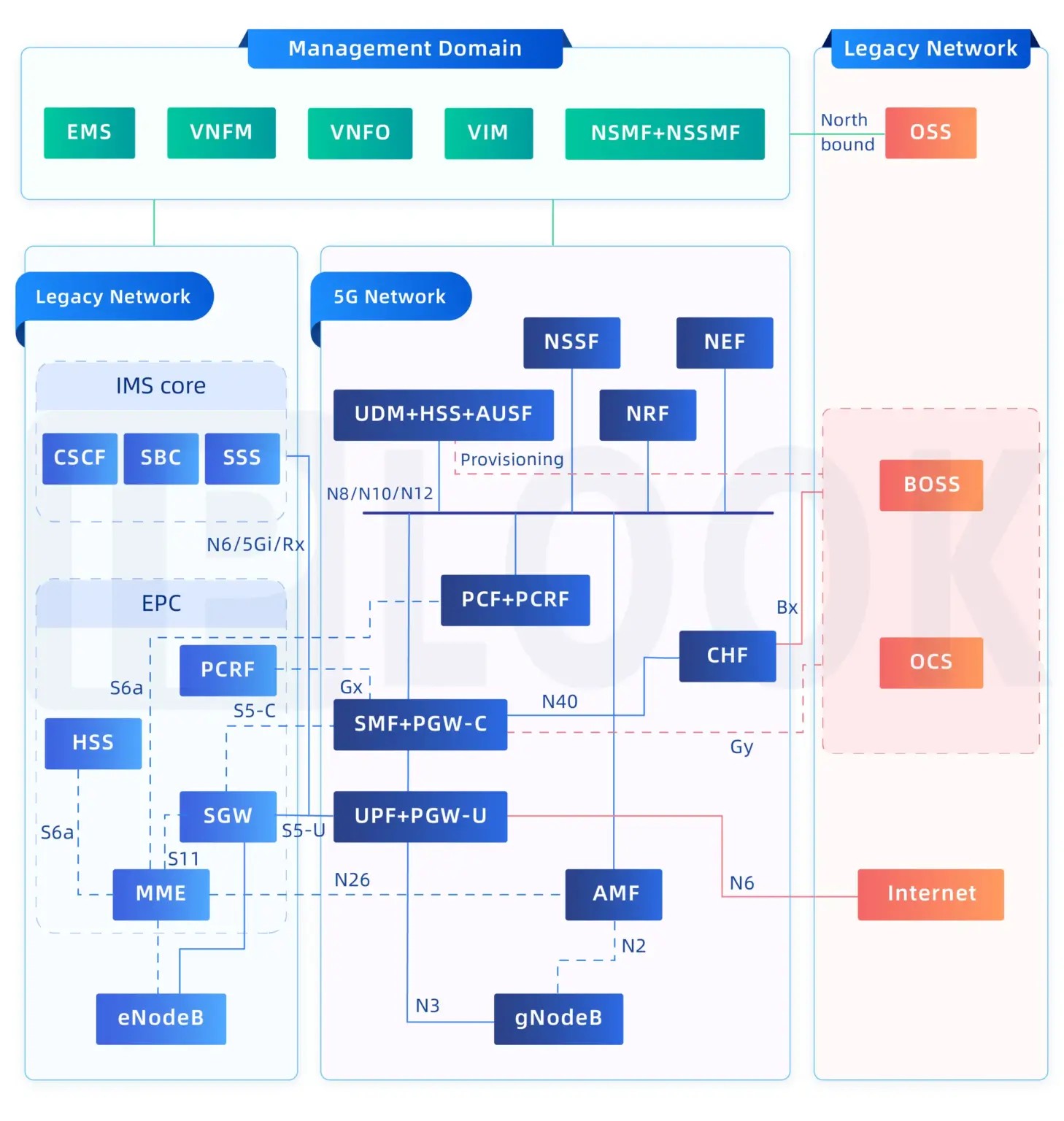
In the always-connected era, a 4G core network that stumbles under load isn't just an inconvenience—it’s a dealbreaker. Subscribers expect seamless streaming, crisp voice calls, and instant data access without a second thought. This demand elevates reliability from a mere technical checkbox to the very foundation of the architecture. Without it, operators face churn, eroded trust, and mounting operational costs.
The modern 4G core earns its reputation through deliberate design choices like N+1 redundancy, geographic separation of control and user planes, and stateful failover mechanisms. Virtualization and cloud-native principles further enable dynamic scaling and self-healing, ensuring that even during hardware failures or traffic spikes, sessions aren’t dropped and services remain transparently uninterrupted.
Ultimately, reliability shapes everything from mission-critical IoT deployments to HD voice calls. It allows operators to enforce strict service-level agreements while end users happily ignore the complex machinery working behind their screens. By baking resilience into every layer—from signaling to packet forwarding—the 4G core architecture proves that true performance is measured not when everything works, but when things go wrong and nobody notices.
Behind the Scenes: How Evolved Packet Core Sustains Network Integrity
The Evolved Packet Core forms the unseen backbone of modern mobile networks, orchestrating the seamless flow of data while preserving the network's stability. At its core, a set of intricate protocols continuously monitors traffic patterns, instantly detecting anomalies that could signal congestion or a security breach. Rather than relying on static rules, the system adapts in real time, rerouting data through less congested paths and isolating suspicious activities without disrupting legitimate user sessions. This dynamic responsiveness ensures that the network remains robust even under unexpected surges or targeted threats.
Integrity is maintained not just at the perimeter but also within the core's architecture itself. Functions like the Mobility Management Entity and the Serving Gateway collaborate through a mesh of encrypted tunnels, verifying each packet's origin and destination. Policy enforcement points embedded throughout the core apply granular rules that govern bandwidth allocation and service priorities, preventing any single application or user from destabilizing the entire system. This layered approach means that even if one node experiences a fault, the broader network can absorb the impact with minimal service degradation.
Beyond technical mechanisms, the core relies on a philosophy of distributed trust. Every component operates on the principle of least privilege, and interelement communications are authenticated before any data exchange. Regular software updates, often deployed with zero downtime, patch vulnerabilities without human intervention. This combination of hardened design and automated maintenance creates a self-healing ecosystem where network integrity is not a static objective but an ongoing, invisible process.
The Art of Balancing Speed and Stability in 4G Networks
Modern 4G networks walk a tightrope between raw speed and rock-solid reliability. Pushing peak data rates often risks introducing latency spikes or dropped connections, yet settling for conservative performance leaves users frustrated with sluggish loads. The real craftsmanship lies in tuning network parameters like modulation schemes and handover thresholds so that streaming, gaming, and video calls feel effortlessly smooth even when signal conditions fluctuate.
Engineers lean on adaptive techniques such as dynamic resource scheduling and carrier aggregation to squeeze more bandwidth from available spectrum without destabilizing the link. Simultaneously, robust error correction and intelligent traffic shaping prevent congestion from strangling throughput during peak hours. These behind‑the‑scenes adjustments ensure that a file download doesn’t stutter when you step indoors, and a VoIP call remains clear as you move between cell towers.
Ultimately, the art isn’t just about chasing higher numbers on a speed test. It’s about fusing the raw horsepower of MIMO antennas and QAM encoding with a deep understanding of user behavior and radio propagation. The result is a network that feels consistently responsive—fast enough to delight, yet stable enough to trust for everything from emergency calls to high‑definition video streaming.
From Legacy to LTE: Transforming Core Network Dynamics
The shift from legacy circuit‑switched architectures to LTE’s packet‑only core marks a fundamental rethinking of how mobile networks handle traffic. Gone are the days when voice and data traveled separate paths, each demanding its own infrastructure and rigid resource allocation. In their place, the Evolved Packet Core (EPC) unifies everything into a streamlined IP‑based framework. This integration eliminates redundant hardware, slashes latency, and opens the door to services that simply weren’t feasible under older models, like high‑definition voice over data channels and seamless handovers between cell towers and Wi‑Fi. The dramatic simplification doesn’t just trim costs; it alters how operators plan capacity and troubleshoot faults, moving from manual circuit provisioning to agile, software‑defined controls.
Beyond the technical overhaul, LTE’s core reshapes the economic and operational dynamics of wireless carriers. With a flat, distributed architecture, data sessions stay anchored even as users roam across different access networks, enabling genuine everywhere connectivity without dropouts. Security and policy enforcement also evolve—from perimeter‑based defenses in legacy systems to layered, identity‑driven protocols that authenticate devices and applications continuously. This transformation forces a rethink of longtime practices: maintenance windows shrink, upgrades roll out without service interruptions, and analytics become embedded in network functions themselves, predicting congestion rather than simply reacting to it. The end result is a living network that adapts in near real time, something the voice‑centric switches of the past could never achieve.
Ensuring Carrier-Grade Performance for Next-Gen Demands
The shift toward ultra-reliable, low-latency services is pushing network infrastructure into uncharted territory. Carrier-grade performance now demands more than just five-nines availability; it requires real-time adaptability to traffic surges, seamless failover mechanisms, and the ability to maintain strict SLAs across distributed architectures. Without rethinking how core systems handle elasticity and resilience, operators risk leaving revenue on the table as next-gen use cases multiply.
One area where this pressure is most visible is in the move from monolithic to cloud-native network functions. Breaking apart tightly coupled components improves scalability, but it also creates complex interdependencies that traditional monitoring tools weren’t built to handle. To truly deliver carrier-grade reliability, teams are embedding observability directly into the fabric of their platforms—capturing telemetry at every hop and using that data to predict failures before they cascade into customer-impacting events.
Edge computing and IoT further amplify the challenge. When critical decision-making moves closer to the user, consistency becomes a moving target. Meeting next-gen demands means aligning infrastructure policy with business intent, so that performance, security, and cost constraints are enforced automatically, no matter how far the network extends. Those who master this alignment will turn performance from a constant struggle into a competitive advantage.
FAQ
A reliable 4G core combines resilient architecture with intelligent traffic management. It must support high availability through redundant design and seamless failover mechanisms, ensuring minimal downtime even during peak usage.
By leveraging advanced packet processing and dynamic resource allocation, the core can scale capacity on demand. Techniques like network slicing at the 4G level and efficient load balancing keep latency low and throughput high across diverse applications.
The mobility management entity (MME) and home subscriber server (HSS) are vital for tracking users and managing sessions. Combined with a robust policy and charging rules function (PCRF), these elements enable uninterrupted connectivity as users move between cells.
Virtualizing network functions replaces dedicated hardware with software running on standard servers. This cuts costs, simplifies upgrades, and allows operators to launch services faster while maintaining carrier-grade performance.
The evolved packet core (EPC) is designed to interwork with existing 3G and even 2G networks, ensuring continuous coverage. It also lays the groundwork for non-standalone 5G, letting operators introduce next-gen radios without overhauling the entire core.
End-to-end encryption, mutual authentication between devices and the network, and secure key exchange via the HSS form a layered defense. Intrusion detection systems and regular security audits further guard against evolving threats.
Yes, by utilizing features like power-saving mode and extended discontinuous reception, the core minimizes device energy consumption. Dedicated APNs and traffic separation ensure that IoT data bursts don't interfere with human-centric services.
Cloud-native designs enable automated healing, effortless scaling, and multi-tenancy. Operators benefit from reduced manual intervention and can quickly adapt to market changes, turning network agility into a competitive edge.
Conclusion
The best 4G core network redefines mobile connectivity through an advanced packet core that enables seamless mobility, eliminating disruptions as users move across networks. Modern evolved packet core architectures prioritize carrier-grade reliability built on distributed, resilient nodes that automatically re-route traffic during failures, sustaining network integrity behind the scenes. This transformation from legacy circuit-switched systems to LTE's all-IP core has not only boosted data speeds but also introduced intelligent load balancing and self-healing mechanisms that maintain consistent service quality even under peak demand.
Achieving the delicate art of balancing speed and stability, these cores dynamically allocate resources to optimize throughput while preventing congestion. Advanced queuing and traffic shaping ensure that critical applications like VoLTE and video streaming perform flawlessly, meeting next-gen demands without compromising on latency. By decoupling the control and user planes, operators gain the flexibility to scale capacity independently, a design principle that continues to underpin future network evolutions. Ultimately, the finest 4G cores deliver a connectivity experience that feels both immediate and steadfast, proving that reliability is not just a feature but the very foundation of mobile broadband.
Contact Us
Contact Person: Shimmy
Email: [email protected]
Tel/WhatsApp: 85253392231
Website: https://www.iplook.com